



Brown Marquetry Bench
A brown marquetry bench brings warmth and intricate woodwork to an interior, offering a practical seat with decorative flair.
Brown Marquetry Bench
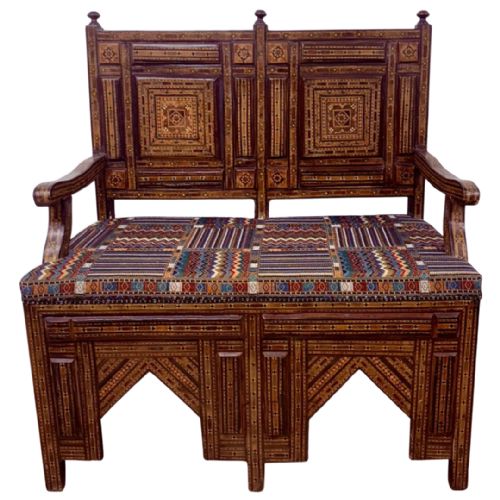
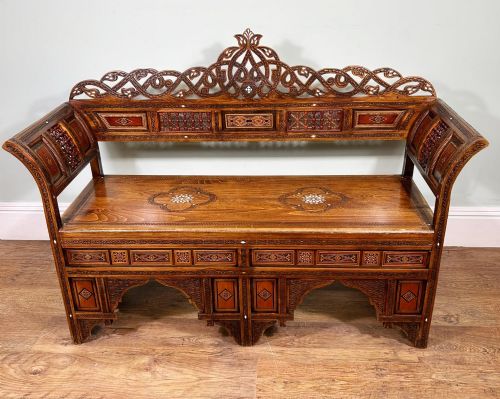
A brown marquetry bench encompasses a range of seating forms including settees, sofas, window seats, piano stools, and settles. These pieces combine functional seating with detailed surface decoration executed in rich woods.
The selections visible here span several periods, most notably the Edwardian era and the nineteenth century, alongside earlier examples like an eighteenth century hall bench. Styles vary from Sheraton Revival and Art Nouveau to Syrian and Italian Renaissance Revival.
Makers utilised diverse woods such as mahogany, walnut, and oak as a base for intricate marquetry inlay. Many pieces incorporate satinwood, bone, or mother of pearl to create striking geometric or figurative patterns across the surface.
Materials and construction methods
Cabinetmakers constructed the foundational frames using hardwoods such as mahogany, walnut, oak, and unspecified Syrian hardwoods. These sturdy structures were built to support daily use while providing a stable canvas for decorative work.
Surfaces received intricate marquetry and satinwood inlay, often complemented by contrasting materials like bone or mother of pearl. Artisans carefully fitted these thin veneers into recessed channels on the wood to form complex decorative schemes.
Upholstery completed many of these seats, utilising various fabrics and textiles to match the wooden framework. This combination of joinery, veneer work, and soft furnishings defined the production of the period.
Brown Marquetry Bench Retail Price Guide 2026
Typical asking prices for brown marquetry bench among the pieces listed under this phrase on Sellingantiques today, from the lower quarter to the upper quarter. They describe what is for sale here now, not the wider market.
Some of these benches come with built-in storage, proving that Victorians loved hiding their clutter just as much as we do.
Distinguishing quality in marquetry seating
The precision and complexity of the marquetry inlay set individual pieces apart. Finer examples feature tight joints in the veneer work and a thoughtful integration of contrasting elements like satinwood, bone, or mother of pearl.
The choice of primary wood and the architectural execution of the frame also indicate the tier of craftsmanship. Pieces showing sophisticated styling, such as Sheraton Revival or Art Nouveau lines, reflect a higher degree of design ambition.
The Brown Marquetry Bench Glossary
- Marquetry Inlay
- A decorative technique where pieces of veneer are fitted into a wood foundation to form pictorial or geometric designs. This method defines the primary visual appeal of the pieces.
- Satinwood
- A durable, yellowish wood often utilised for contrasting inlay work on darker bases like mahogany. Its natural sheen enhances the decorative detail.
- Settle
- A wooden bench featuring a high back, solid arms, and frequently a storage compartment underneath the seat. These practical items often incorporate decorative panels.
- Window Seat
- A narrow form of seating designed specifically to fit within the recess of a window. They appear frequently in Edwardian mahogany configurations.
- Settee
- A long, upholstered seat with a back and arms, designed to accommodate multiple people. The listings show numerous inlaid mahogany interpretations from the late nineteenth and early twentieth centuries.
Brown Marquetry Bench: Frequently Asked Questions
Where should I place a marquetry bench?
These pieces suit entrance halls, living rooms, and bedrooms, functioning as decorative focal points as well as seats.
End of bed placements and window recesses are particularly common spots for Edwardian settees and window seats.
How do I care for inlaid wood?
Keep the wood away from direct sunlight and steady heat sources to protect the delicate veneers and natural finishes from drying out.
Regular dusting with a soft cloth helps maintain the surface without the need for heavy polishes.
Can these benches be used daily?
Most frames are built from solid hardwoods like mahogany and walnut, making them structurally sound for regular sitting.
Upholstered versions may require attention to the fabric depending on its age and condition.
What styles are represented here?
The selection includes Edwardian, Art Nouveau, Sheraton Revival, and Late Victorian designs alongside Syrian and Italian pieces.
This variety reflects different regional traditions in woodworking and surface decoration across the nineteenth and early twentieth centuries.