

Brown Marble Chest
A brown marble chest brings together solid timber and cool stone in pieces ranging from compact bedside cabinets to grand commodes.
Brown Marble Chest
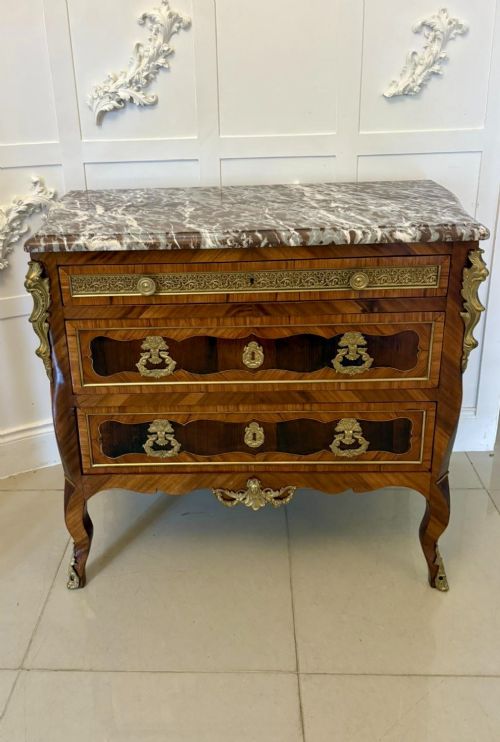
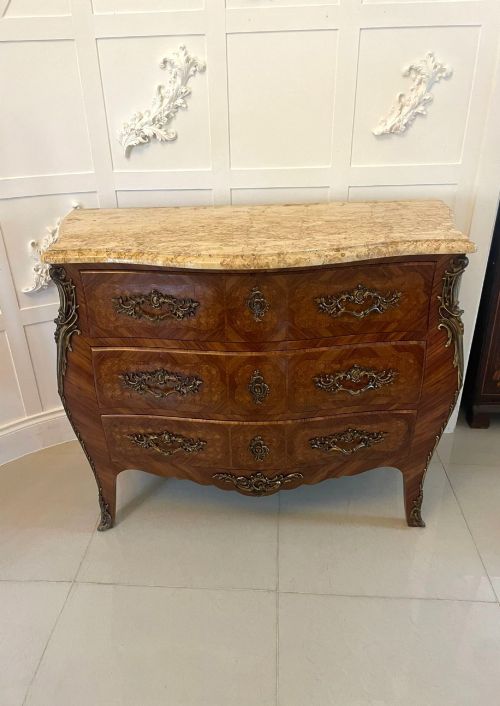
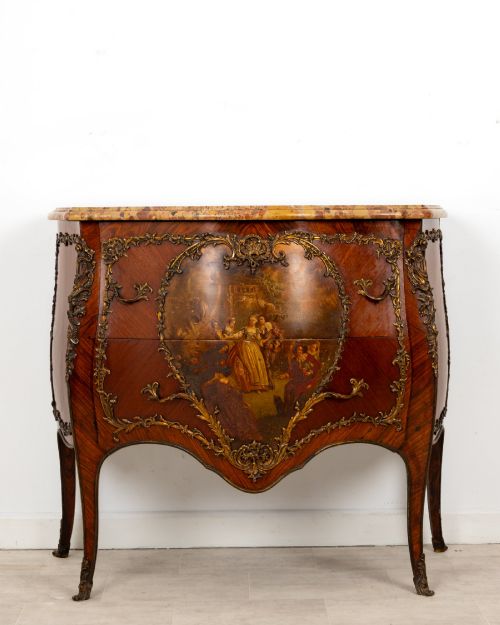
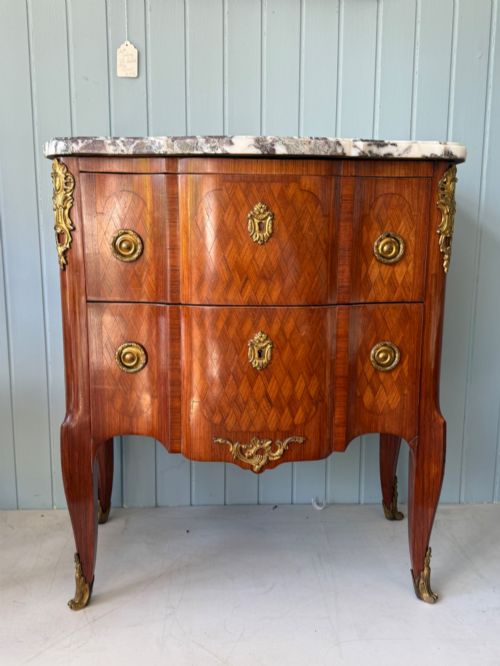
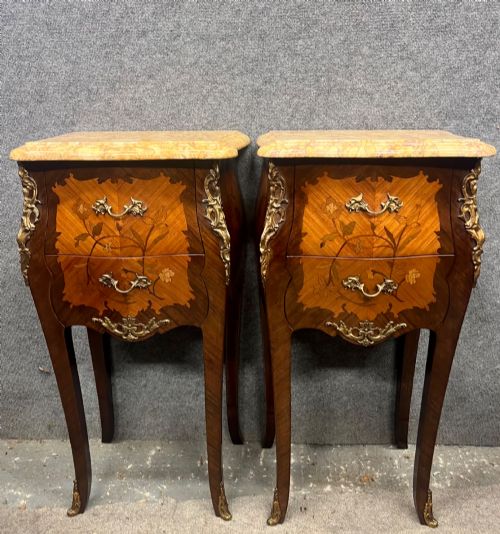
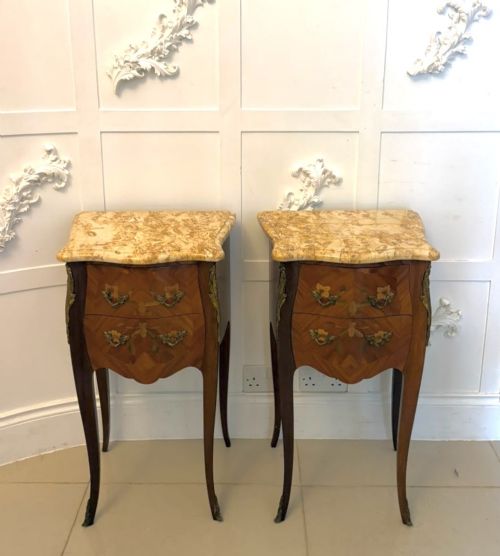
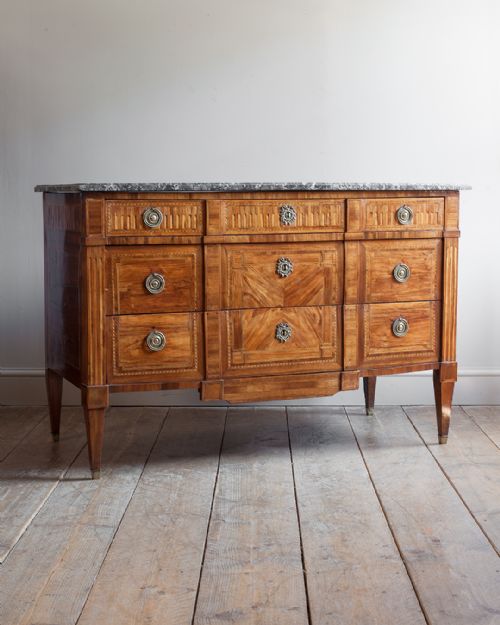
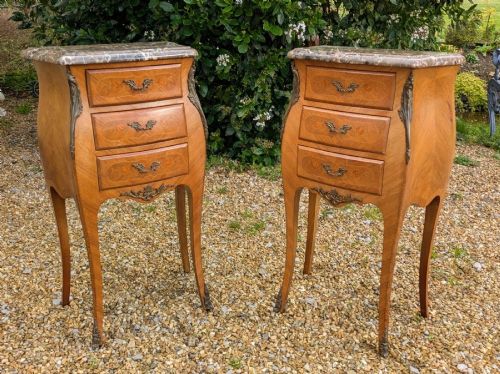
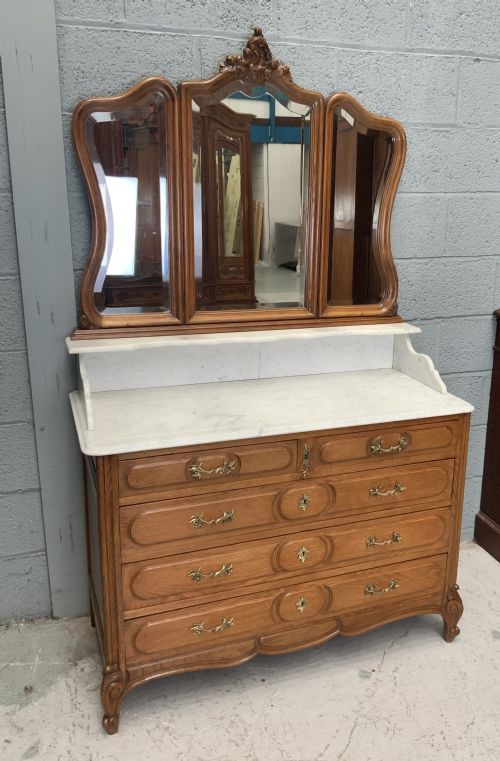
A brown marble chest primarily takes the form of a commode, bedside cabinet, or tall chest of drawers. These pieces emerge predominantly from nineteenth-century and early twentieth-century French workshops, alongside select eighteenth-century examples.
The search phrase typically leads to case furniture topped with polished stone slabs, often paired with matching drawer configurations. Walnut, mahogany, kingwood, and cherrywood form the primary bodies supporting the marble surfaces.
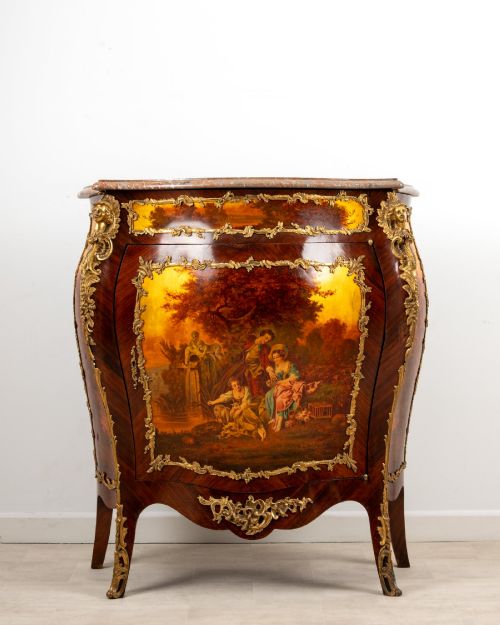
Makers working in Louis XV and Louis XVI revival styles dominate the selection, producing serpentine fronts, bombe profiles, and straightforward rectangular chest designs.
Materials and Construction
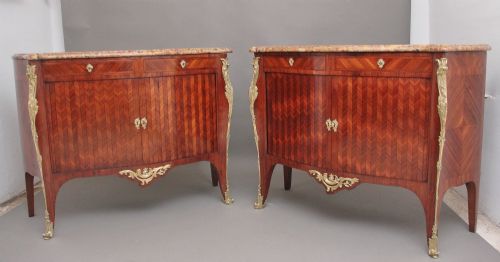
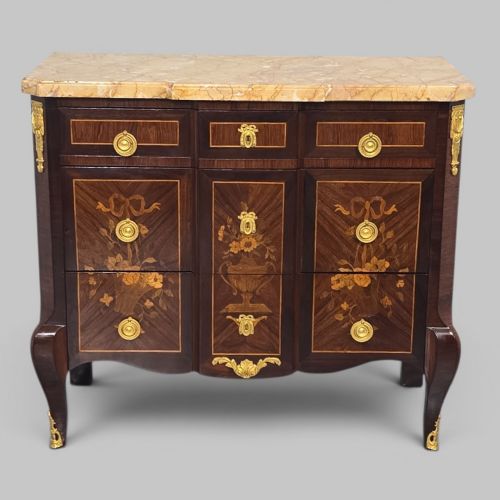
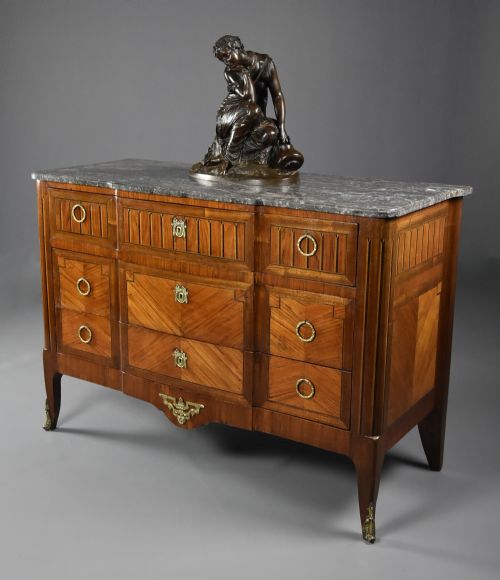
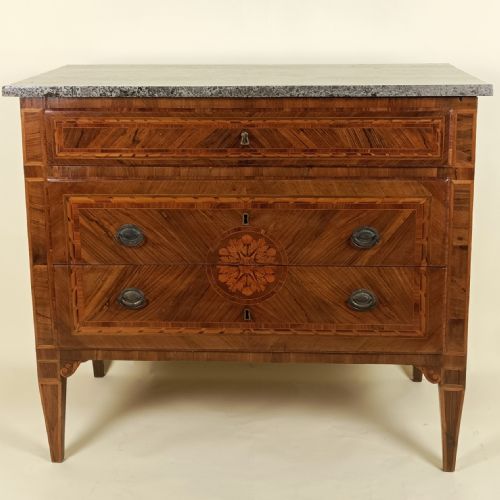
Craftsmen combine native and exotic timbers such as kingwood, tulipwood, walnut, and mahogany, frequently laying down intricate marquetry or parquetry patterns across the drawer fronts and sides.
Slabs of marble sit squarely on top of the wooden carcasses, accompanied by cast brass or ormolu mounts that accent corners, handles, and apron scrolls.
Periods represented stretch from the eighteenth century through the art deco era of the twentieth century.
Distinctions in Execution
Quality reveals itself in the precision of the marquetry inlay and the weight of the bronze or ormolu mounts fixed to the corners and handles. Superior examples display dense, well-figured timber veneers matched neatly across the drawer fronts.
The thickness and finish of the marble top, along with how snugly it seats into the wooden moulding, separate standard production from finer cabinet work.
The Brown Marble Chest Glossary
- Commode
- A low chest of drawers or cabinet originating in France. These pieces typically feature multiple drawers and sit on short legs.
- Ormolu
- Gilt bronze mounts applied to furniture for decoration. Artisans cast and chase these metal elements to accent corners and handles.
- Bombé
- A swelling or bulging curved profile found on the front and sides of case furniture. This silhouette requires skilled veneer work.
- Marquetry
- Decorative patterns formed by inserting pieces of contrasting veneer into a wooden background. Craftsmen use various tinted woods to build floral or geometric designs.
- Parquetry
- Geometric wood inlay laid out in repeating patterns such as squares or cubes. This technique creates structured surface decoration across drawer fronts.
Brown Marble Chest: Frequently Asked Questions
How do I clean the marble top?
Wipe the surface gently with a soft cloth dampened in warm water and mild soap.
Avoid acidic cleaners or abrasive pads that can etch or dull the polished stone finish.
Are these chests heavy to move?
The combination of solid timber frames and thick stone tops makes these pieces quite heavy.
Lifting the removable marble slab off the wooden base before shifting the furniture helps manage the weight.
What rooms suit a marble top chest?
Bedrooms and living spaces accommodate these cabinets well, offering surface space alongside drawer storage.
The stone top provides a durable landing area for lamps and decorative objects.
How do I identify the wood veneer?
Examine the grain patterns and colour variations across the flat surfaces of the chest.
Common species like kingwood, walnut, and mahogany display distinct tones ranging from deep browns to rich reddish hues.