










Brown Marble Base
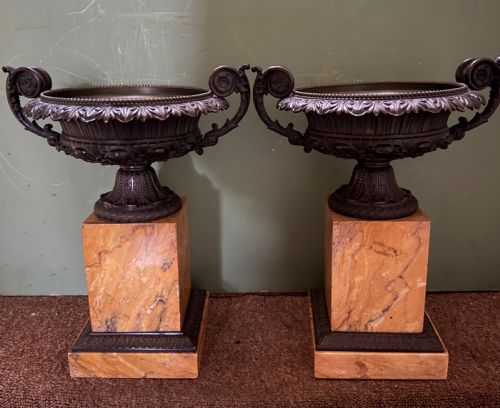
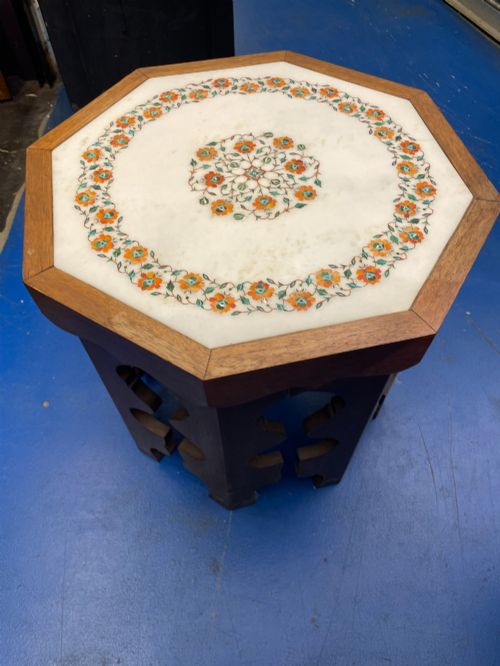
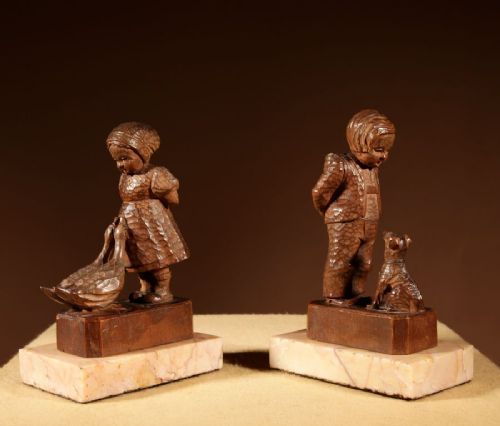
A brown marble base grounds sculptures, clocks, and tables from the nineteenth and early twentieth centuries, adding substantial weight and fine mineral colour to each piece.
Brown Marble Base
When you search for a brown marble base, you encounter a distinct assembly of decorative objects where solid stone provides a stable foundation for metal casting, wood carving, and horological works. The selection spans the nineteenth century through the Art Deco period of the 1920s and 1930s, shifting from classical Grand Tour souvenirs to stylised animalier and dancer figures.
The objects most frequently met on this page include cast bronze figures of humans and animals, architectural models, mantel clocks, and occasional tables with stone tops. Many items take the form of heavy pedestals or plinths directly supporting patinated bronze or spelter sculpture, while others utilise the stone as a structural surface for tables and plant stands.
How They Were Made
Makers formed the foundational plinths from quarried stone, cutting and polishing the mineral to create smooth, rectilinear blocks or stepped bases that contrast with organic cast metal forms. Bronze and spelter components were shaped via traditional foundry casting, employing patination techniques to achieve dark surface tones.
Cabinetmakers and bronze-workers combined wood such as mahogany, walnut, and burr elm with brass mounts and stone tops, securing mechanical assemblies and decorative mounts with threaded pins and hand-cut screws.
Brown Marble Base Retail Price Guide 2026
Typical asking prices for brown marble base among the pieces listed under this phrase on Sellingantiques today, from the lower quarter to the upper quarter. They describe what is for sale here now, not the wider market.
Listings combine bronze, brass, wood, and marble across nineteenth-century and Art Deco periods.
What Varies in Quality
The calibre of a piece rests heavily on the harmony between the upper sculpture or table top and the stone foundation beneath it. Superior items demonstrate precise geological selection in the marble, showing rich veining and uniform polish that complements the cast metal or carved wood above.
Artisanal execution in the metal chasing or wood carving distinguishes standard production from exceptional work. Greater depth of detail in the casting and tighter joints in composite assemblies separate the finest examples from simpler commercial outputs.
Bruno Zach·Pierre Collinet·R Varnier·Claude Michel Clodian·Henri Godet·Franz Bergman·Eugene Barillot·Eugene Emile Borga·Maurice Guiraud Riviere·Clovis Masson·Alajos Strobl·Louis Auguste Moreau·Alexandre Kelety·Carl Kauba·Xavier Raphanel·Emmanuel Villanis
The Brown Marble Base Glossary
- Animalier
- A nineteenth-century artistic focus on the realistic depiction of animals, particularly predators and prey. Sculptures of this type frequently utilise heavy stone plinths to ground dynamic figures of tigers, stags, and panthers.
- Spelter
- A zinc alloy utilised as an economical alternative to bronze for sculptural casting, often given a dark patination. Spelter figures are commonly mounted onto stone or composite bases.
- Grand Tour
- The traditional journey undertaken by nineteenth-century travellers through Europe collecting cultural artefacts. These souvenir bronzes and architectural models were routinely mounted on heavy mineral slabs.
- Guéridon
- A small, round occasional table supported by a central pillar, frequently topped with marble. Examples from the nineteenth century pair timber frames with stone surfaces.
Brown Marble Base: Frequently Asked Questions
What periods do these pieces come from?
The listings span the nineteenth century through the early decades of the twentieth century. This encompasses Regency, Victorian, and Art Deco eras.
Design sensibilities evolved from classical Grand Tour antiquities and naturalistic animal studies into stylised geometric forms by the 1920s and 1930s.
How do I care for a marble base?
Stone surfaces require gentle cleaning with a soft cloth and neutral soap to avoid dulling the natural polish. Harsh chemical cleaners strip the protective finish.
Keep wooden components and metal figures away from direct heat sources to prevent timber shrinkage and patination damage.
What is the difference between bronze and spelter?
Bronze is a durable copper alloy that accepts detailed chasing and rich patination. It represents the higher tier of sculptural material.
Spelter is a softer, zinc-based metal used as a cost-effective substitute, typically finished with a painted or metallic surface coating.
How were these objects originally used?
Sculptures and clocks served as prominent decorative ornaments on mantelpieces, desks, and credenzas in period interiors. Tables functioned as movable surfaces for tea or display.
Architectural models and small bronzes were often collected as educational or travel souvenirs from European journeys.