



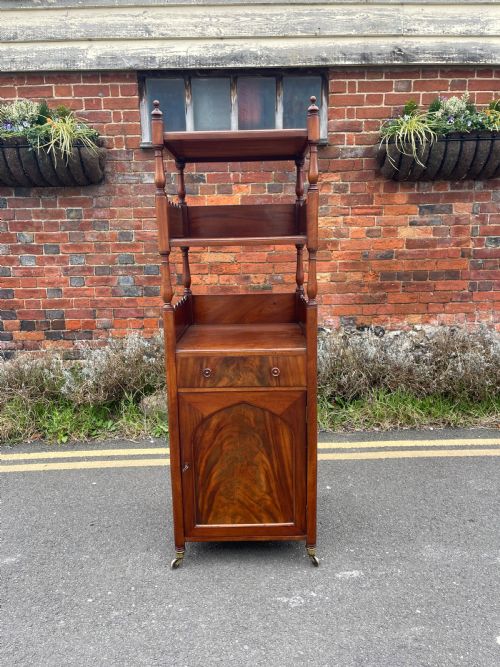


Brown Mahogany Whatnot
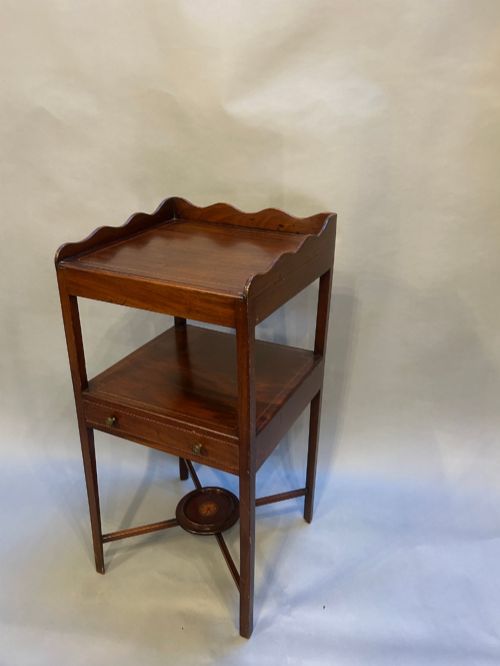
A brown mahogany whatnot is a multi-tiered display stand designed to hold books, ornaments or serving ware in period interiors.
Brown Mahogany Whatnot
A brown mahogany whatnot is a multi-tiered shelving unit or etagere designed for display and storage in traditional rooms. When searching for a brown mahogany whatnot, buyers encounter pieces spanning the Georgian, Regency, and Victorian periods.
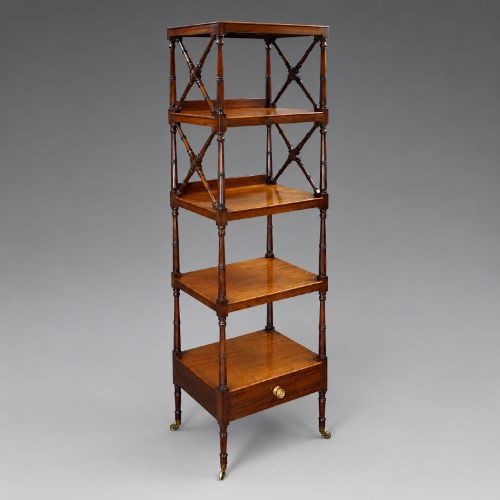
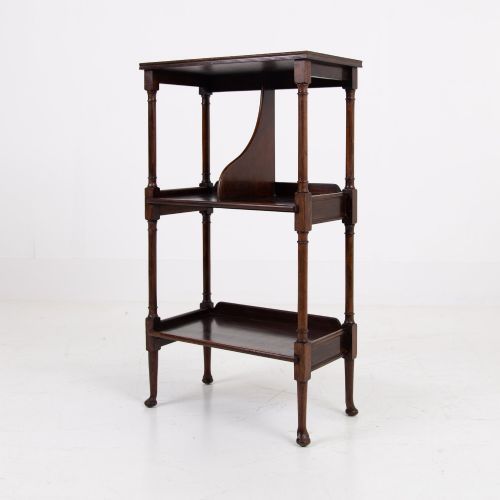
The selections on this page include three-tier and four-tier shelving units, corner whatnots, and designs combined with cupboards, drawers, or dumb waiter functions. These objects served utilitarian and decorative purposes in dining rooms, libraries, and drawing rooms.
Most examples originate from the nineteenth century, utilising rich brown mahogany timbers. Formats range from open shelves supported by turned columns to compact pieces fitted with mirrors and backboards.
How they were made
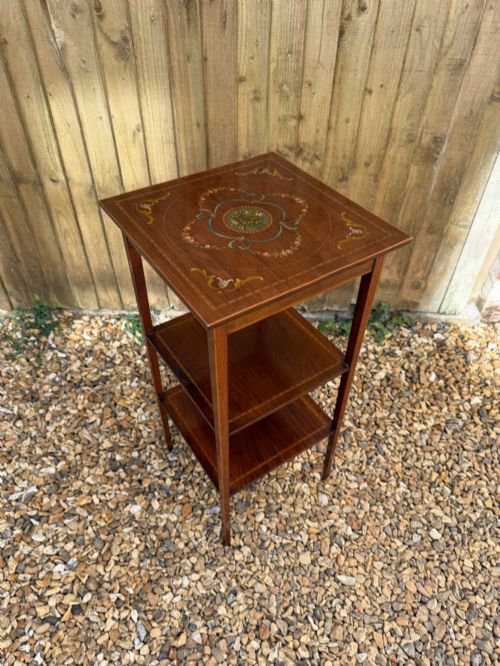
Cabinetmakers constructed these pieces primarily from solid mahogany and mahogany veneers over secondary timbers. Workshops utilised brass castors on the feet, glass inserts, marble tops, and delicate boxwood inlay to enhance the primary brown wood.
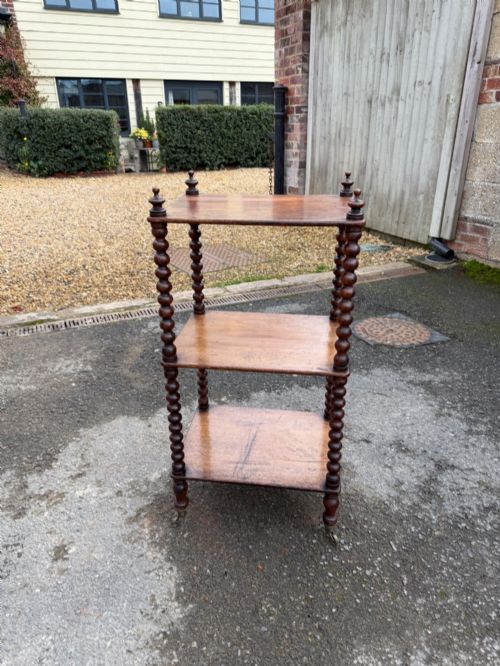
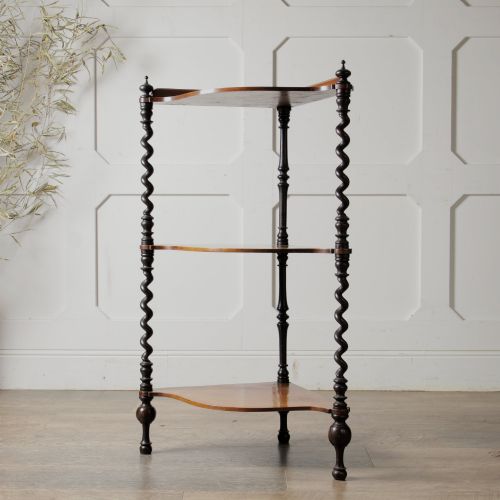
Structural support relied on turned uprights, barley twist columns, or A-frame supports to connect the individual tiers. Joinery techniques such as dovetailing secured the integrated drawers found on buffet and cupboard variants.
Brown Mahogany Whatnot Retail Price Guide 2026
Typical asking prices for brown mahogany whatnot among the pieces listed under this phrase on Sellingantiques today, from the lower quarter to the upper quarter. They describe what is for sale here now, not the wider market.
What varies in quality
Quality in a brown mahogany whatnot rests upon the selection of timber grain, the crispness of turned supports, and the structural proportion of the tiers. Pieces utilising dense, deeply figured mahogany demonstrate superior craftsmanship compared to plain or heavily faded surfaces.
Refined detailing such as boxwood stringing, original brass hardware, or integrated mirrors elevate a piece beyond standard utility furniture. The stability of the stacked tiers and the balance of the overall scale distinguish exceptional examples from simpler workshop output.
Gillows
The Brown Mahogany Whatnot Glossary
- Whatnot
- A piece of furniture consisting of a set of open shelves for displaying small objects. These tiered stands date principally from the Georgian and Victorian eras.
- Etagere
- A piece of furniture with a set of open shelves for displaying ornaments. The term is often used interchangeably with whatnot in nineteenth-century contexts.
- Dumb waiter
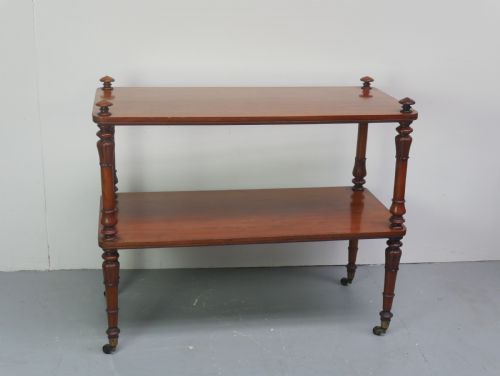
- A tiered serving piece or mobile whatnot used in dining rooms. Certain models incorporate revolving or stationary shelves for food and tableware.
- Canterbury
- A low stand with partitioned vertical sections for holding sheet music or books. Some Regency variants combine this function with open whatnot shelving.
- Barley twist
- A carved wooden column taking the form of a spiral twist. This decorative turning appears frequently on upright supports of Victorian pieces.
Brown Mahogany Whatnot: Frequently Asked Questions
What is a brown mahogany whatnot?
A brown mahogany whatnot is a tiered open shelving unit designed to display books, porcelain, and ornaments. These pieces originated in the eighteenth century and remained popular throughout the Victorian era.
They provide vertical storage without dominating a room, making them practical additions to traditional interiors. The open structure allows items to be viewed from multiple angles.
Where were whatnots used?
These versatile pieces functioned in drawing rooms, parlours, dining rooms, and libraries. Smaller versions fitted neatly into corners or served as end tables beside seating.
In dining spaces, larger buffet variants held serving dishes and silverware. In reception rooms, the shelves displayed decorative porcelain and collections.
How do I date a mahogany whatnot?
Dating relies on architectural styling, turning details, and integration with other furniture forms. Georgian and Regency examples typically feature cleaner classical lines, while Victorian pieces often incorporate barley twist columns or mirrors.
Secondary woods and construction methods inside drawers also help determine the period of manufacture. Earlier items generally display lighter framing proportions compared to robust late-nineteenth-century stands.
Are all whatnots open shelves?
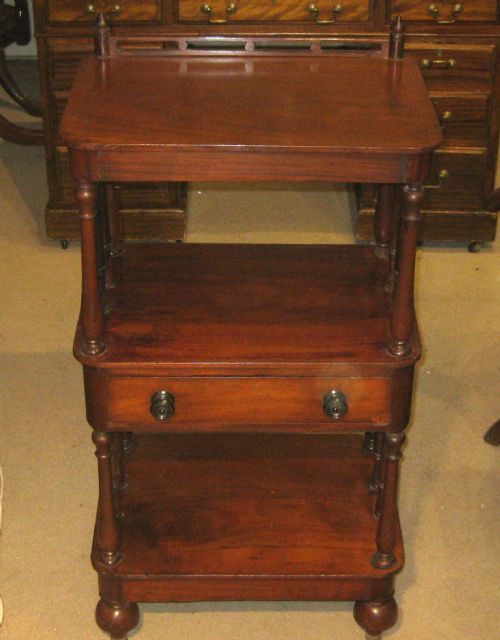
While the standard form relies entirely on open tiers, many examples incorporate enclosed storage. Some designs include a cupboard base or a single drawer beneath the shelves.
Variants such as dumb waiters and buffet cabinets combine open display space with enclosed compartments. This hybrid functionality served specific domestic tasks in period homes.