

Brown Mahogany Tray
A brown mahogany tray serves as a practical portable surface or a display piece, bringing rich timber tones and period craftsmanship into a room.
Brown Mahogany Tray
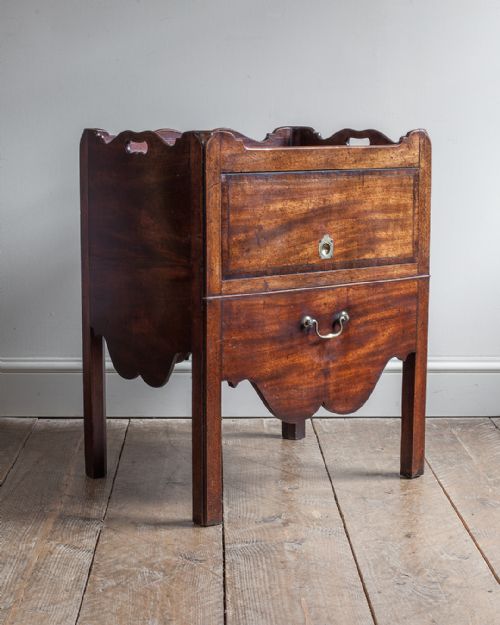
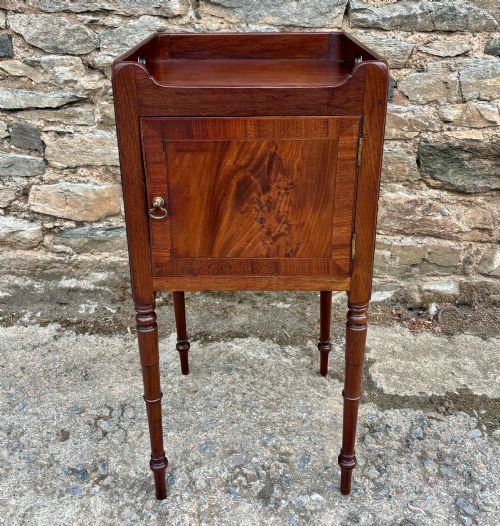
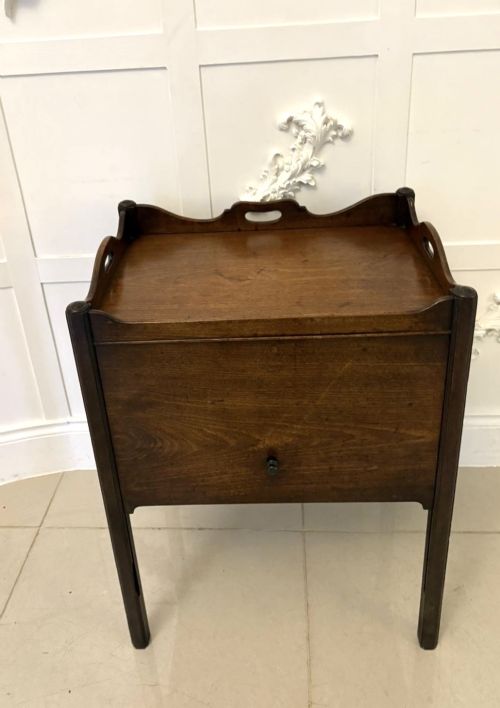
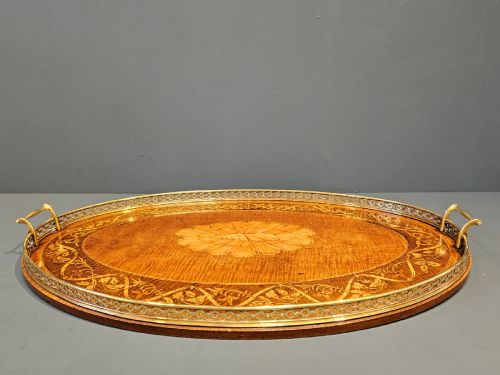
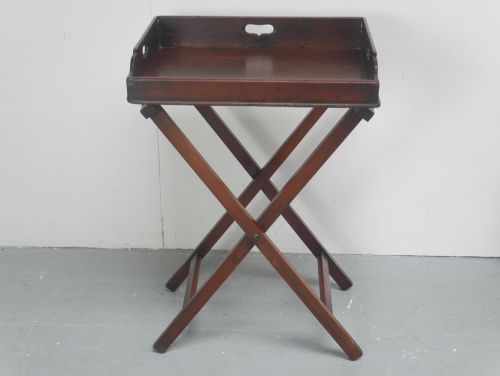
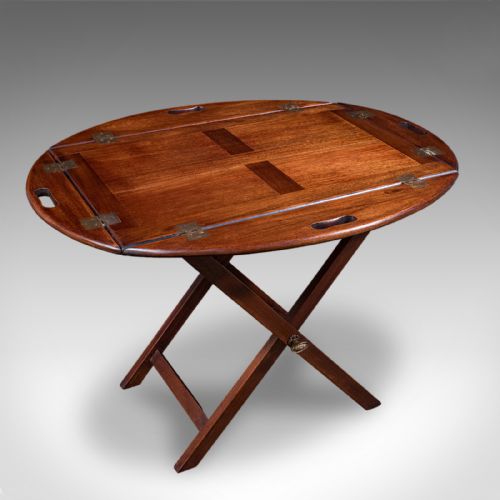
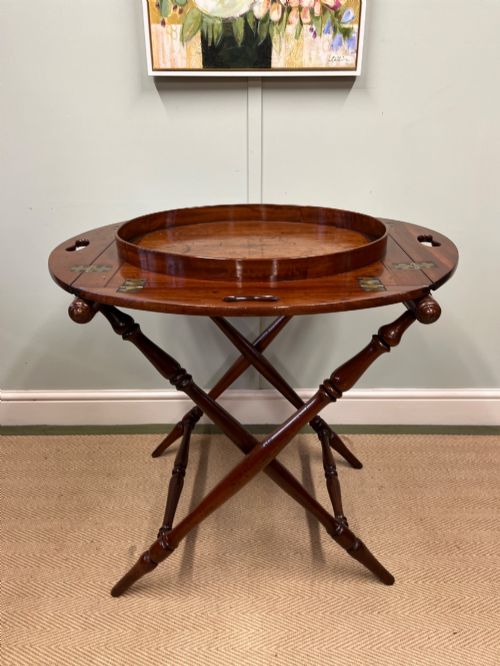
A brown mahogany tray is a traditional serving or display piece, often found in oval or rectangular forms with raised edges or carrying handles. These items appear across Georgian, Victorian, and Edwardian periods, frequently paired with folding stands to function as portable furniture.
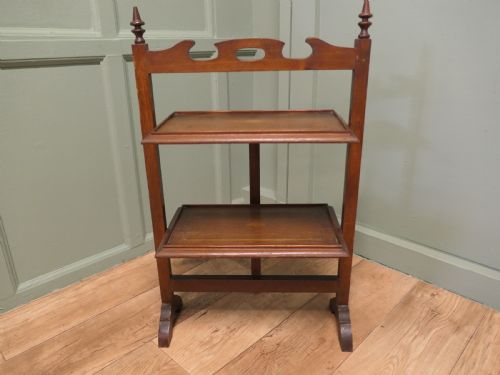
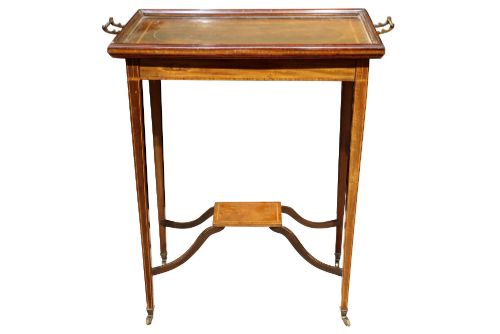
The version most commonly met on this page is the butler's tray, which lifts off a collapsible wooden frame for easy storage and service. Examples range from eighteenth-century George III pieces to later Edwardian revivals featuring inlaid details.
How they were made
Cabinetmakers constructed these pieces primarily from solid mahogany, utilising its dense grain and deep brown colour for both strength and appearance. Supporting frames and folding stands were built to match, providing stable bases for heavy serving use.
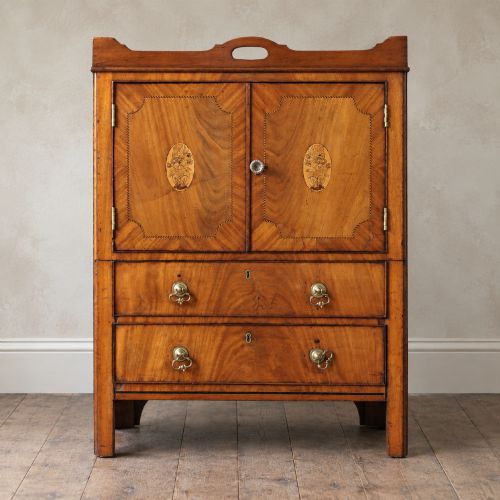
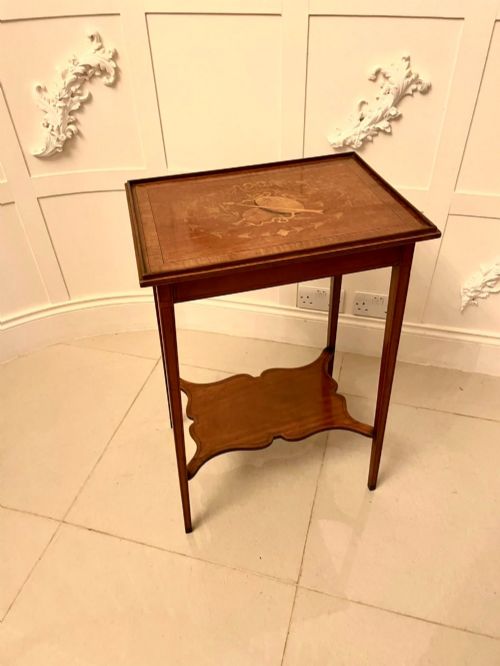
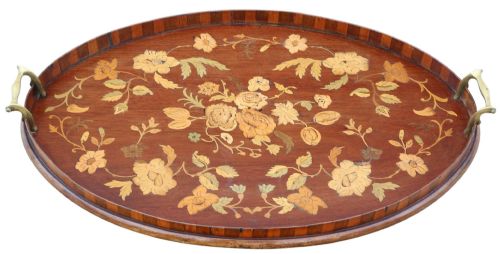
Many items incorporate contrasting timbers such as satinwood, boxwood, and brass hardware for handles and hinges. Marquetry and string inlay appear on later Edwardian and revival pieces to create geometric or floral patterns across the surface.
Some nineteenth-century tables served double duty as garden party furniture, folding away flat when the English weather intervened.
What varies in quality
The standard of craftsmanship shows in the crispness of the joinery around the gallery edges and the precision of any inlay work. Finer examples display carefully selected wood grain and well-fitted dovetails on the tray structures.
Age and period integrity separate standard production items from distinguished pieces, particularly where original stands accompany eighteenth-century trays. The depth of the hand-polished finish and the retention of original brass fittings also influence the character of each piece.
The Brown Mahogany Tray Glossary
- Gallery
- A raised wooden border surrounding the edge of a tray or tabletop to prevent items from sliding off. This feature is frequently pierced with handgrips.
- Inlay
- A decorative technique where contrasting woods like satinwood or boxwood are fitted into recessed channels within the mahogany surface. This creates geometric or botanical patterns.
- Tripod table
- A small freestanding table supported by a central pillar and three spreading legs. Several listings combine this form with a tray top.
- Marquetry
- Elaborate veneer work forming pictorial designs using various coloured timbers. It appears on Edwardian examples to enhance the visual appeal.
- George III
- The period spanning the reign of George III from seventeen sixty to eighteen twenty, noted for refined proportions and mahogany furniture. Pieces from this era command particular attention.
Brown Mahogany Tray: Frequently Asked Questions
What is a brown mahogany tray used for?
These items function primarily as serving accessories for drinks or food, moving easily from kitchen to living spaces when paired with a folding stand.
Collectors also place them on low tables or use them as decorative surfaces for books and glassware in traditional interiors.
How do I identify a Georgian tray?
Georgian pieces generally display restrained lines, substantial mahogany timber, and hand-cut joinery without modern mechanical fasteners. Their oval shapes often feature subtle cockbeading or understated gallery edges.
Checking the underside for period construction marks and timber shrinkage helps confirm the eighteenth-century origin.
Are the stands original to the trays?
Many surviving butler's trays retain their matching folding stands, especially those dating from the nineteenth and early twentieth centuries. Because trays and stands suffered separate wear, some combinations represent later marriages of compatible periods.
Examining the wood species, wear patterns, and finish across both pieces clarifies whether they were made together.
How do I care for mahogany wood?
Mahogany benefits from occasional application of quality beeswax to nourish the grain and maintain its warm brown lustre. Avoid placing these items near direct heat sources or in strong sunlight to prevent timber splitting.
Routine dusting with a soft cloth keeps the polished surface clean without risking moisture damage.
What is the difference between Georgian and Edwardian trays?
Georgian trays rely on simple proportions, solid mahogany construction, and understated elegance. They focus on timber figure rather than surface decoration.
Edwardian examples often incorporate satinwood inlay, marquetry patterns, and lighter framing reflecting the revival styles popular around nineteen hundred.