



Brown Mahogany Slope
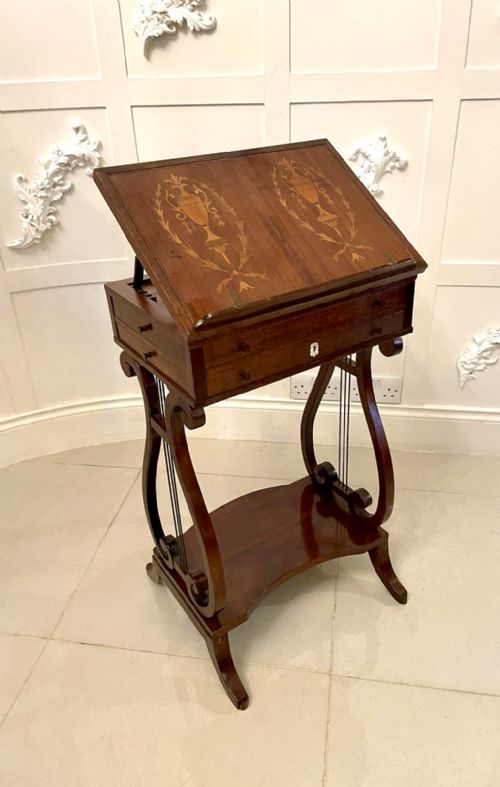
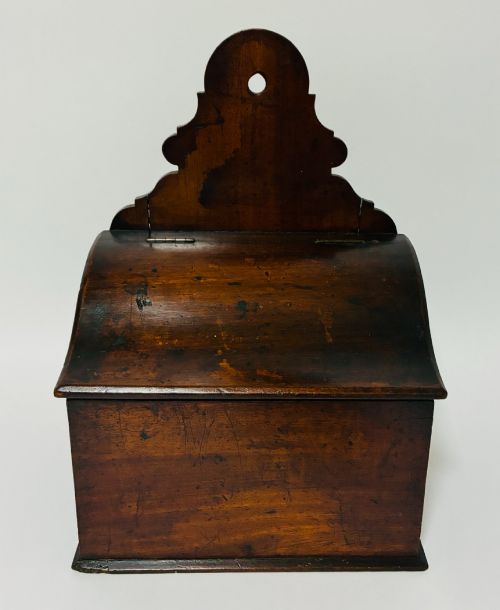
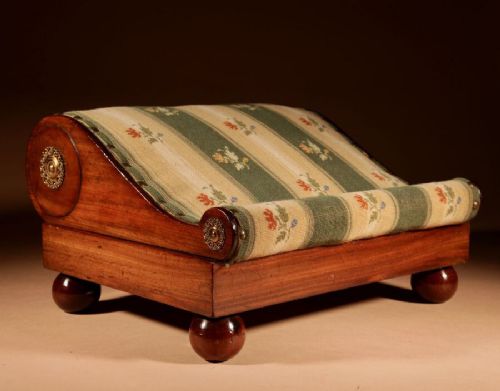
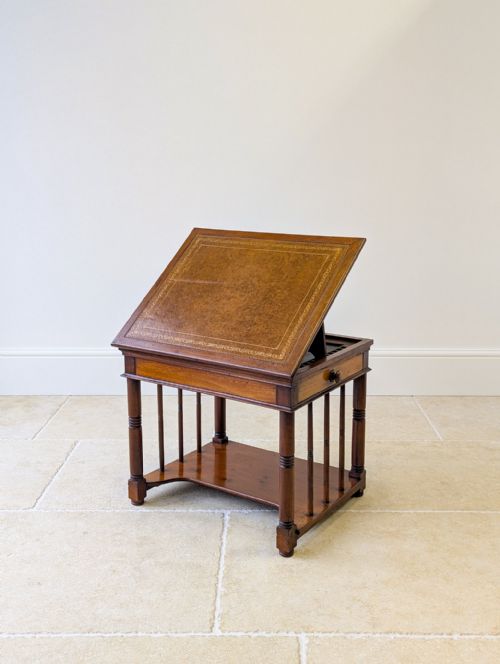
A brown mahogany slope brings solid weight and practical writing surfaces into a room, spanning bureau desks, campaign boxes, and Davenport styles.
Brown Mahogany Slope
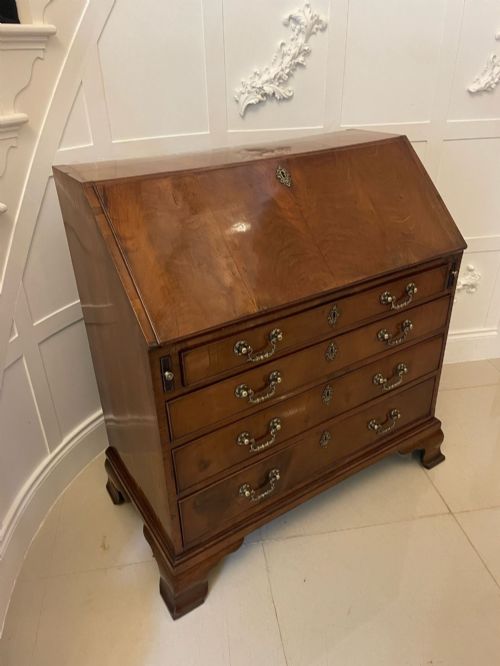
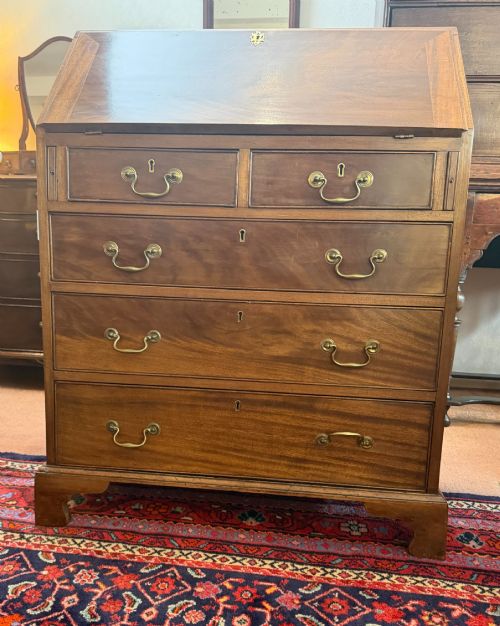
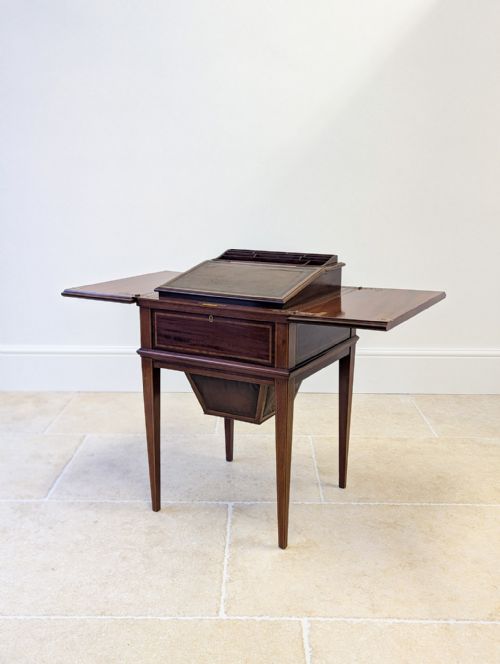
When you search for a brown mahogany slope, you encounter writing furniture and portable boxes shaped by centuries of use, from George III bureaux to Victorian Davenport desks and campaign boxes. These pieces combine a slanted writing surface with internal compartments, drawers, and secret spaces designed for correspondence and records.
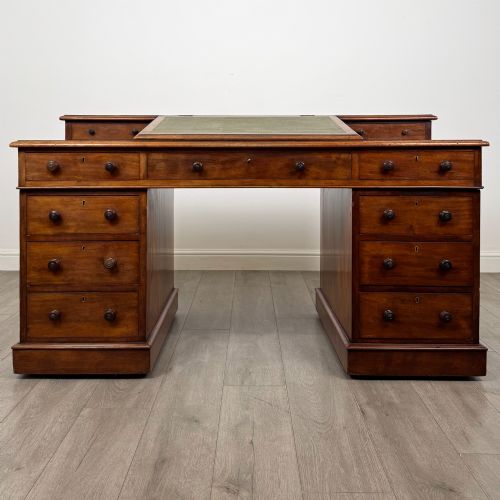
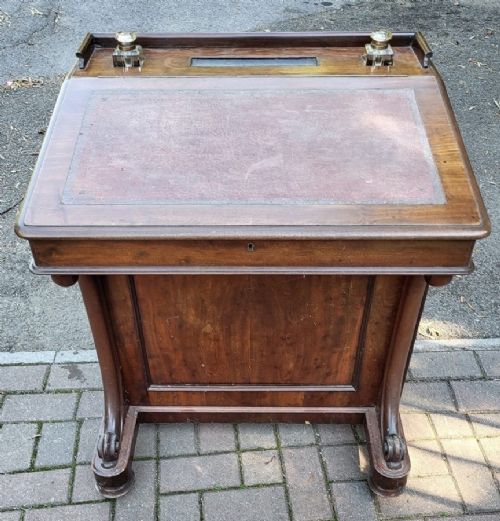
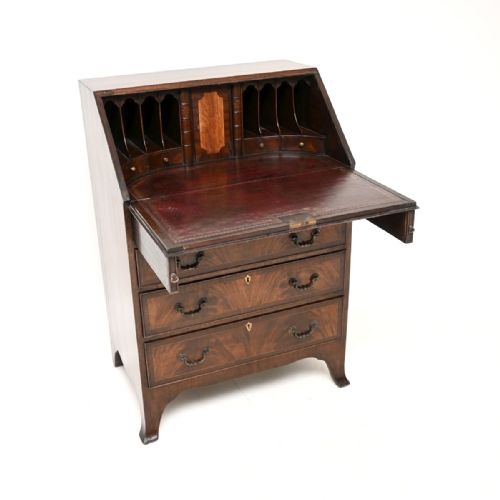
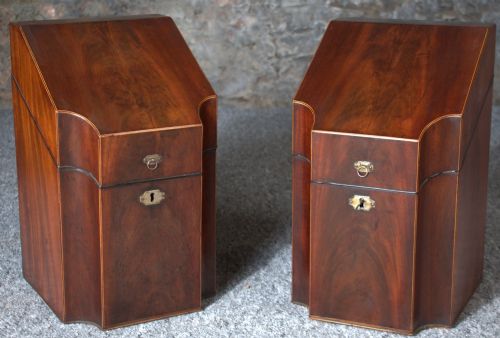
The versions most likely to meet you on this page are Georgian bureaux with fall fronts, Victorian Davenports with side drawers, and compact writing slope boxes featuring fitted interiors. Styles span the 18th century, the Victorian era, and the Edwardian period, often incorporating satinwood inlay, brass fittings, and leather inserts.
How they were made
Cabinet makers constructed these slopes using dense mahogany timber, frequently enhanced with contrasting boxwood and satinwood inlay to define drawer fronts and borders. Brass handles, hinges, and corner brackets provided structural reinforcement and secure closure for portable campaign pieces and heavy bureaux alike.
Internal compartments often featured secondary woods, secret drawers, and fitted sections for inkwells and pens, while writing surfaces were commonly lined with tooled leather. Joinery relied on precise dovetail construction for drawers and solid framing to withstand the daily pressure of writing.
Secret compartments require sliding hidden catches or releasing false drawer bottoms to reveal tucked-away letters.
What varies in quality
The distinction between standard examples and the finest pieces lies in the crispness of the cabinet work, the grain figure of the mahogany, and the integrity of the fitted interior. Superior pieces display finely figured timber, intact secret compartments, and original brass hardware that sit flush and tight against the wood.
Construction details such as hand-cut dovetails on drawer linings, well-matched secondary timbers, and subtle string inlay separate utilitarian items from pieces produced by notable workshops like Gillows. The balance of proportions and the preservation of original polish complete the measure of quality.
Gillows of Lancaster
The Brown Mahogany Slope Glossary
- Bureau
- A writing cabinet featuring a sloping hinged lid that drops down to form a desk surface above a set of drawers. It typically conceals pigeonholes and small drawers inside.
- Davenport
- A compact pedestal desk originating in the 19th century, featuring a sloped writing top with a hinged lid and a bank of drawers opening to one side.
- Campaign slope
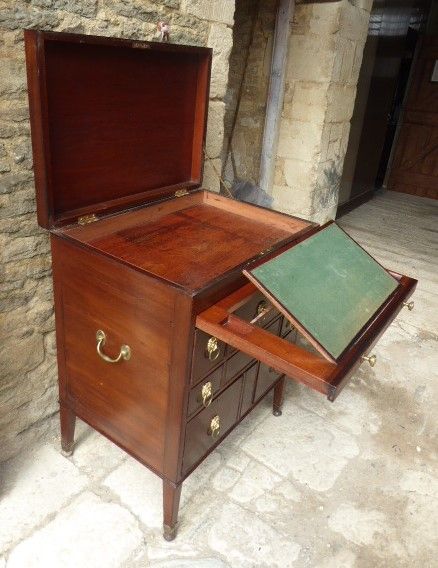
- A portable writing box designed for travel, constructed with recessed brass carrying handles and corner brasses to protect the mahogany exterior during transit.
- Fall front
- A hinged writing flap that drops from a vertical position to a horizontal or sloped plane, supported by sliding lopers or side arms when opened.
- Satinwood inlay
- A decorative technique using lighter, golden-toned satinwood veneers inserted into the darker mahogany surface to create contrasting geometric or floral borders.
Brown Mahogany Slope: Frequently Asked Questions
What is a brown mahogany slope?
A brown mahogany slope refers to writing furniture and portable boxes built with an angled lid designed for writing. These range from full-sized George III bureaux and Victorian pedestals to compact portable desk boxes.
They combine rich timber with internal stationery compartments, secret drawers, and leather writing surfaces, reflecting the writing habits of the 18th and 19th centuries.
How do I use a slope desk?
These pieces function as compact writing stations where the angled lid provides a comfortable surface for letter writing or paperwork. Opening the fall front or lifting the slope reveals pigeonholes and inkwell spaces for organising correspondence.
Many portable versions sit upon a table or lap, while larger bureau and Davenport forms remain stationary as primary room desks.
How do I date a mahogany bureau?
Dating relies on observing structural characteristics, timber choice, handle design, and secondary woods like oak or pine inside the drawers. Georgian pieces often show hand-cut dovetails and bracket feet, while Victorian examples introduce pedestal banks and bolder mouldings.
Inlay styles also shift over time, moving from simple string lines to elaborate Edwardian satinwood banding around 1900.
Where were campaign slopes used?
Campaign slopes accompanied officers and travellers during military campaigns and colonial voyages. Their robust mahogany construction, flush brass corners, and recessed handles protected the contents during rough transport.
Inside, secure locks and fitted compartments kept ink, paper, and letters stable on the move.