

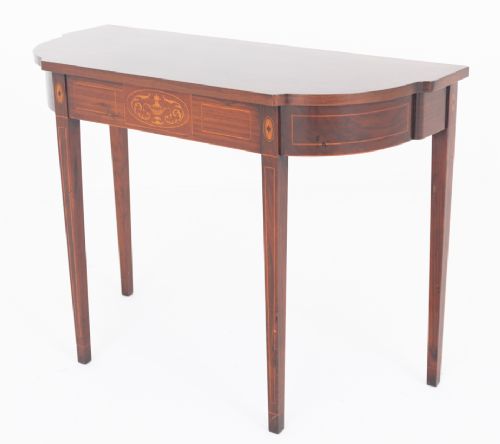
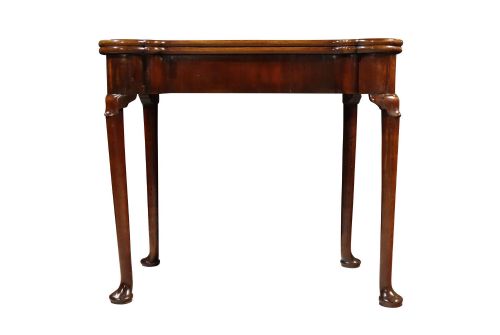


Brown Mahogany Foldover Table
A brown mahogany foldover table opens to reveal a felt-lined surface for card games or tea, combining domestic utility with cabinet-making skill.
Brown Mahogany Foldover Table
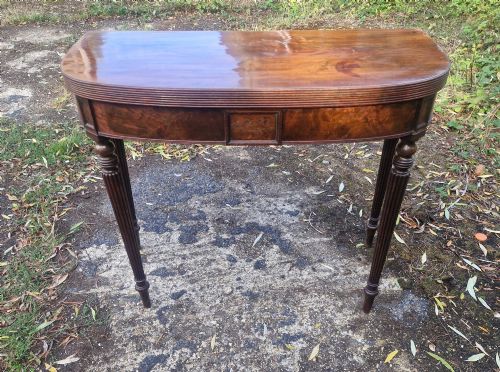
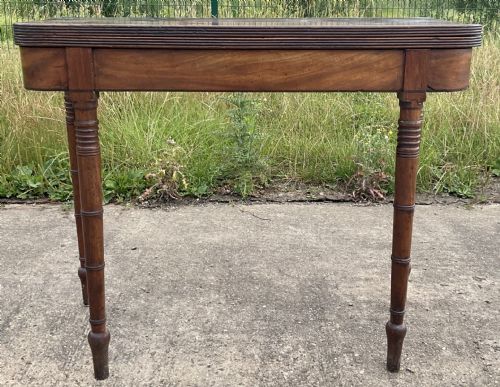
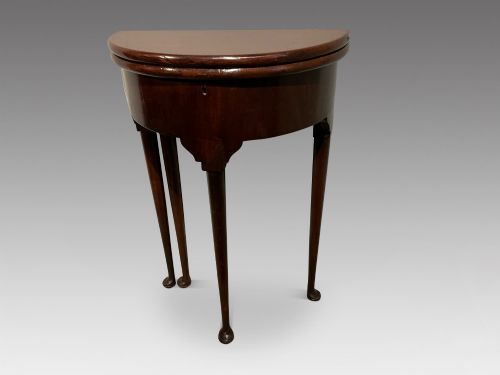
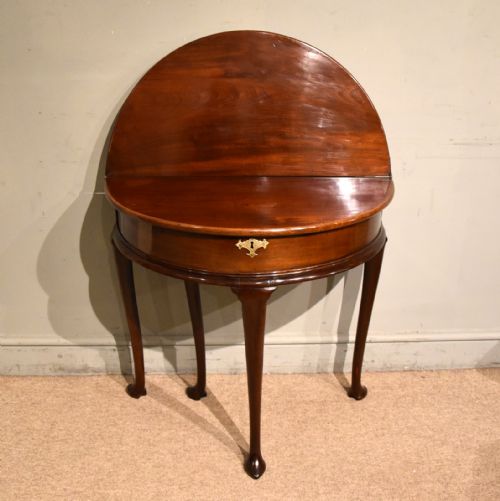
A brown mahogany foldover table appears primarily in Georgian and Regency forms, spanning the eighteenth and nineteenth centuries with later revival pieces into the twentieth century. These adaptable items function as tea tables, card tables, and console tables, shifting from closed side pieces to open surfaces supported by hinged tops.
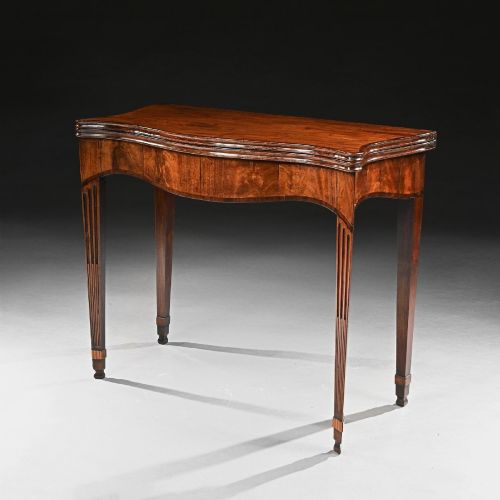
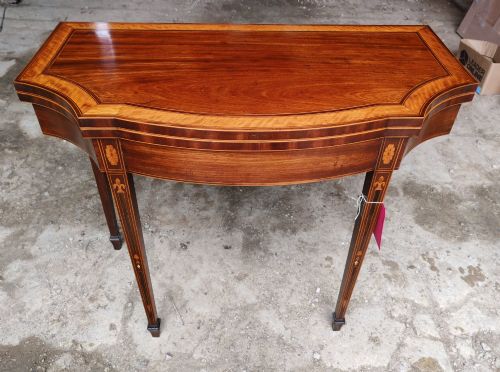
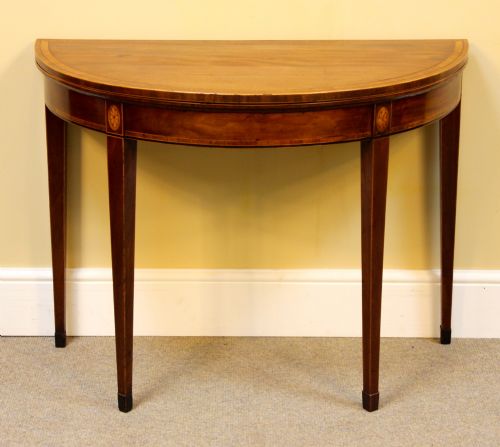
The evidence shows many examples taking a D-shape or demi-lune profile, alongside rectangular serpentine and concertina action formats designed for formal drawing rooms. Buyers most frequently encounter nineteenth-century Regency pieces or eighteenth-century George III items utilising rich timber grains.
Materials and Construction
Cabinet-makers constructed these tables using solid mahogany and timber veneers, frequently incorporating contrasting details such as satinwood, boxwood inlay, and ebony stringing. Brass components appear in hinges, castors, and swing-leg mountings that support the pivoting leaves.
Structural engineering focused on stable folding mechanisms, including concertina actions that expand all four rails equally and single swing legs that pivot out to bear the weight of the opened top.
Listings feature periods from the 18th century through to the 1930s, highlighting mahogany alongside satinwood, boxwood, and brass.
Distinctions in Execution
Quality rests in the depth of timber figure, patination, and the crispness of inlaid borders such as satinwood and boxwood. Superior examples display thoughtful grain matching across the foldover leaves so the pattern flows uninterrupted when open.
Constructional integrity defines the upper tier, seen in smooth concertina actions, tight joints, and original brass hardware rather than later replacements. The sophistication of leg turning, carved drapery, or lyre supports also separates standard workshop output from exceptional cabinet work.
Gillows·Giles Grendey
The Brown Mahogany Foldover Table Glossary
- Concertina action
- An expanding frame mechanism that allows a card table to open on all four sides symmetrically, maintaining stability without a swinging rear leg. This method requires complex joinery hidden within the rail.
- Demi-lune
- A half-moon shape used for side and card tables designed to sit flat against a wall when closed. The straight edge contains the hinge for the folding leaf.
- Patination
- The surface sheen and colour acquired by wood over decades of handling, polishing, and exposure to light. Good patination reveals warmth and depth in the mahogany grain.
- Boxwood inlay
- Narrow strips of pale boxwood embedded into darker mahogany surfaces to create geometric borders or stringing lines. It provides sharp linear contrast against the deep brown timber.
- Serpentine
- A curved edge profile that undulates with a convex centre flanked by concave curves. This shaping demands precise hand-sawing and planing on solid mahogany.
Brown Mahogany Foldover Table: Frequently Asked Questions
How do I use a foldover table?
These tables operate by lifting and pivoting the top leaf ninety degrees over a hinged wooden gate leg or an expanding concertina frame. The opened surface provides a stable platform originally intended for tea service or card playing.
When closed, the item functions as a slim console or side table against a wall. This dual purpose made them central pieces in historic drawing rooms and parlours.
What is the difference between a tea and card table?
Tea tables typically feature plain wooden interiors designed to hold porcelain vessels and silverware safely. Card tables often incorporate lined playing surfaces, dished gaming wells, or corners shaped for candlesticks.
Externally the forms look similar, but opening the top leaf reveals the specific functional intention of the original maker. Both types utilise the same folding top mechanisms.
How do I date a mahogany table?
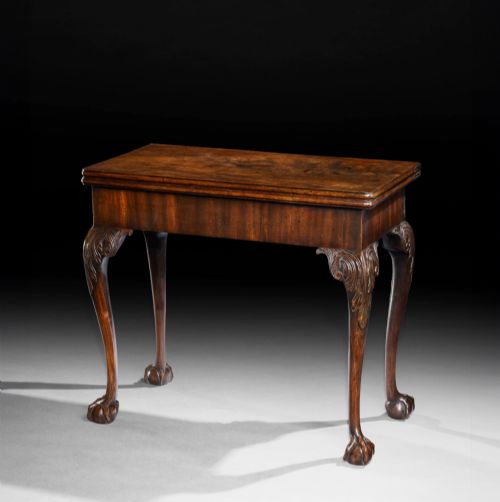
Dating relies on stylistic clues like leg design, timber choice, and inlay techniques, moving from heavy George II cabriole legs to refined Regency reeded supports and later Sheraton revival details. Eighteenth-century pieces often display superior timber figure and hand-cut joinery.
Nineteenth-century examples frequently show standardised brass castors and machine-sawn elements. Comparing the construction methods inside the frame clarifies the period.
How do I care for antique mahogany?
Protect the wood by keeping it away from direct sunlight and maintaining stable indoor humidity to prevent veneer lifting or timber splitting. Regular dusting with a dry cloth preserves the finish without chemical buildup.
Avoid placing damp items directly onto the polished surface. Applying natural wax periodically maintains the historic sheen of the mahogany.