
Brown Mahogany Fireside Chair
A brown mahogany fireside chair brings deep wood tones and robust comfort to a room, offering a seat shaped for warmth and quiet hours by the hearth.
Brown Mahogany Fireside Chair
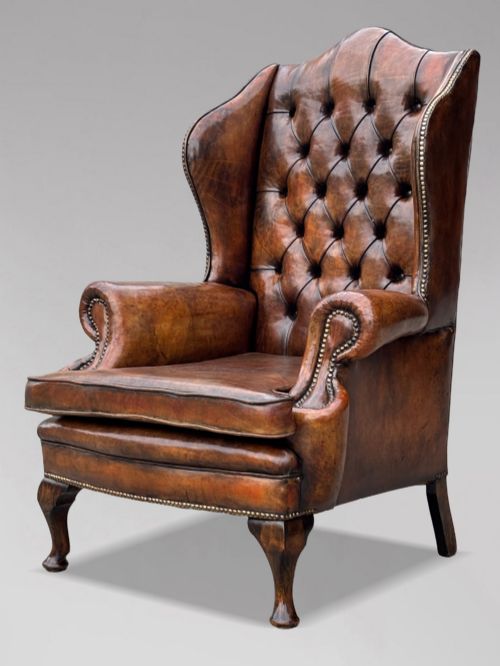
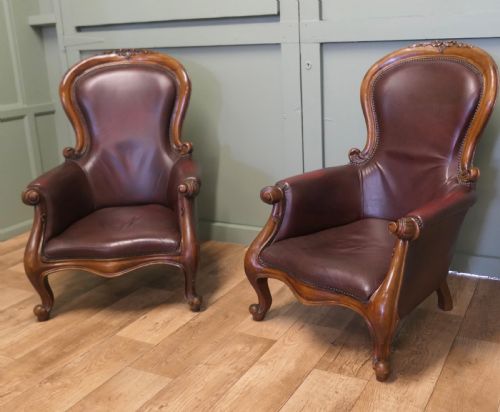
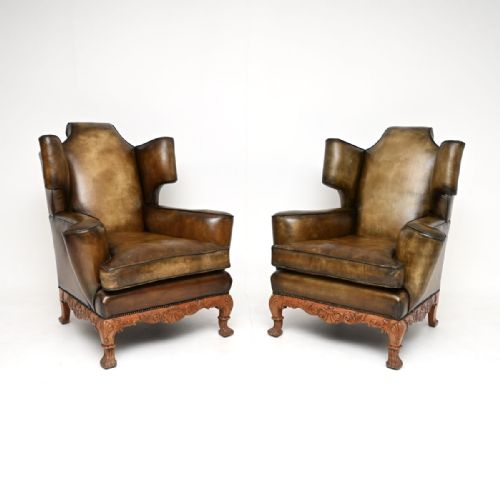
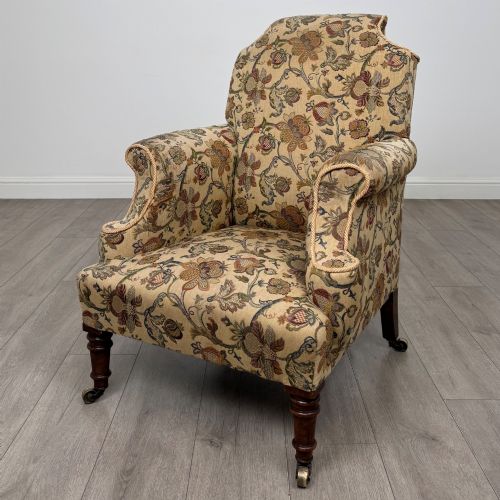
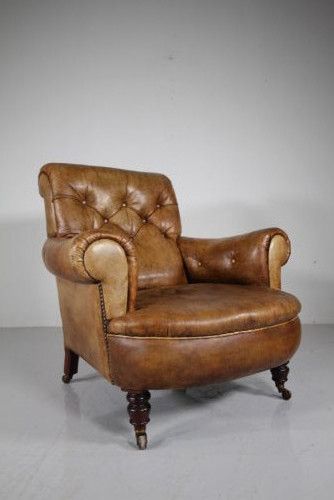
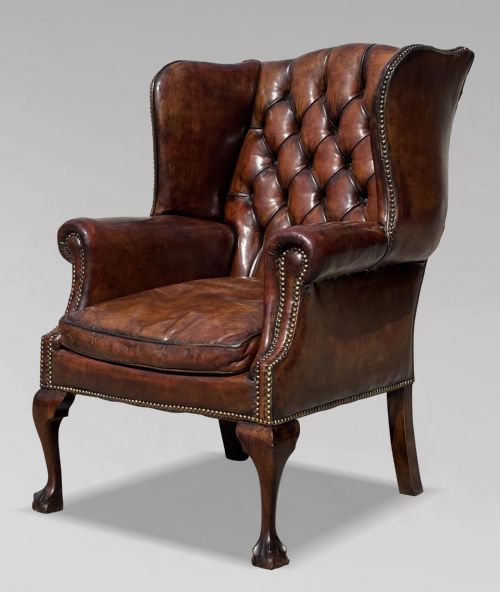
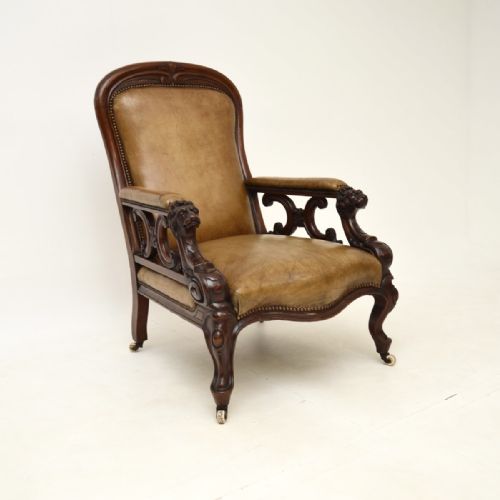
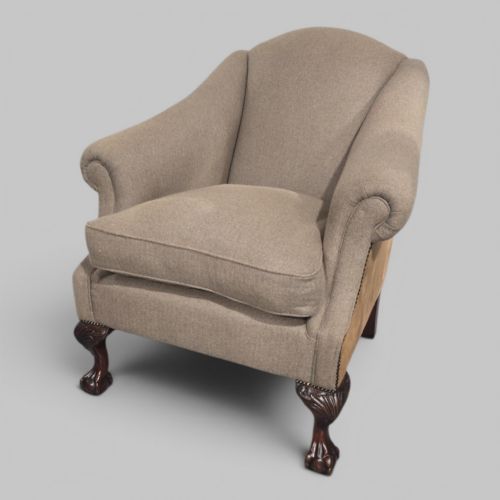
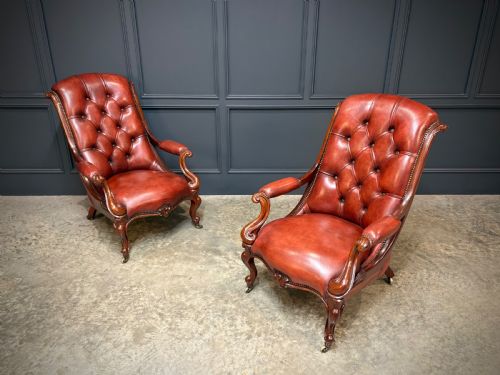
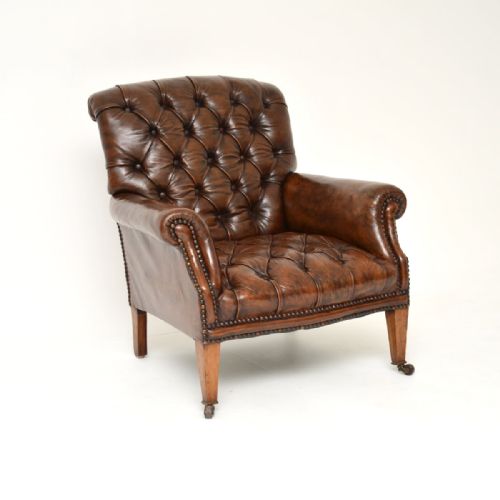
A brown mahogany fireside chair encompasses sturdy wooden seating designed for domestic comfort, appearing across Georgian, Victorian and revival periods in forms such as wingbacks, club chairs and spoon backs. These seats combine dark timber frames with upholstered pads, leather covers or buttoned hide panels intended to withstand daily use near a hearth.
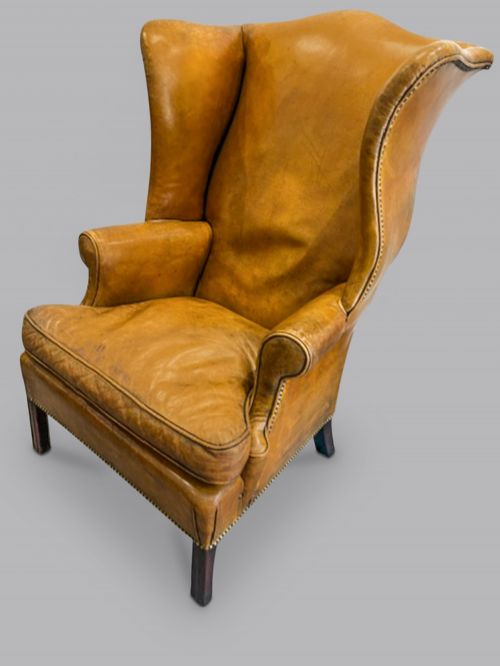
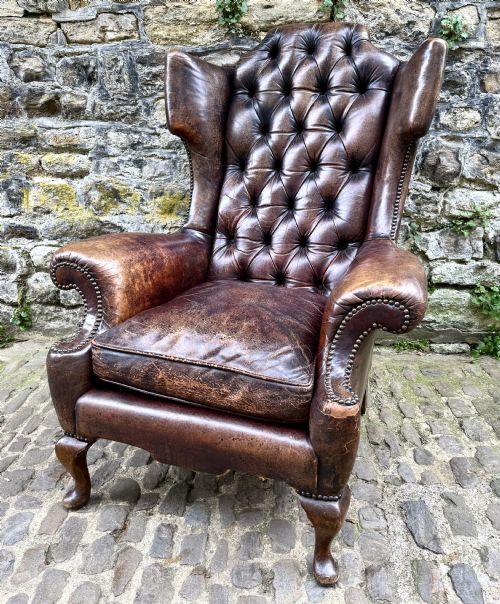
The version most commonly met on this page is the nineteenth-century leather wing armchair or library chair, often framed in solid mahogany with brass detailing. Such pieces reflect country house traditions and the stylistic revivals of later decades, retaining upright backs and generous proportions.
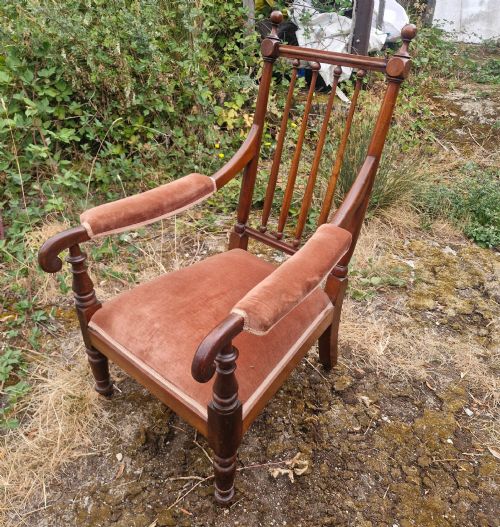
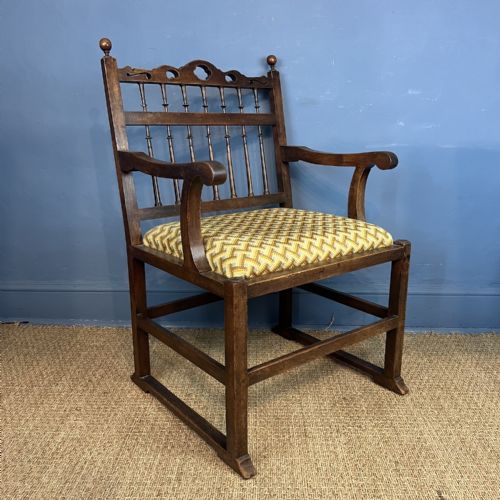
Makers and workshops across Britain produced these chairs using dense hardwood, shaping arms and legs to support relaxed postures. Variations span high-backed barrel forms, low nursing seats and spindle-backed rocking designs built for sitting close to an open fire.
Materials and construction methods
Construction relies heavily on dense mahogany timber for frames, legs and structural supports, frequently paired with supple leather upholstery, horsehair stuffing and brass tacks. Woodworkers joined components using mortise and tenon techniques to ensure stability under heavy daily loads.
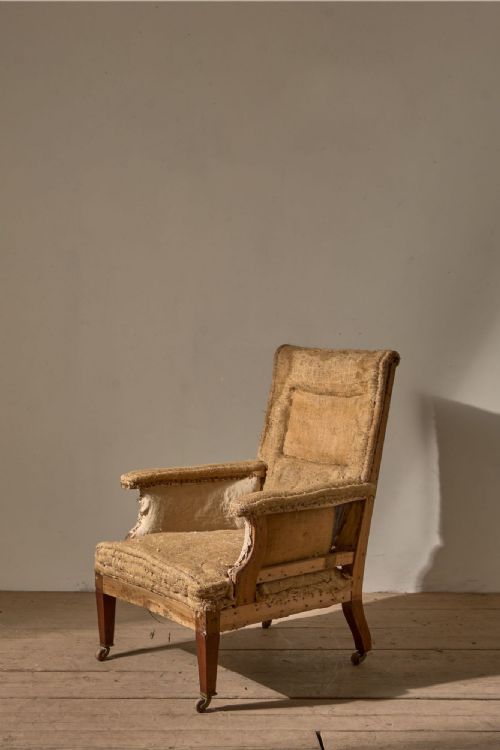
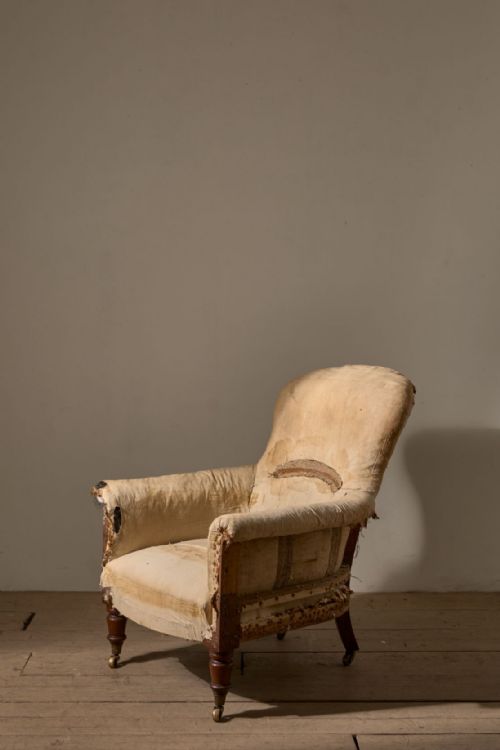
Upholstery methods involve tensioned hessian webbing, spring systems in later examples and deep buttoning secured through thick padding. Leather covers are often hand-dyed or finished with wax to develop a rich surface patina over generations of use.
Available chair forms include armchairs, salon chairs, side chairs, rocking chairs, fireside chairs and nursing chairs.
Distinctions in quality and finish
Quality rests in the density and grain figure of the mahogany frame, the integrity of the joinery and the depth of hand-carved detailing on legs and arms. Superior examples exhibit tightly secured joints without structural movement and retain substantial timber substance rather than thin veneers.
The treatment of the leather and upholstery dictates the tactile appeal, where vegetable-tanned hides with natural distressing and careful hand-stitching outlast machine-finished alternatives. Original brass hardware and well-preserved internal stuffing elevate a piece far above utilitarian replacements.
Wheeler Of Arncroach
The Brown Mahogany Fireside Chair Glossary
- Mahogany
- A durable tropical hardwood known for its reddish-brown colour and fine grain. It provides exceptional structural strength for chair frames and legs.
- Wingback
- An armchair featuring protective side panels attached to the arms and back. This design originally deflected drafts from open fires.
- Buttoning
- An upholstery technique where twine pulls through padding to create recessed tufts. This secures internal stuffing and forms a geometric pattern.
- Spoon back
- A chair back shaped in a concave oval resembling the bowl of a spoon. This form offers ergonomic support suited to nineteenth-century saloon and nursing seats.
- Hessian
- A coarse woven fabric utilised as a foundational support layer beneath upholstery padding. It holds horsehair and stuffing firmly within the frame.
Brown Mahogany Fireside Chair: Frequently Asked Questions
What defines a brown mahogany fireside chair?
These seats feature solid mahogany wooden frames combined with upholstered leather, fabric or buttoned panels designed for comfortable seating near a hearth. They span Georgian, Victorian and revival periods.
Their forms range from high wingbacks to low rocking chairs, all sharing a sturdy construction intended to withstand daily domestic use.
How do I identify a Georgian piece?
Georgian chairs display restrained proportions, classical carving traditions and structural elements dating from the eighteenth century. They frequently employ unadorned mahogany frames and traditional joinery.
Later revivals mimic these traits, but genuine eighteenth-century examples exhibit authentic wear patterns and period-specific framing techniques.
Why choose leather upholstery?
Leather provides a durable, wipe-clean surface that develops a rich patina over decades of handling and exposure to hearthside warmth. It ages gracefully alongside the mahogany frame.
Upholstered hide also offers firm support while resisting the wear typical of woven textiles near an open fireplace.
Where were these chairs used?
Houses across Britain placed these seats in libraries, drawing rooms and private studies where warmth from a fire mattered most. Their substantial frames suited formal reception spaces and quiet reading corners.
Country houses and urban residences alike utilised different forms, from grand wing chairs to intimate gossip seats.
How should I care for the timber?
Maintenance requires occasional application of quality wax to nourish the mahogany and preserve its deep brown tone. Avoid placing the chair directly beside intense heat sources to prevent wood splitting.
Gentle dusting with a soft cloth keeps the grain visible without harming the historic finish.