

Brown Leather Office Desk
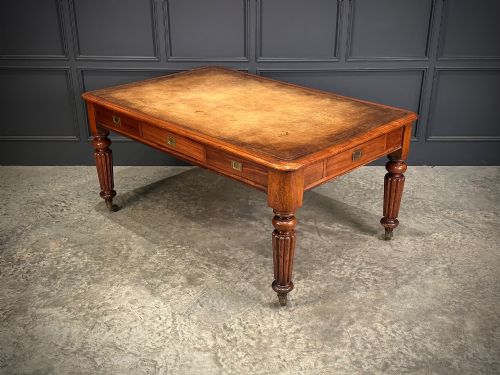
A brown leather office desk brings solid timber and a fitted writing surface together for daily work.
Brown Leather Office Desk
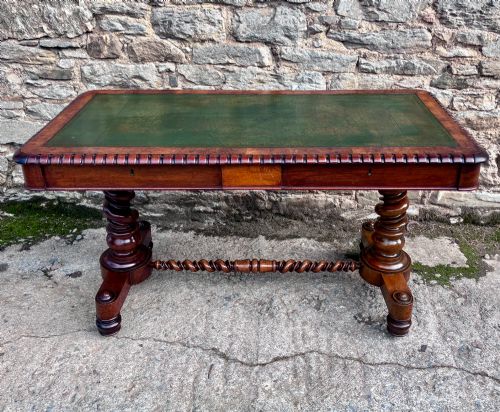
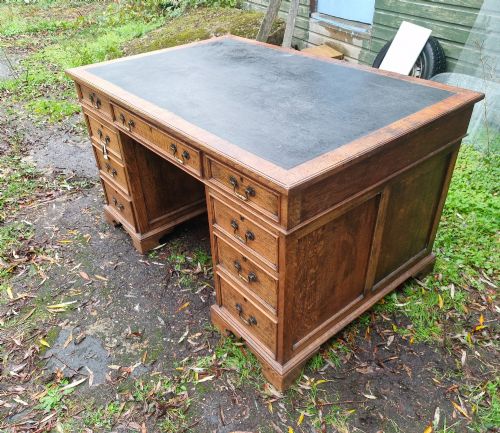
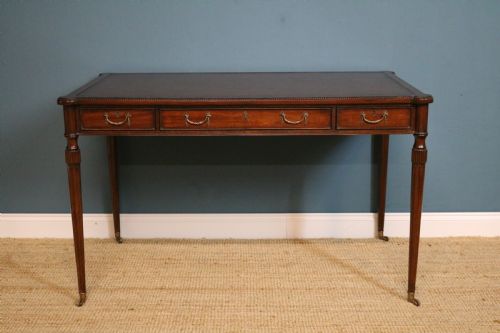
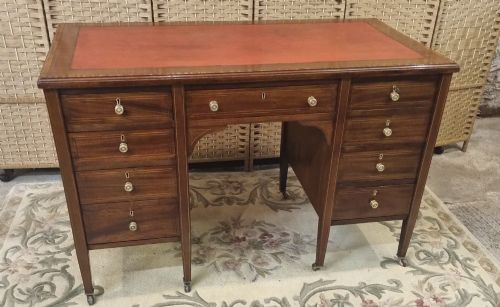
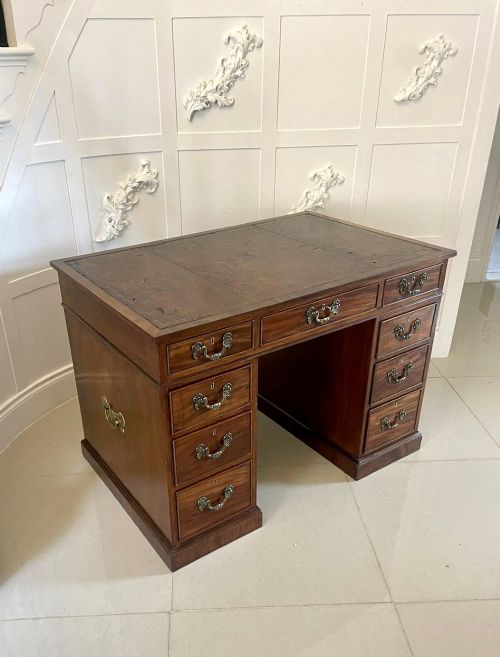
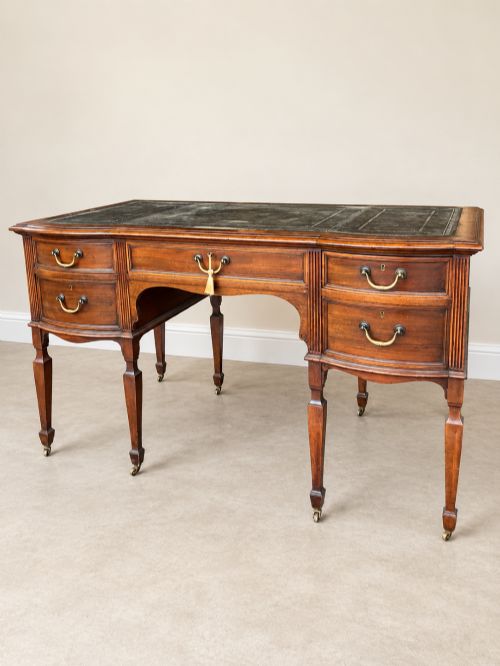
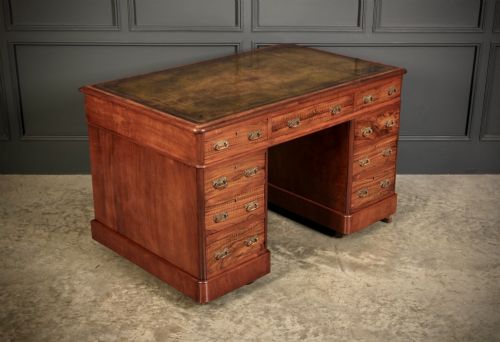
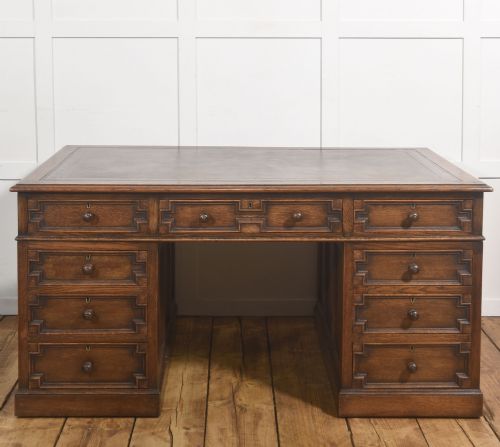
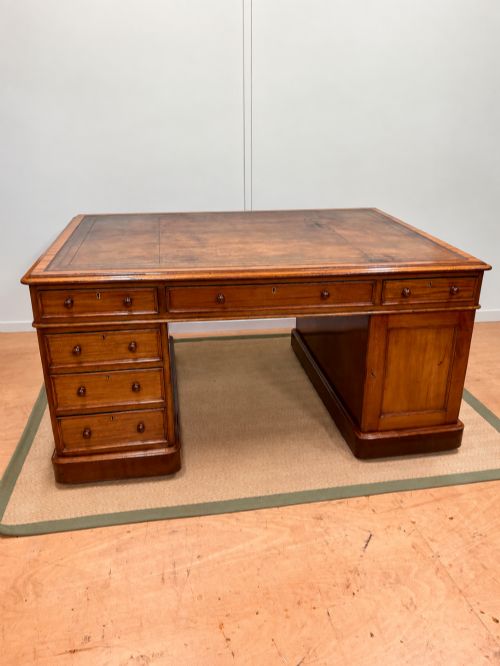
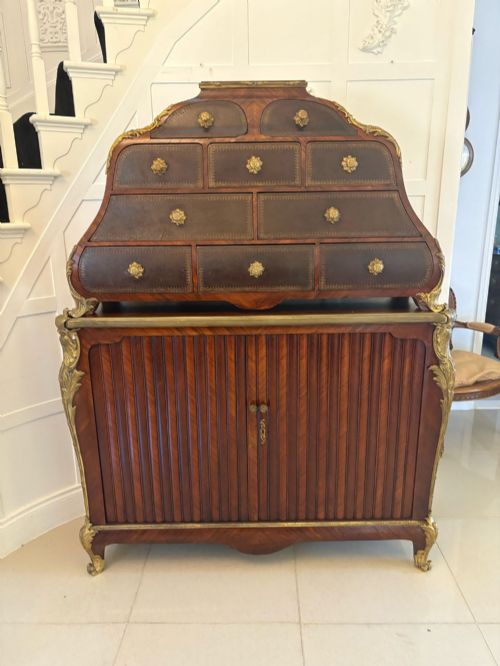
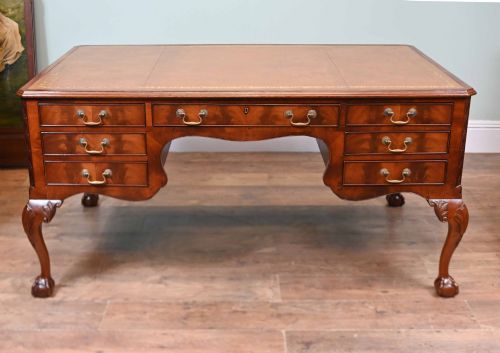
A brown leather office desk encompasses pedestal desks, partners desks, writing tables, and partners writing surfaces produced across the nineteenth and early twentieth centuries. These pieces appear in styles ranging from Victorian and Edwardian to Georgian Revival, William IV, Regency, and French Chateau.
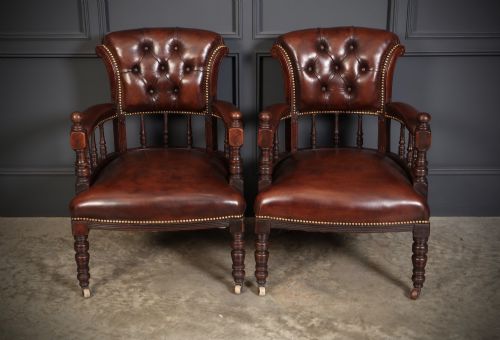
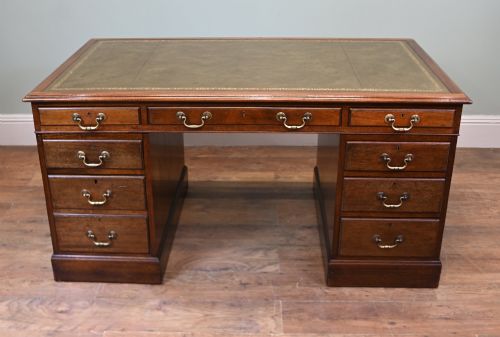
Pedestal desks with banks of drawers flanking a central kneehole dominate the selection, alongside larger partners desks designed for two users facing each other. Writing tables and compact Davenport models also surface frequently, often paired with matching swivel armchairs and library chairs.
Materials span mahogany, walnut, burr walnut, oak, kingwood, and ormolu mounts, complemented by tooled leather writing surfaces. Pieces date from the early nineteenth century through to the Art Deco period of nineteen thirty.
Materials and Construction
Cabinet makers utilised dense hardwoods including mahogany, walnut, and oak to build the structural carcases, drawer linings, and panelled pedestals. Burr walnut and kingwood veneers provided decorative figuration on drawer fronts and top surfaces.
Writing surfaces utilised sheets of leather inset into the timber top, frequently finished with blind or gilt tooling along the margins. Brass handles, castors, and ormolu mounts completed the hardware of the period.
Brown Leather Office Desk Retail Price Guide 2026
Typical asking prices for brown leather office desk among the pieces listed under this phrase on Sellingantiques today, from the lower quarter to the upper quarter. They describe what is for sale here now, not the wider market.
Listings feature pedestal desks, partners desks, and writing tables constructed from mahogany, walnut, and oak across Victorian and Edwardian periods.
The Distinction in Craft
Quality rests upon the selection of timber figures and the precision of the joinery within the drawer construction, such as hand-cut dovetails. Superior examples maintain original handles, fitted interiors, and patinated leather surfaces without modern intervention.
The architectural presence of carved detailing, secondary timbers, and stable pedestal alignment separate standard utilitarian office furniture from cabinet work produced by notable makers.
Gillows·Bruce James Talbert·Howard and Sons·Trollope and Sons·Charles Andrea Nosotti
The Brown Leather Office Desk Glossary
- Partners Desk
- A large pedestal desk designed with drawers and cupboards on both sides so two people can work facing each other.
- Pedestal Desk
- A form comprising two freestanding drawer units supporting a single top with a central kneehole space.
- Ormolu
- Gilded bronze used for decorative mounts and handles, frequently seen on French furniture styles.
- Davenport
- A compact writing desk featuring a sloping lid above a set of side drawers.
Brown Leather Office Desk: Frequently Asked Questions
What is a partners desk?
A partners desk provides workspace on both sides, featuring matching drawers and cupboards facing outward in opposite directions.
These large pieces were originally built for offices where two clerks or business partners shared a single table.
How do I care for the leather top?
Leather writing surfaces require gentle cleaning with a damp cloth and occasional treatment with appropriate balms to prevent cracking.
Avoiding direct sunlight and excessive heat preserves the gilt tooling and suppleness of the material.
Are swivel chairs original to these desks?
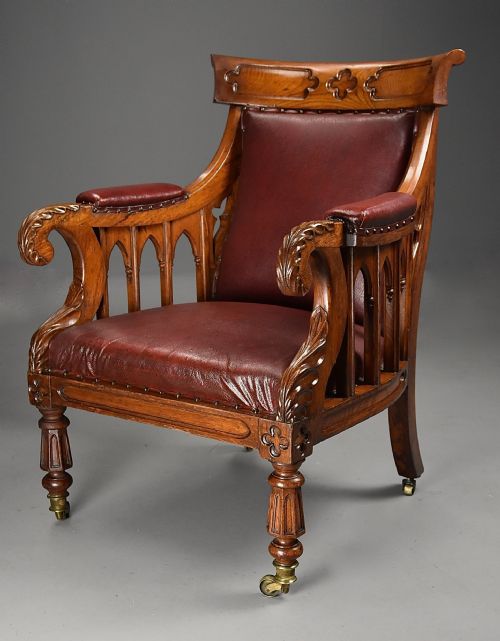
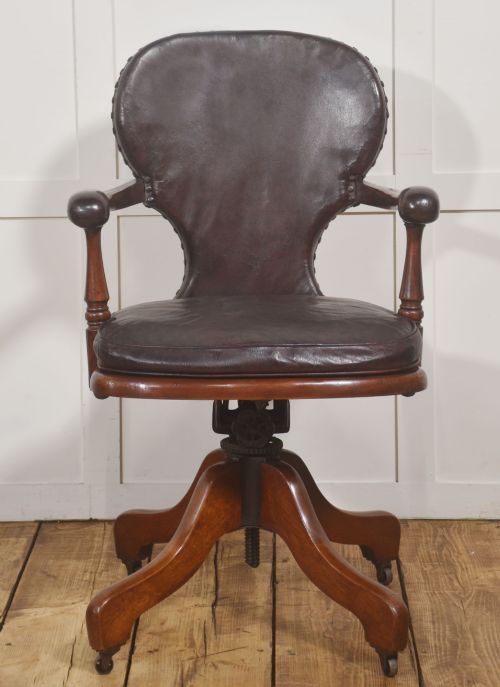
Many desks were paired with revolving library chairs or rise and fall swivel seats featuring timber frames and leather upholstery.
Desk chairs utilised mechanisms from the nineteenth and early twentieth centuries to allow movement for the user.
How do I distinguish Victorian from Edwardian desks?
Victorian desks generally display heavier proportions, dense timbers like mahogany and walnut, and deeper carved enrichment.
Edwardian pieces tend to show lighter construction, simpler satinwood or mahogany framing, and influences of earlier revival styles.