

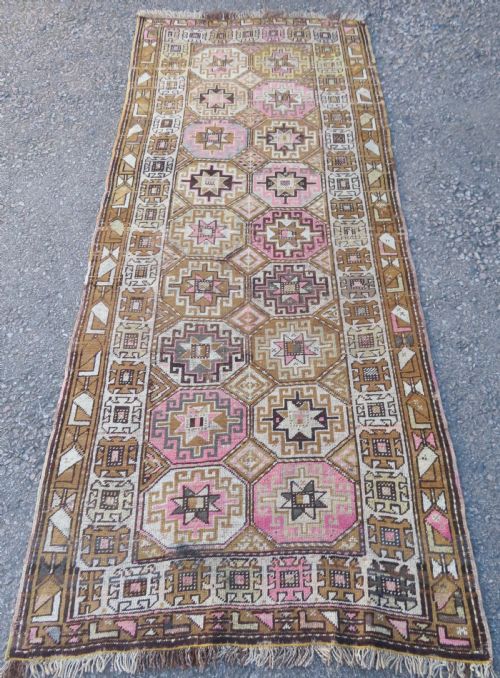
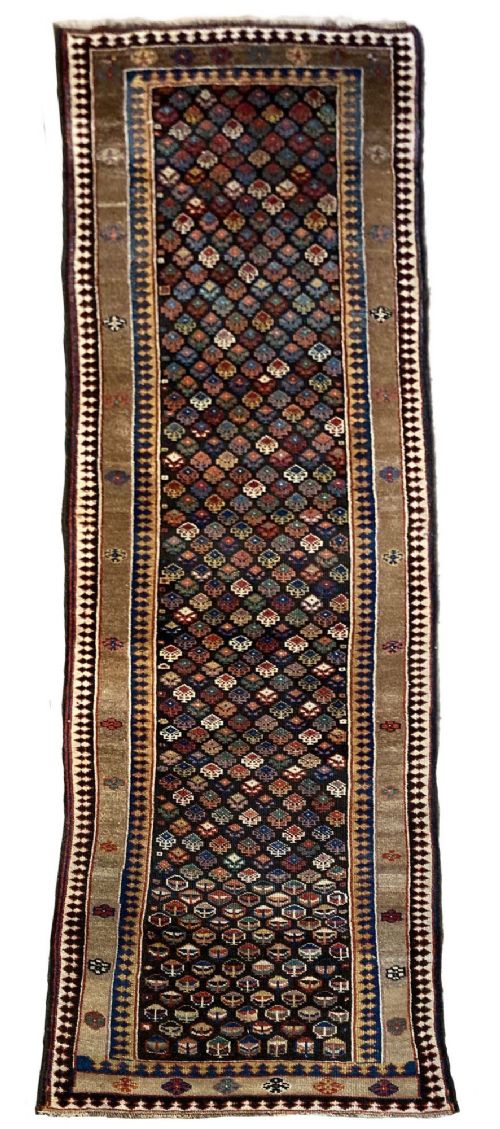


Brown Kurdish Runner
A brown kurdish runner brings genuine tribal warmth to a hallway, offering deep earthy tones and resilient construction.
Brown Kurdish Runner
When you search for a brown kurdish runner, you are looking at narrow tribal floor coverings originating from the rug-weaving communities of the Kurdish lands in North West Persia. These pieces are woven to withstand heavy use while displaying intricate traditional motifs that ground a room.
The versions you are most likely to meet on this page date from the nineteenth and early twentieth centuries, spanning periods from the 1860s through to the 1930s. They typically present as elongated formats designed for corridors and narrow spaces, often incorporating geometric medallions, latch hooks, or bird motifs.
How they were made
Weavers constructed these pieces using hand-spun wool for the pile, providing a dense and durable surface that absorbs natural dyes richly. The foundations commonly utilise sturdy cotton or wool yarns to maintain structural integrity across the long, narrow format.
The rich brown shades and contrasting colours derive from natural dyeing techniques traditional to the region. Artisans knotted the wool by hand onto the warp threads, creating durable pile surfaces designed for long-term domestic utility.
Brown Kurdish Runner Retail Price Guide 2026
Typical asking prices for brown kurdish runner among the pieces listed under this phrase on Sellingantiques today, from the lower quarter to the upper quarter. They describe what is for sale here now, not the wider market.
Geographic origins represented on this page centre specifically on the Kurdish lands of North West Persia.
What varies in quality
The distinction between standard examples and finer pieces lies in the precision of the knotting and the complexity of the design elements, such as distinct memling guls or pictorial details like birds perched on trees. Tighter construction yields sharper geometric definitions and greater resilience in high-traffic hallways.
The handling of natural colour variation across the field also separates ordinary pieces from superior ones. Subtle shifts in tone resulting from hand-spun wool and natural dye batches give the best examples a depth of character that mechanical dyeing cannot replicate.
The Brown Kurdish Runner Glossary
- Kelleh
- A large room-sized carpet or an elongated format intermediate in proportion between a rug and a long runner. These pieces share the robust weaving traditions of the Kurdish region.
- Memling gul
- An octagonal or stepped medallion motif frequently found in tribal rugs and runners. It is named after the fifteenth-century painter who depicted similar Anatolian carpets in his works.
- Latch hook
- A recurring geometric hook motif extending from the edges of medallions or borders. This design element appears frequently in tribal weaving to ward off evil or symbolise protection.
- Warp
- The stationary vertical threads stretched onto a loom that form the structural foundation of the textile. Weft threads are woven horizontally across these warp strands to secure the knots.
- Pile
- The vertical or slanted cut wool fibres forming the usable surface of the carpet. Hand-spun wool pile provides both softness underfoot and hard-wearing durability.
Brown Kurdish Runner: Frequently Asked Questions
How do I clean a runner?
Maintenance requires gentle vacuuming without the rotating brush bar to protect the aged wool fibres. Professional specialist cleaning is necessary when deeper washing is required to preserve the natural dyes.
Avoid immersing the textile in water at home or using harsh chemical spot treatments. Regular shaking outdoors removes trapped dust effectively.
Can I put these in hallways?
These narrow formats were originally created specifically for corridors, long entryways, and bridging rooms. Their dense wool construction handles foot traffic remarkably well.
Utilising a quality underlay keeps the textile stable on hard floors and reduces friction. This simple step protects the antique foundation from premature wear.
How old are these runners?
The pieces available range from the mid-nineteenth century through the early decades of the twentieth century. Dating relies on stylistic analysis, material examination, and structural characteristics.
Tribal weaving traditions often continued unchanged for generations, making exact dating a matter of studying wool preparation and dye chemistry. Most examples reflect techniques established long before mass production began.
What is a tribal design?
Tribal designs originate from nomadic and village weaving traditions rather than urban workshops. These patterns use geometric forms, memory-based motifs, and symbolic tribal markers.
Runners from the Kurdish lands often display idiosyncratic local variations in these motifs. Each weaver adapted traditional patterns freely, resulting in distinctive individual expressions.