





Brown Inlaid Tea Tray
A brown inlaid tea tray is a functional domestic antique that brings warm wood tones and decorative marquetry to a room.
Brown Inlaid Tea Tray
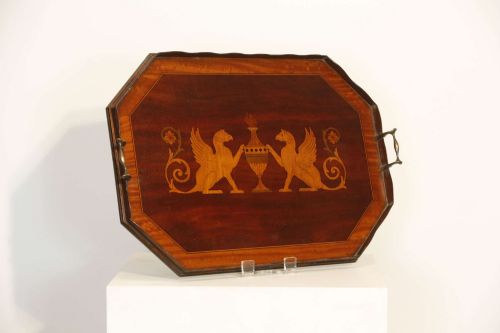
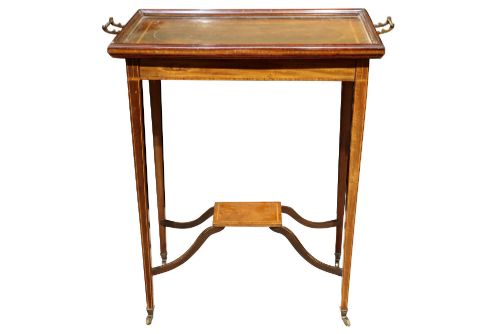
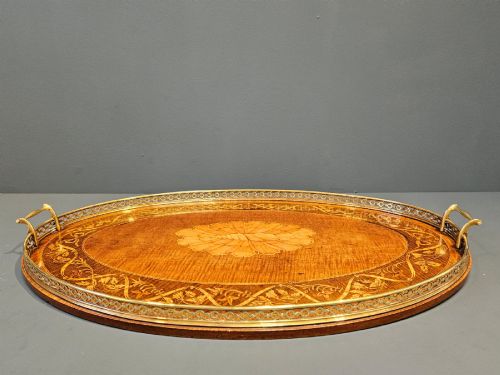
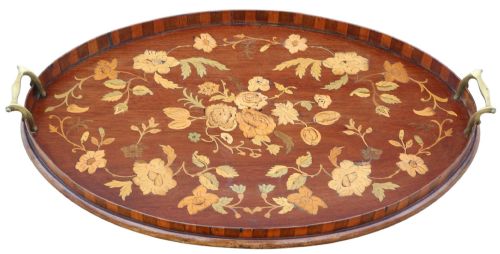
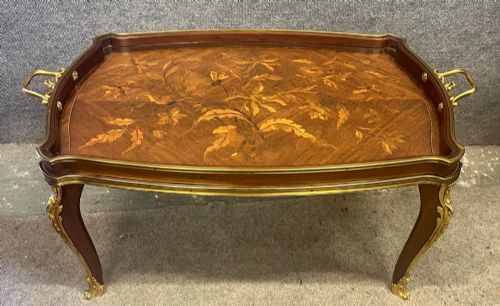
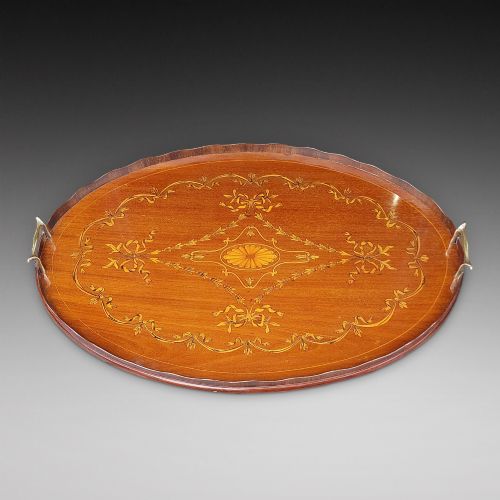
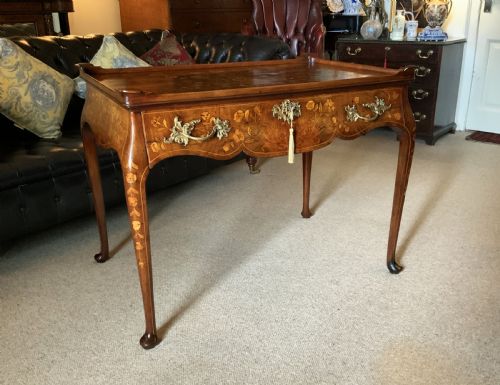
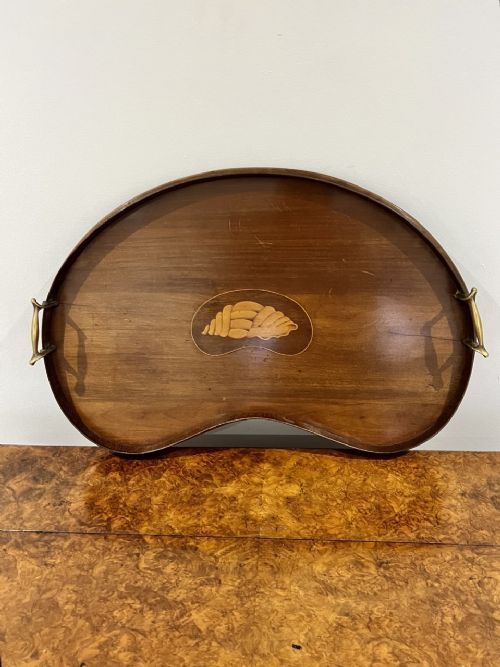
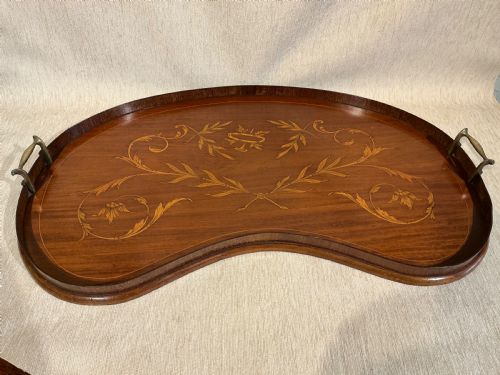
A brown inlaid tea tray serves as both a practical hosting accessory and a decorative surface, frequently encountered in rectangular, oval, or kidney-shaped formats. When you search for a brown inlaid tea tray, you encounter examples ranging from portable serving pieces with brass handles to fixed items mounted on occasional tables.
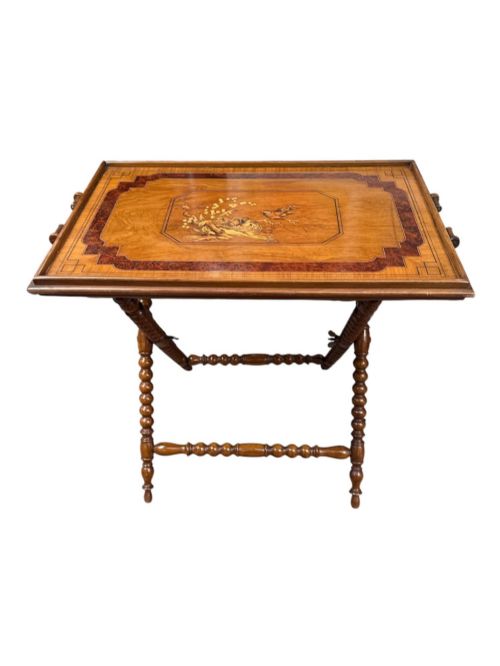
The selections span several periods, with Edwardian and nineteenth-century pieces forming the core of the available options. Earlier eighteenth-century iterations and revival styles such as Sheraton and Dutch Rococo also appear, alongside variants incorporating stands to create side and coffee tables.
Materials and construction
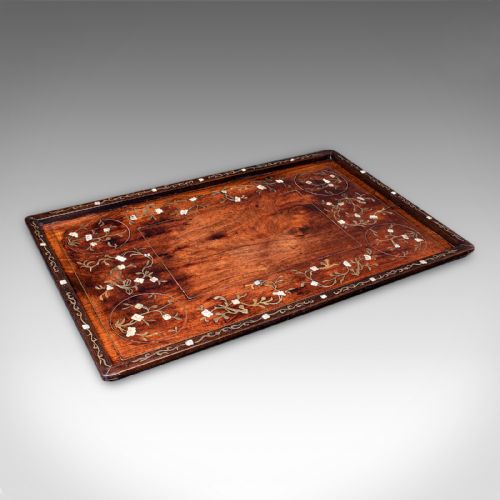
The foundation of these pieces relies predominantly on mahogany, walnut, and teak, often paired with contrasting light timbers for the decorative elements. Craftsmen utilised satinwood, boxwood, and marquetry veneers to create intricate floral, geometric, or pictorial designs set into the darker timber backgrounds.
Brown Inlaid Tea Tray Retail Price Guide 2026
Typical asking prices for brown inlaid tea tray among the pieces listed under this phrase on Sellingantiques today, from the lower quarter to the upper quarter. They describe what is for sale here now, not the wider market.
The inventory spans the eighteenth, nineteenth, and early twentieth centuries, featuring Edwardian, Victorian, and Georgian stylistic influences.
Assessing craftsmanship
The distinction between standard items and finer examples rests in the precision and complexity of the marquetry work and timber selection. Pieces utilising highly figured mahogany or burr woods paired with delicate, multi-wood satinwood and boxwood inlay sit at the upper end of the range.
The Brown Inlaid Tea Tray Glossary
- Marquetry
- Decorative veneer work forming pictures or patterns by fitting together small pieces of wood, shell, or ivory. Craftsmen arrange these contrasting materials onto the primary surface of the tray.
- Etagere
- A piece of furniture consisting of a set of open shelves for displaying small objects. These tiered tables often incorporate removable trays as their top surface.
- Satinwood
- A hard, durable timber with a characteristic golden-yellow sheen used extensively for contrasting inlay. It provides the bright highlights in detailed Edwardian and nineteenth-century marquetry.
- Gallery
- A raised wooden or metal rim running along the edge of a tray or table top. This feature prevents items from sliding off during transport or use.
Brown Inlaid Tea Tray: Frequently Asked Questions
How were these trays originally used?
These trays served primarily for carrying tea services, silver pots, and porcelain cups between rooms within large households. They functioned as portable hospitality items before transitioning into permanent display surfaces.
Over time, many of these trays found new life mounted onto dedicated stands, effectively converting portable serving implements into static occasional or coffee tables for the drawing room.
What is the difference between a tray and a tray table?
A standard tray is a portable item equipped with handles or a raised gallery, designed to be lifted and carried. A tray table combines the tray top with a fixed or folding wooden stand.
Many pieces listed include removable tray tops that lift off their supporting frame, allowing them to function in both capacities depending on your needs.
How do I identify an Edwardian piece?
Edwardian items typically date from the period around nineteen hundred to nineteen ten, displaying lighter proportions and refined satinwood inlay. They frequently draw on Sheraton Revival aesthetics, favouring symmetrical floral motifs and graceful kidney shapes.
Compared to heavier Victorian examples, Edwardian pieces often exhibit a brighter finish and more restrained decorative banding along the borders.