
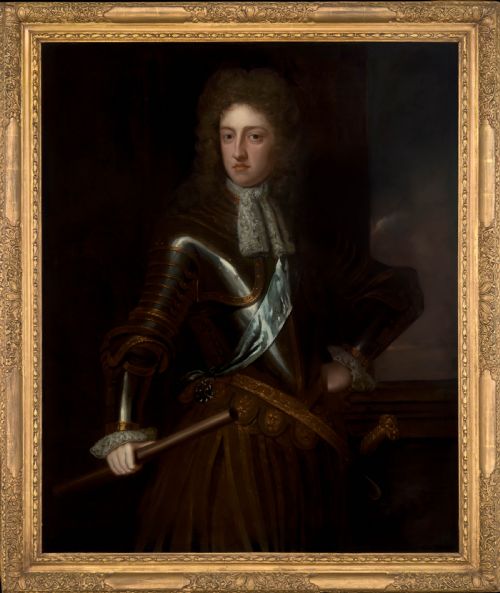
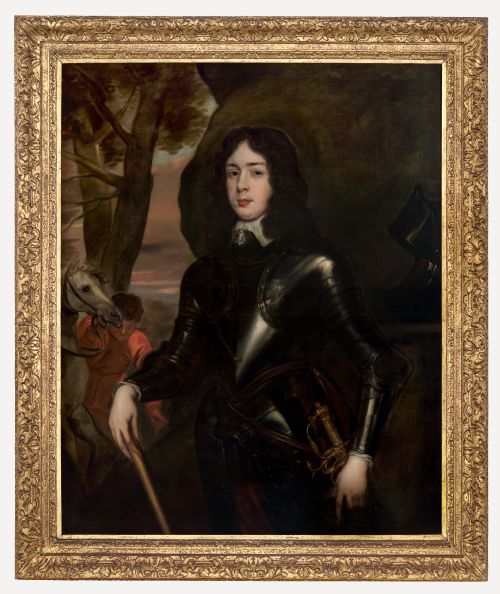


Brown Framed Military Art
Brown framed military art brings together historical portraits, battle scenes, and naval tributes enclosed in wooden surrounds.
Brown Framed Military Art
Brown framed military art encompasses oil paintings, watercolours, and prints spanning the seventeenth century through to the mid-twentieth century. Buyers encounter depictions of officers in armour, naval ironclads, battle scenes, and soldiers alongside framed commemorative watercolours and prints.
How they were made
Works utilise oil on canvas, watercolour, gouache, and pen and ink on paper, housed within wooden and giltwood frames. Many pieces rely on traditional canvas supports and paper sheets.
Frames employ wood construction to house the paintings, prints, and watercolours safely. The combination of pigment, paper, canvas, and wooden framing defines the physical construction of these works.
What varies in quality
Quality rests upon the execution of the brushwork, the depth of historical detail in uniforms and armaments, and the fidelity of the portraiture. Studio works and signed pieces carry distinct artistic weight compared to standard prints.
The preservation of the paper or canvas surface, alongside the integrity of the wooden frame, influences the overall character of the piece. Handling by known artists or followers elevates the provenance and execution.
Sir Godfrey Kneller·Sir Anthony van Dyck·David Scougall·Baruch Shalom Oskotsky·Edith Alice Simkins·Frank Dadd·George Cattermole·John F.H. Dutton·Samuel van Hoogstraten
The Brown Framed Military Art Glossary
- Gouache
- An opaque watercolour paint consisting of pigment, water, and a binding agent such as gum arabic. It produces a dense matte surface frequently seen in maritime and military watercolours.
- Giltwood
- Wood that has been treated with a thin layer of gold leaf or gilt powder. It appears on traditional frames enclosing historical portraits and watercolours.
- Etching
- A printmaking process where lines are incised into a metal plate with acid before ink is applied and transferred to paper. This technique produces fine linear detail in historical battle scenes.
- Miniature
- A small-scale portrait painting executed with fine detail. These compact works often capture historical figures or officers on small panels or card.
Brown Framed Military Art: Frequently Asked Questions
What periods do these artworks cover?
The works span from the seventeenth century through the Victorian and Edwardian eras up to the mid-twentieth century. This includes seventeenth-century oil portraits, nineteenth-century watercolours, and First World War pieces.
Buyers find materials ranging from early canvas paintings to later framed prints and drawings.
How should I hang these framed pieces?
Pieces require sturdy wall fixings appropriate for their weight, particularly larger oil paintings on canvas with wooden frames. Placement should avoid direct sunlight to protect watercolours and paper works.
Maintaining stable room humidity preserves both the wooden frames and the canvas or paper supports.
Are the signatures on the artworks original?
Signatures where present, such as those by named artists or military illustrators, relate directly to the period of creation. Many historical portraits stem from studios or followers of established painters.
Documentation within titles notes studio attributions and follower designations alongside signed works.
What subjects are included in military art?
Subjects feature military officers in full armour, royal reviews, naval ironclads, and battle formations. Portraits record specific historical figures, regiments, and soldiers from various campaigns.
Works also capture sentimental tributes by sailors and soldiers alongside documentary battle scenes.