



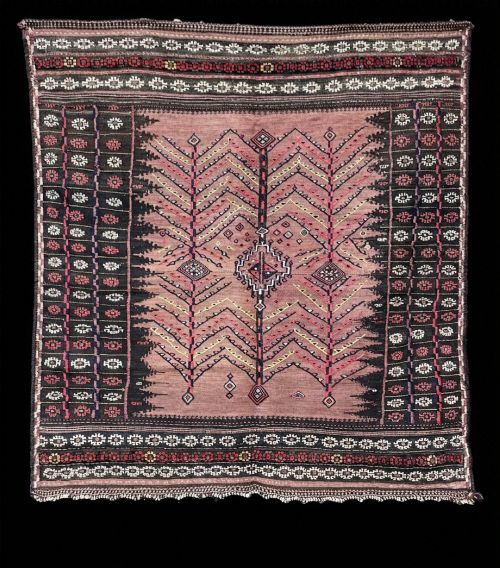


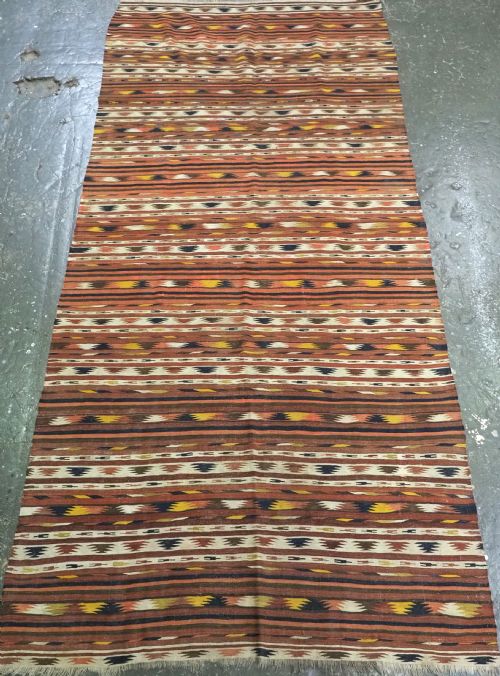
Brown Flatweave Carpet
These brown flatweave carpet pieces are flat-woven textiles providing durable floor coverings and wall hangings rooted in tribal and folk traditions.
Brown Flatweave Carpet
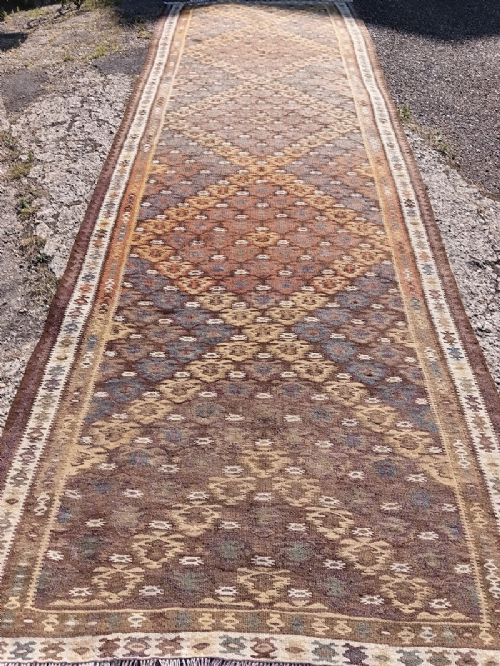
When searching for a brown flatweave carpet, buyers encounter a variety of flat-woven tribal and folk textiles originating from Central Asia, Persia, the Caucasus, and Eastern Europe. These items function primarily as rugs, runners, room-size kilims, and wall hangings produced across the nineteenth and early twentieth centuries.
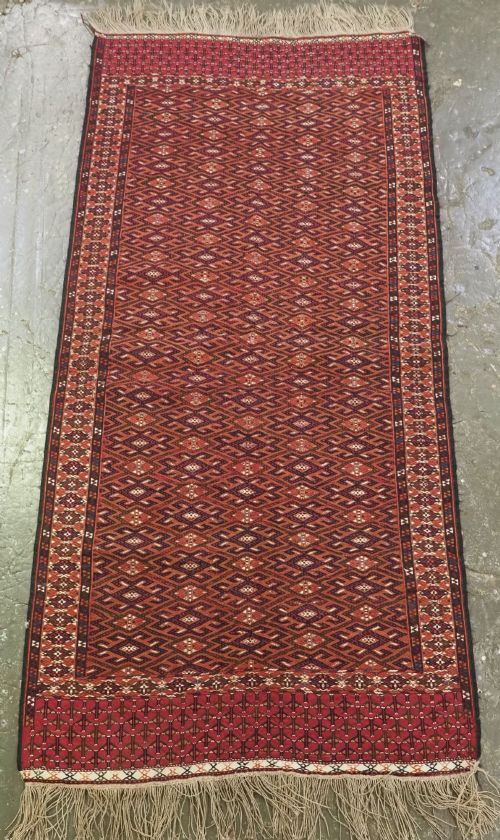
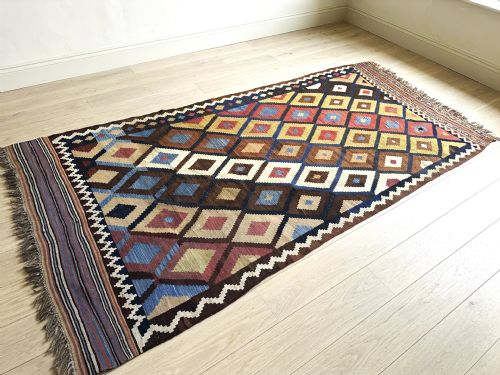
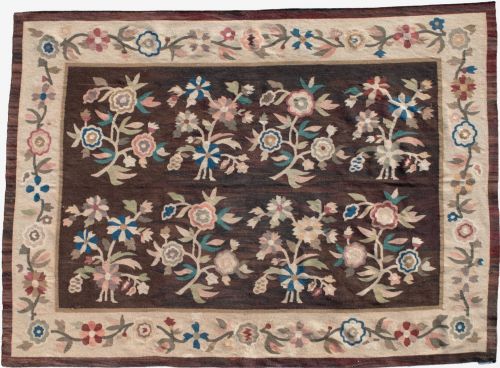
The selection on this page relies heavily on regional tribal work, including Turkmen, Afghan, Uzbek, and Caucasian pieces, alongside examples from Ukrainian and Bessarabian traditions. These textiles take the form of kilims, mafrash panels, tent bands, and sofreh dining kilims constructed without a knotted pile.
Makers utilised traditional flat-weaving methods to create geometric banded designs, striped patterns, and pictorial layouts suited to nomadic or village use. The resulting objects provide functional floor coverings with a flat surface texture and distinct cultural provenance.
How they were made
The construction of a brown flatweave carpet depends on wool and cotton foundations worked with natural dyes, camel hair, and camel wool. Weavers interlace warp and weft threads to build flat surfaces without pile, incorporating techniques such as weftwork and soumak alongside standard slit-weave kilim construction.
Materials like camel hair and native wool supply durable foundations and natural brown tones, complemented by natural dyes that yield soft colour palettes across Central Asian and Persian workshops. Textiles are occasionally woven in multiple parts and joined, or fashioned from older storage bags and tent bands repurposed into smaller kilims.
Brown Flatweave Carpet Retail Price Guide 2026
Typical asking prices for brown flatweave carpet among the pieces listed under this phrase on Sellingantiques today, from the lower quarter to the upper quarter. They describe what is for sale here now, not the wider market.
Several pieces began life as nomadic storage sacks or tent straps before finding new purpose as modern floor art.
What varies in quality
Quality in a brown flatweave carpet rests upon the tightness of the weave, the integrity of the materials, and the precision of the geometric or banded design. Finer weaves demonstrate greater structural control by the weaver, while robust wool and camel hair foundations ensure long-term durability.
The depth and nuance of natural dyes distinguish superior examples, as does the preservation of original tribal formats such as complete tent bands or untouched mafrash panels. Pieces showing careful execution in mixed techniques like soumak or detailed weftwork represent the upper tier of the range.
The Brown Flatweave Carpet Glossary
- Kilim
- A flat-woven textile produced by tightly interweaving warp and weft strands to create a smooth surface without pile. These pieces serve as rugs, wall hangings, and floor coverings.
- Soumak
- A wrapping technique utilised to create a sturdy flatweave with raised surface details resembling embroidery. It adds structural strength and tactile texture to the textile.
- Sofreh
- A traditional dining kilim used by tribal groups for sharing meals and setting out food. These cloths often feature specific banded or geometric layouts.
- Mafrash
- A storage bag or panel associated with nomadic tribes, frequently dismantled and adapted into smaller flatweave rugs or wall hangings. They display characteristic tribal motifs.
- Tent band
- A long, narrow woven textile employed within nomadic tents for structural binding and decoration. These strips exhibit dense geometric patterns.
Brown Flatweave Carpet: Frequently Asked Questions
What is a flatweave rug?
A flatweave rug is a textile constructed without knotted pile by interweaving warp and weft threads together directly. This produces a flat, lightweight surface suitable for floors and walls.
Such pieces rely on techniques like kilim or soumak weaving rather than the dense pile found in traditional knotted carpets.
How were tribal kilims used?
Nomadic and village communities utilised these textiles as floor coverings, blankets, storage containers, and tent furnishings. They served practical daily functions within domestic and travel settings.
Larger versions covered tent floors, while smaller panels functioned as storage bags or dining cloths for communal meals.
How do I care for antique wool rugs?
These textiles require gentle regular care using suction vacuuming without a rotating brush bar. Professional cleaning suited to antique wool ensures natural fibres remain protected.
Avoiding prolonged direct sunlight prevents natural dyes from fading over time in residential settings.