

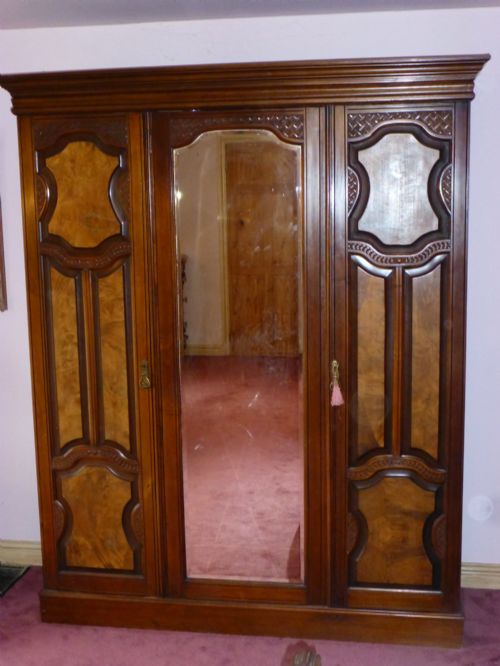
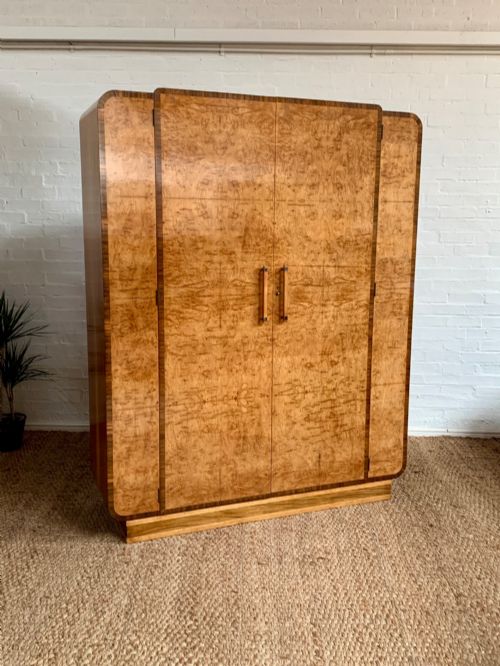
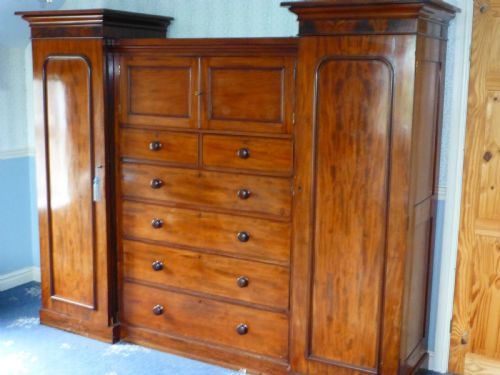
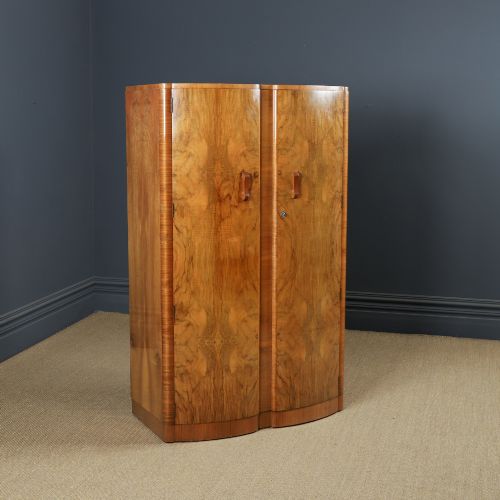
Brown Fitted Wardrobe
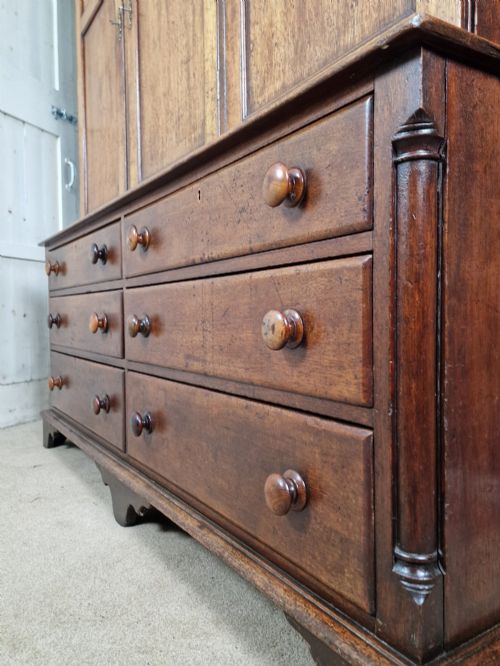
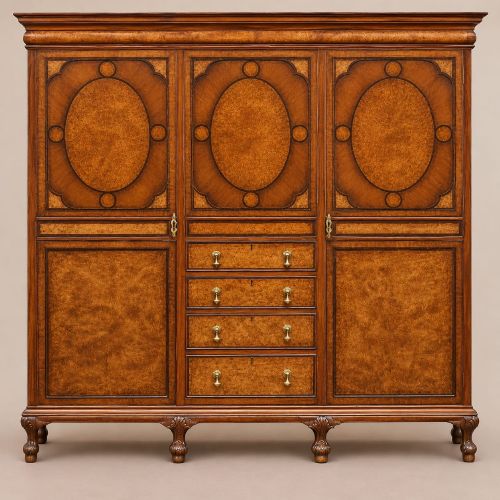
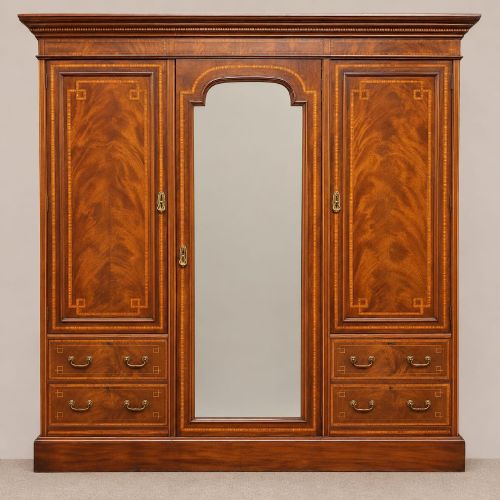
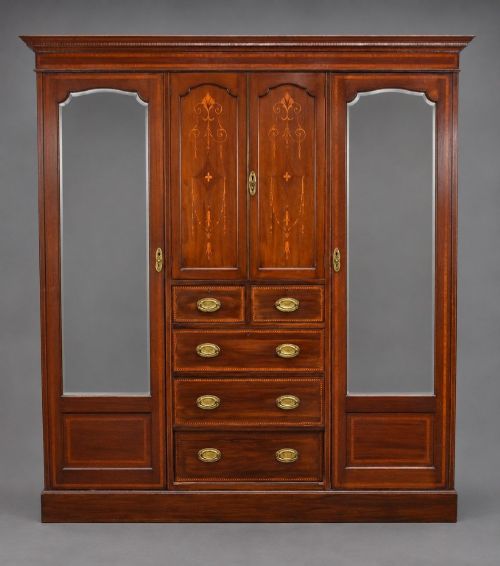
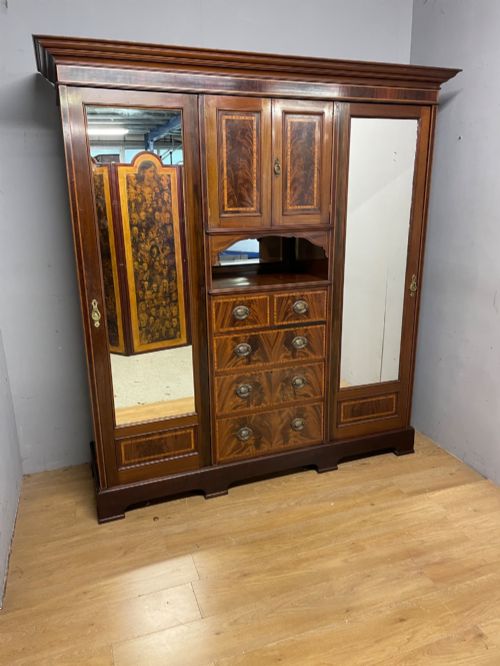
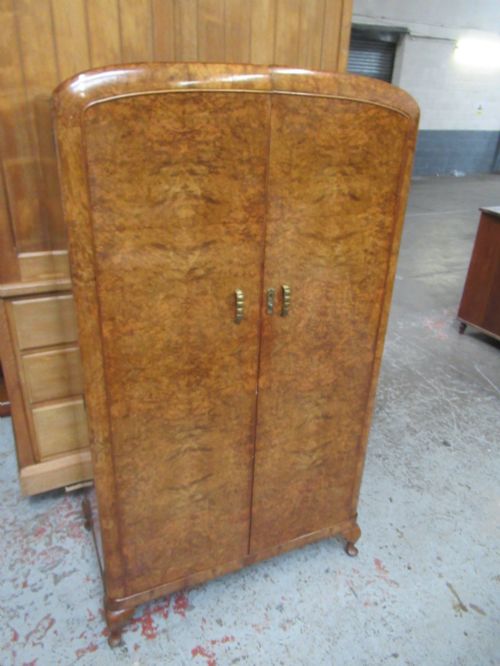
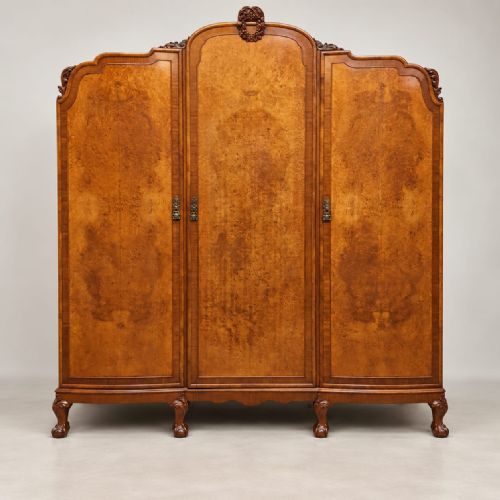
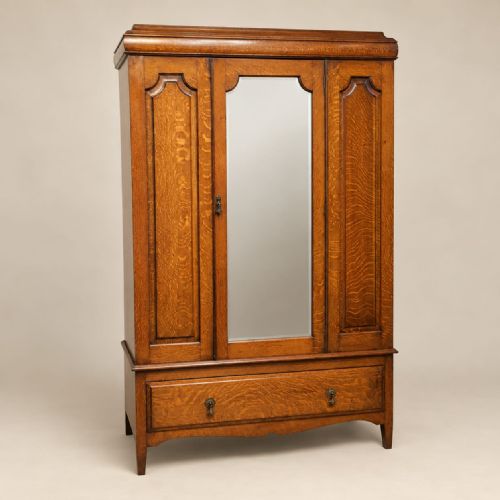
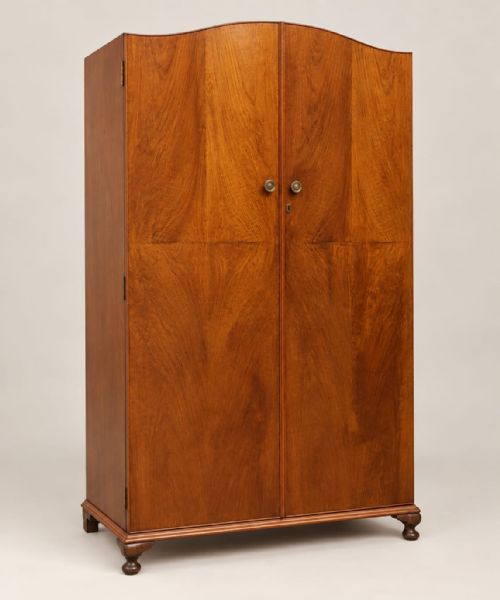
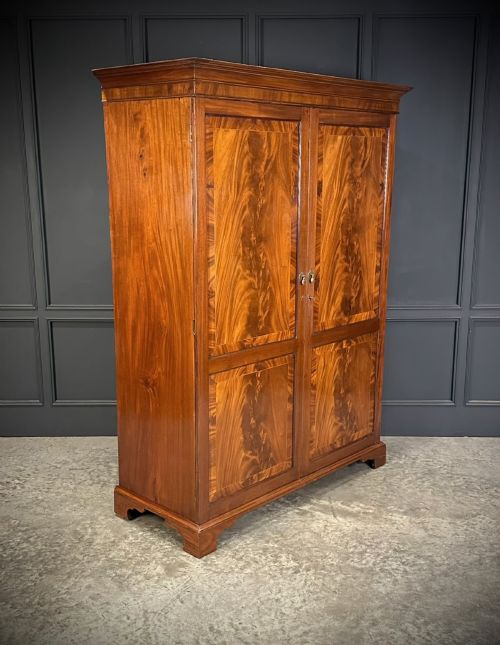
A brown fitted wardrobe offers substantial storage while showcasing period timbers like burr walnut and mahogany from the nineteenth and twentieth centuries.
Brown Fitted Wardrobe
A brown fitted wardrobe combines generous internal storage with architectural presence, emerging frequently in forms such as double and triple wardrobes, compactums, and linen presses. These pieces span periods from the Victorian and Edwardian eras through to Art Deco and nineteen-twenty designs.
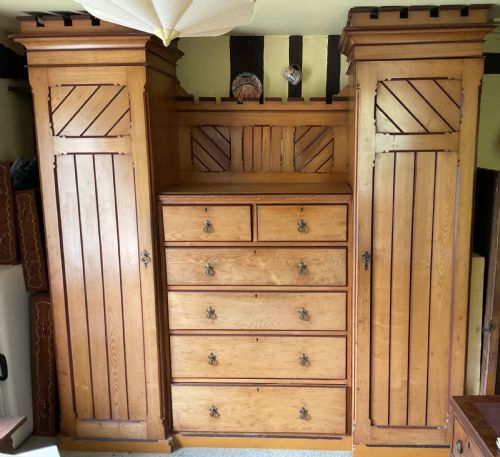
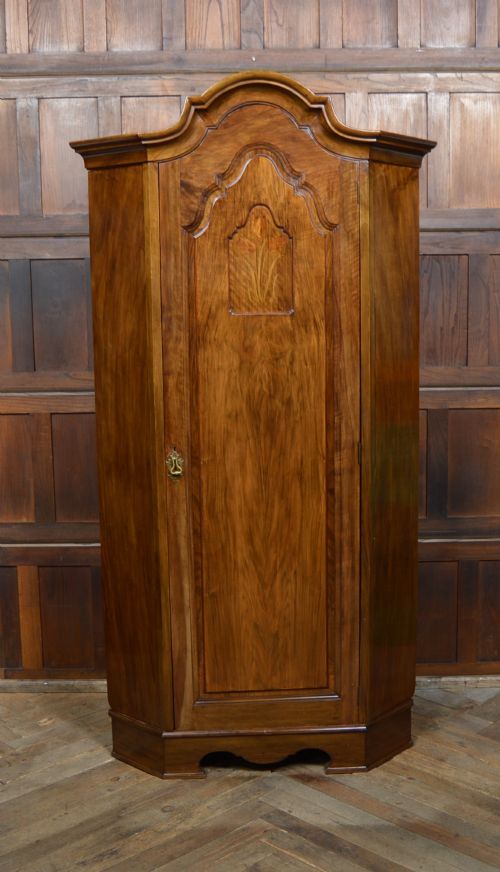
Buyers encounter variations ranging from compact single-door corner robes and small Edwardian oak examples to expansive breakfront and serpentine triple wardrobes. Internal fittings often comprise hanging space, drawers, and linen shelves designed for systematic organisation.
Origins stretch across English workshops, French armoires, and specialised luggage pieces like fitted steamer trunks. Walnut and mahogany dominate the selection, providing deep brown tones suited to traditional and modernist interiors alike.
Materials and Construction
Cabinet makers utilised solid timbers alongside veneers, applying burr walnut, flame mahogany, and pollard oak over sturdy carcases of oak or pine. Brass hardware secures doors and internal compartments, while glass panels sometimes front the cabinetry.
Surfaces receive careful polishing to highlight the natural grain patterns of walnut and mahogany veneers. Structural joinery and internal partitioning reflect the utilitarian and decorative demands of nineteenth and early twentieth-century domestic life.
Brown Fitted Wardrobe Retail Price Guide 2026
Typical asking prices for brown fitted wardrobe among the pieces listed under this phrase on Sellingantiques today, from the lower quarter to the upper quarter. They describe what is for sale here now, not the wider market.
Judging Quality and Execution
Quality rests in the selection of timber veneers, where symmetrical burr walnut or figured flame mahogany indicates superior workshop standards. The precision of breakfront, bow front, or serpentine shaping distinguishes standard production from ambitious cabinet work.
The sophistication of the internal fitting elevates a piece, transforming a basic shell into an elaborate combination compactum with dedicated drawers and presses. Maker attribution, through signatures or established firm provenance, further separates standard examples from exceptional ones.
Crown Furniture·Waring and Gillow·Holland and Sons·Gillows·Heals·Seaward·Maple and Co
The Brown Fitted Wardrobe Glossary
- Compactum
- A multi-compartment wardrobe combining hanging space, drawers, and shelving within a single unified piece of furniture. These configurations often include linen presses or gentlemen's chests.
- Breakfront
- A piece of furniture whose central section projects forward from the recessed outer sections. This architectural arrangement creates depth and visual rhythm across larger triple wardrobes.
- Burr Walnut
- Timber taken from the gnarled growths of a walnut tree, yielding complex, swirling grain patterns highly prized for cabinet veneers. It appears frequently on Art Deco and early twentieth-century doors.
- Linen Press
- A tall cupboard featuring upper shelving for folded textiles and lower drawers for ancillary storage. They frequently incorporate fine mahogany or walnut construction.
- Serpentine Front
- A furniture front characterised by a wavy contour, curving outward in the centre and inward at the sides. This technique demands high woodworking skill to execute cleanly in solid timber and veneer.
Brown Fitted Wardrobe: Frequently Asked Questions
How do I fit a tall wardrobe into a modern bedroom?
Measure your ceiling height and floor space carefully before selecting a piece, as many period wardrobes are tall and bulky.
Consider triple wardrobes and compactums in sections if ceiling clearance is tight during assembly.
What is the difference between an armoire and a wardrobe?
An armoire typically refers to a large ornamental cupboard of continental origin, often featuring single or double doors over deep storage.
Wardrobes focus primarily on vertical hanging space and internal compartmentalisation developed through the Victorian and Edwardian periods.
How do I care for walnut veneer surfaces?
Dust regularly with a soft cloth and avoid placing wooden furniture in direct sunlight or near heat sources to prevent veneer drying.
Apply high-quality beeswax sparingly to nourish the timber grain without building up heavy residues.
Are these wardrobes practical for daily clothing storage?
Fitted interiors with shelves, drawers, and hanging rails provide adaptable storage capacity comparable to modern alternatives.
Combination compactums and linen presses offer specialised compartments suited to folded garments and accessories.