
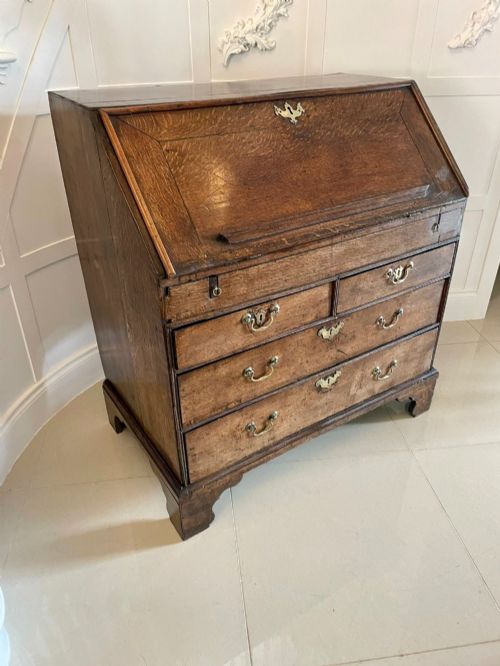
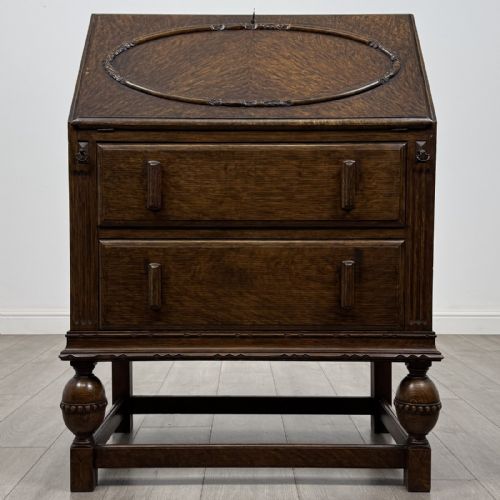
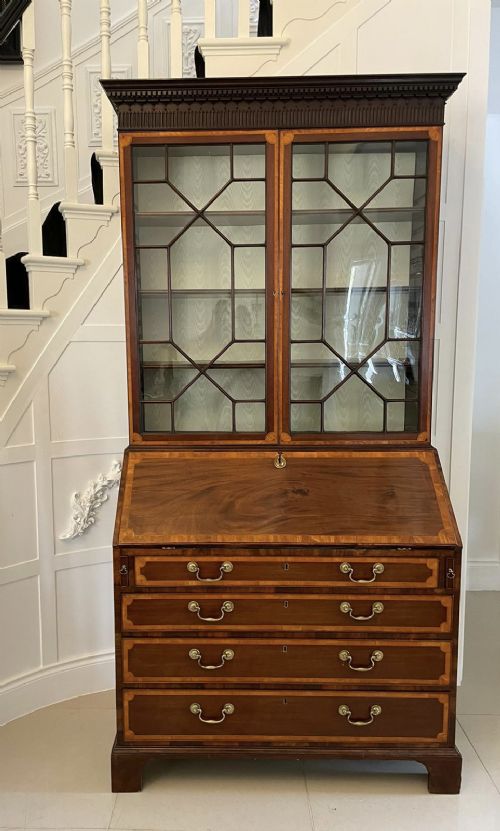
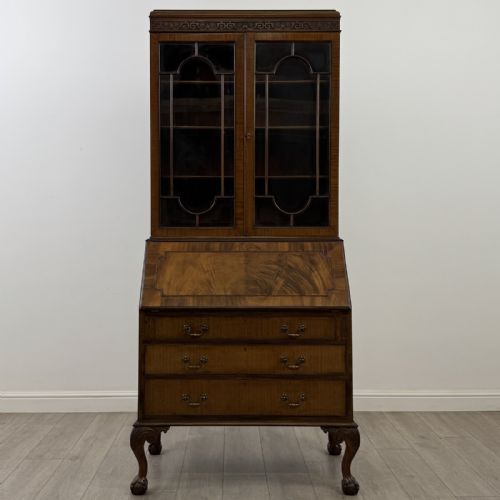
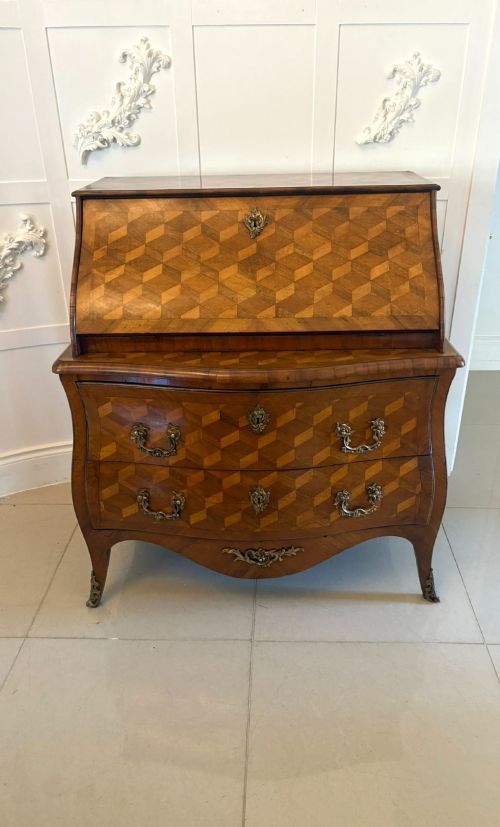
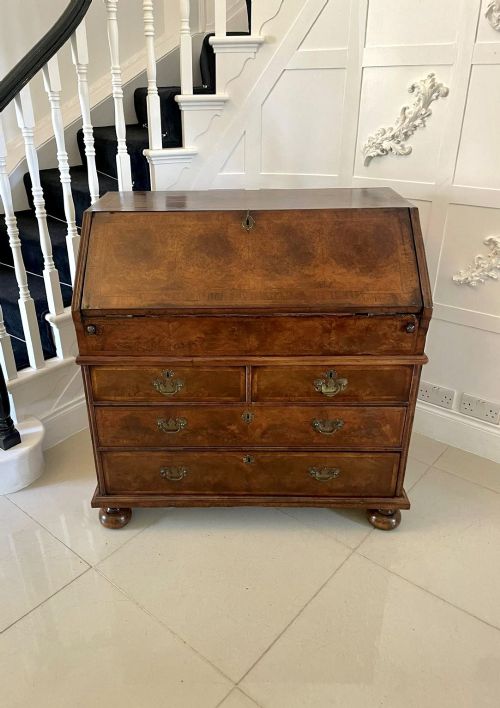
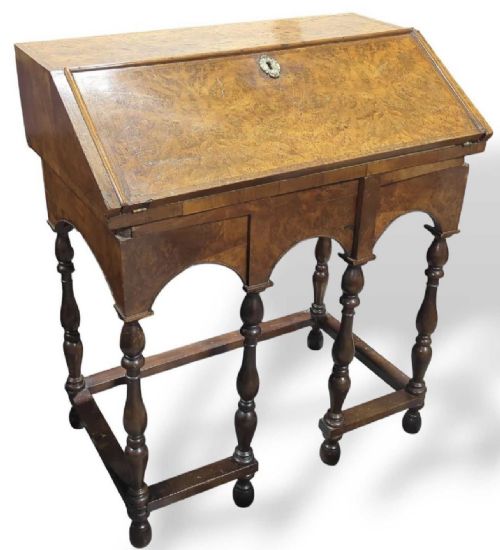
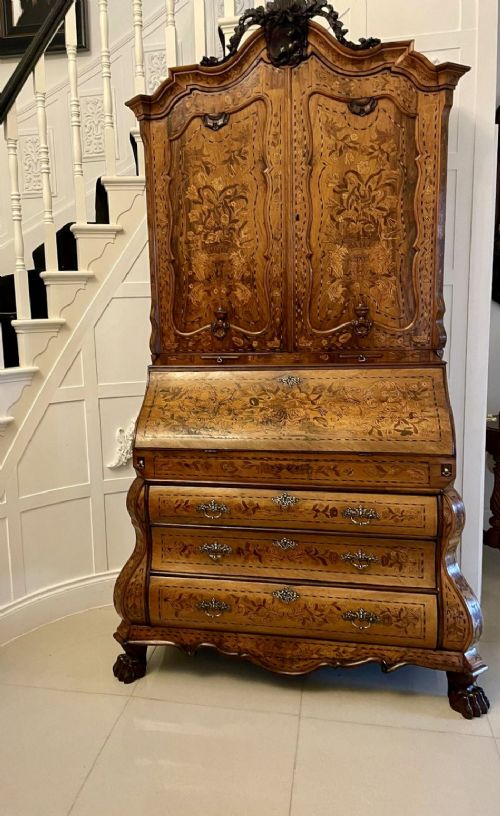
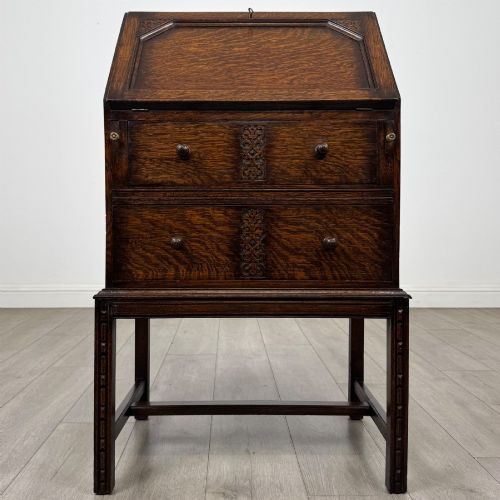
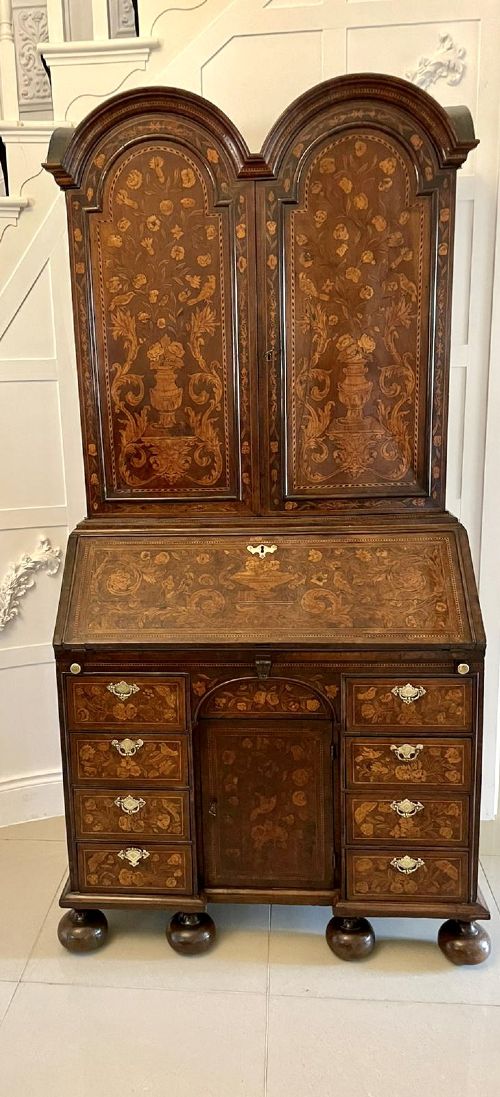
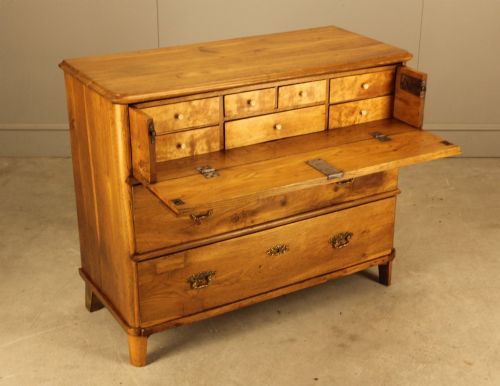
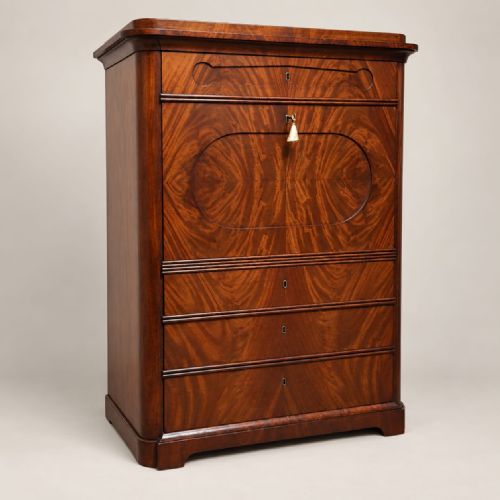
Brown Fall Front Desk
A brown fall front desk brings practical writing space and secret compartments together in timber that deepens in character over centuries.
Brown Fall Front Desk
When you search for a brown fall front desk, you enter a world of fitted writing furniture spanning the seventeenth, eighteenth, and nineteenth centuries. These pieces combine a vertical writing flap that drops down to form a horizontal desk surface with interior compartments for papers and correspondence.
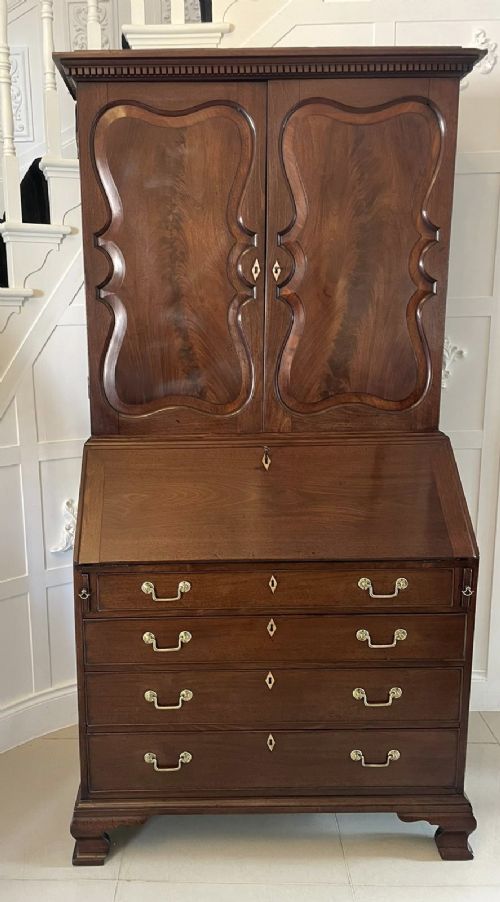
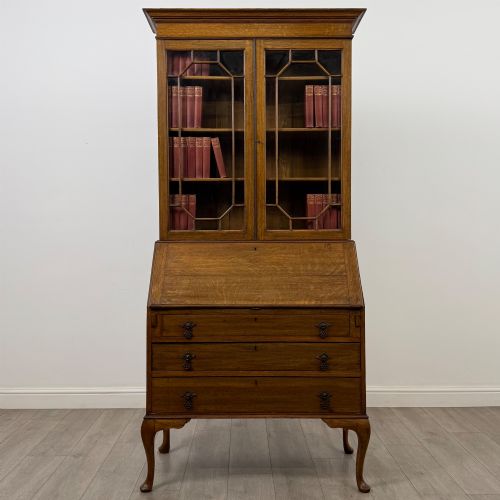
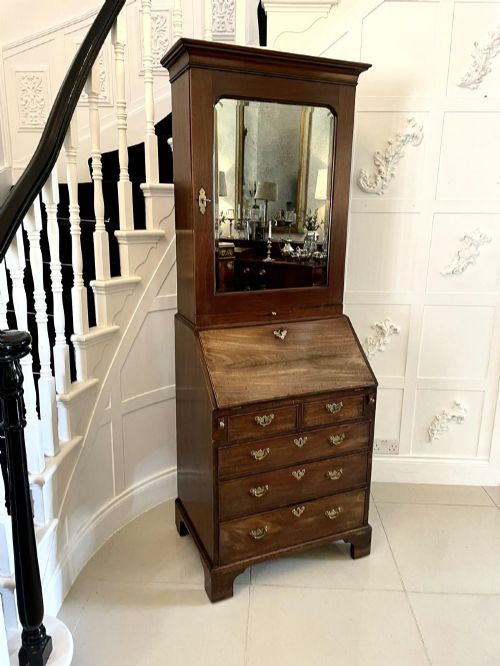
You will most commonly meet mahogany, oak, and walnut examples dating from the Georgian and Edwardian eras. The selection includes compact bureau desks designed for smaller rooms alongside towering bureau bookcases topped with glazed or panelled doors.
Materials and construction methods
Cabinet makers utilised dense hardwoods like mahogany and oak for structural stability, often applying burr walnut or satinwood veneers to prominent surfaces. Timber grain patterns were matched carefully across the fall front and drawer fronts to create harmonious visual symmetry.
Interiors reveal complex joinery with small pigeonholes, sliding wells, and secret drawers concealed behind dummy book spines or sliding panels. Brass hardware, including drop handles and escutcheons, secures the drawers while supporting the heavy writing flaps.
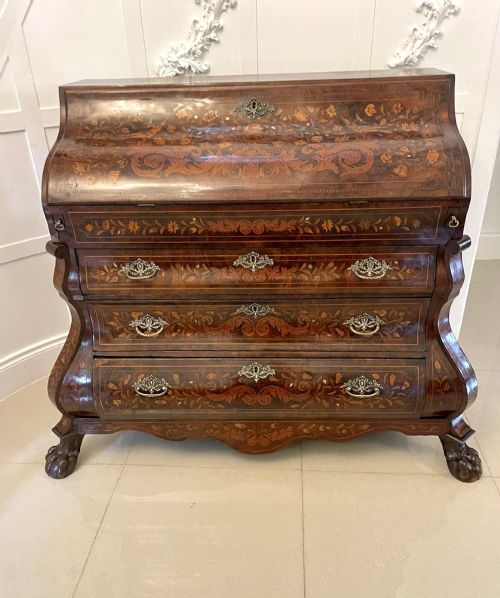
The furniture styles represented include Queen Anne, Georgian, Regency, Edwardian, and Dutch Rococo.
Distinctions in construction and finish
Quality rests upon the choice of timber veneer and the precision of the interior layout. Fine examples display rich burr walnut or figured mahogany with herringbone inlay, while simpler versions rely on plain solid oak or mahogany planks.
The sophistication of the internal stationery drawers and the integrity of the fall front hinges dictate the standing of a piece. Original brasses, well-figured timber selection, and intact secondary woods separate standard utility furniture from master cabinet work.
The Brown Fall Front Desk Glossary
- Bureau
- A writing cabinet featuring a sloping or vertical fall front that encloses a fitted interior of small drawers and pigeonholes. This term appears frequently across Georgian and Edwardian examples.
- Fall Front
- The hinged writing flap that drops from a vertical position to provide a horizontal surface for correspondence. It locks shut to conceal the fitted interior.
- Secretaire
- A writing cabinet or desk, often found in French or Regency designs, incorporating a drop-down writing surface. It shares functional similarities with the standard bureau.
- Marquetry
- Decorative inlay work using various coloured woods to create floral or geometric patterns on the exterior surfaces. Dutch and William and Mary pieces utilise this technique extensively.
- Fitted Interior
- The collection of small drawers, pigeonholes, and central compartments revealed when the fall front opens. These spaces often include sliding secrets or miniature cupboards.
Brown Fall Front Desk: Frequently Asked Questions
What is a brown fall front desk?
A brown fall front desk is a traditional writing cabinet featuring a hinged flap that pulls down for writing. Inside, a collection of small drawers and pigeonholes keeps correspondence organised.
These pieces range from compact freestanding desks to tall bureau bookcases with shelving above. Walnut, mahogany, and oak dominate the materials used by historical makers.
How do I date a brown fall front desk?
Dating relies on examining the construction methods, timber choices, and hardware styles. Earlier pieces from the seventeenth and early eighteenth centuries often feature walnut veneers, herring-bone inlay, and bracket or ball feet.
Later Georgian and Edwardian versions introduce mahogany, simpler internal layouts, and different foot designs like bracket or ogee feet. Examining the secondary woods inside the drawers provides further clues to origin.
Where were these desks placed historically?
Historically, these desks occupied private studies, withdrawing rooms, and master bedrooms where correspondence and household accounts were managed. The lockable fall front kept sensitive letters and financial records secure from servants and guests.
In modern homes, they function well in home offices, living rooms, and hallways as practical workspace combined with concealed storage.
How do I care for the wood surface?
Preserving the timber involves applying high-quality beeswax periodically to nourish the grain and protect the polish. Avoid placing the desk in direct sunlight or near heat sources to prevent the wood from drying and splitting.
Dusting regularly with a soft, dry cloth keeps the surface clean without damaging historic polishes or delicate veneer work.