



Brown Fabric Settee
A brown fabric settee brings period warmth and deep seating into a room, offering historic woodwork paired with soft textile upholstery.
Brown Fabric Settee
When you search for a brown fabric settee, you are looking at upholstered seating designed to seat multiple people across several historic periods. The versions you are most likely to meet on this page range from Victorian and Edwardian examples to earlier revival styles.
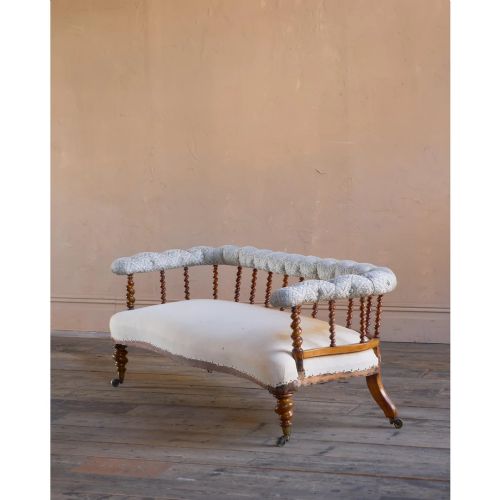
The forms include spindle back salon sofas, drop end sofas, and multi-seat settees framed in mahogany, walnut, or satinwood. These pieces combine wooden frames with fabric or velvet upholstery.
Origins stretch from the eighteenth century through the nineteenth century and into the twentieth century. Revival designs from the 1900s, 1910s, 1920s, and 1930s sit alongside older pieces.
How they were made
Makers constructed the structural frames from solid hardwoods like mahogany and walnut, frequently incorporating satinwood and marquetry inlay for decorative contrast. Brass details occasionally appeared on fittings.
Upholstery fabrics included velvet and general upholstery fabric attached to sprung or padded seats. Wood carving defined styles like Chippendale and Queen Anne, while turnings formed spindle backs.
Brown Fabric Settee Retail Price Guide 2026
Typical asking prices for brown fabric settee among the pieces listed under this phrase on Sellingantiques today, from the lower quarter to the upper quarter. They describe what is for sale here now, not the wider market.
Listings feature settees spanning from the eighteenth century to the 1930s, constructed in mahogany, walnut, and satinwood.
What varies in quality
The standard of carving and inlay work dictates the refinement of the wooden frame, separating standard production from finely detailed pieces. Crisp execution in mahogany or satinwood indicates a higher grade of craftsmanship.
The integrity of the frame and the condition of the woodwork determine the overall worth of the settee. Pieces requiring complete reupholstery offer a blank canvas for fresh fabric while retaining their historic structure.
C. Hindley & Sons
The Brown Fabric Settee Glossary
- Settee
- An upholstered seat for more than one person, typically featuring a back and arms. It functions similarly to a small sofa.
- Drop end sofa
- A sofa with adjustable or hinged arms that can be lowered on one or both sides. This mechanism allows the piece to convert into a daybed format.
- Marquetry inlay
- Decorative patterns formed by fitting contrasting veneers into wooden surfaces. It adds pictorial or geometric ornamentation to mahogany and satinwood.
- Spindle back
- A chair or sofa back constructed from a series of slender, turned wooden rods. This style appears frequently on nineteenth-century salon furniture.
- Queen Anne style
- A furniture design movement characterised by cabriole legs and curved lines, revived during later periods. Walnut was frequently utilised for these pieces.
Brown Fabric Settee: Frequently Asked Questions
What is a brown fabric settee?
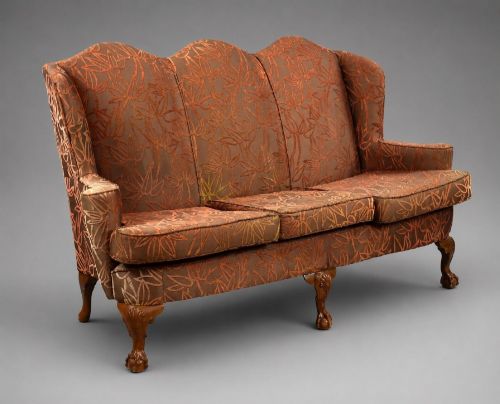
A brown fabric settee is an antique or vintage multi-seat sofa featuring a wooden frame and brown textile or velvet upholstery. These pieces span multiple historic periods and design styles.
They serve as practical seating while introducing traditional woodworking and period character into a modern interior setting.
How were these settees used historically?
These settees provided formal and informal seating in drawing rooms, parlours, and salons. Drop end variants offered versatile resting positions for daytime relaxation.
Over time, they adapted to changing domestic habits while remaining central pieces of household furniture.
How do I live with an antique settee?
Living with an antique settee involves placing it away from direct sunlight to protect the wooden frame and textile upholstery. Regular gentle cleaning maintains the condition of the fabric.
Some pieces arrive ready for reupholstery, allowing you to select modern or traditional fabrics that suit your interior scheme.
How can I tell the periods apart?
Periods are identified through characteristic styling details, such as carved mahogany in Chippendale revival pieces or slender turned rods in nineteenth-century spindle back designs. Walnut and satinwood usage also points to specific aesthetic eras.
Examining construction techniques and timber selection helps establish whether a piece originates from the eighteenth, nineteenth, or twentieth century.