


Brown Equestrian Canvas Art
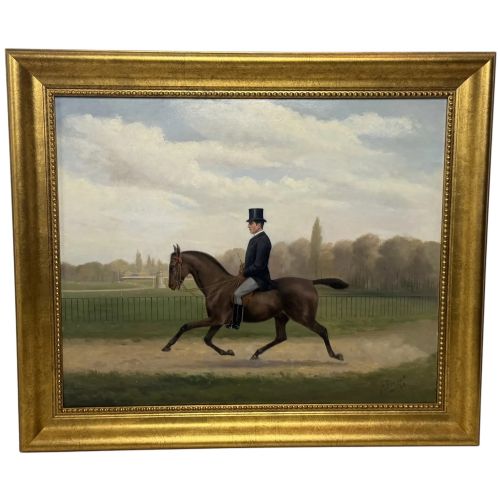
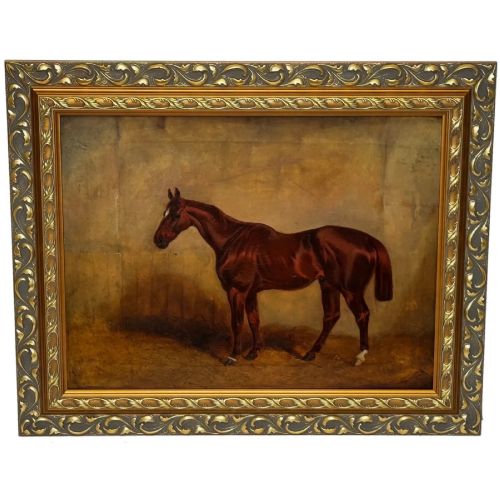
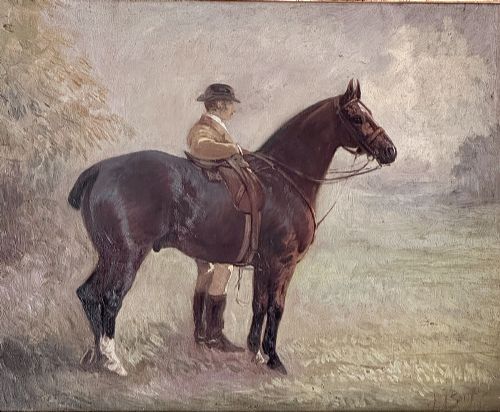
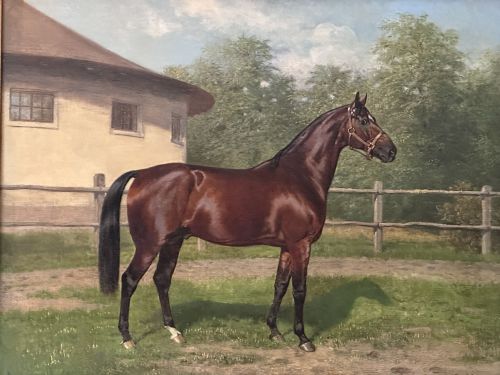
Brown equestrian canvas art brings together historic equine portraiture and sporting scenes painted in oils on canvas.
Brown Equestrian Canvas Art
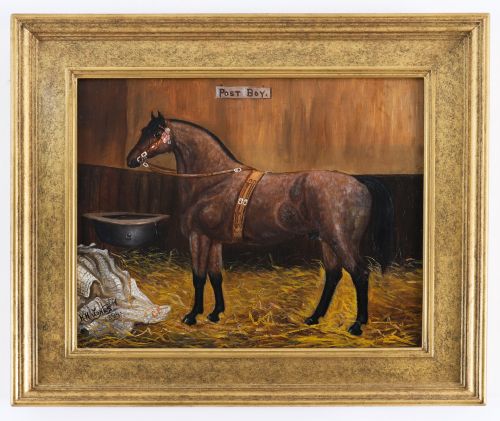
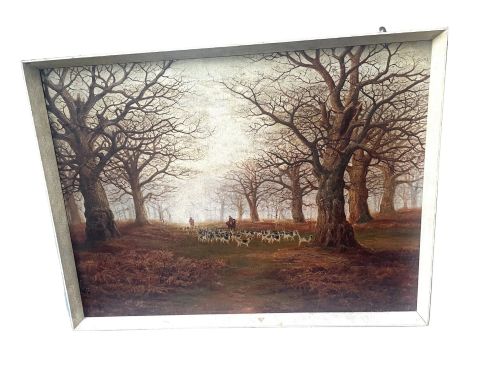
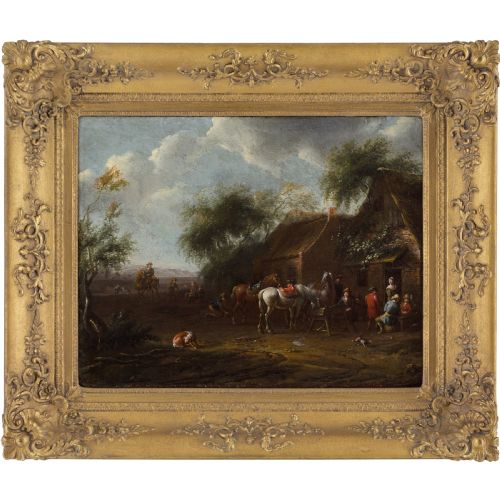
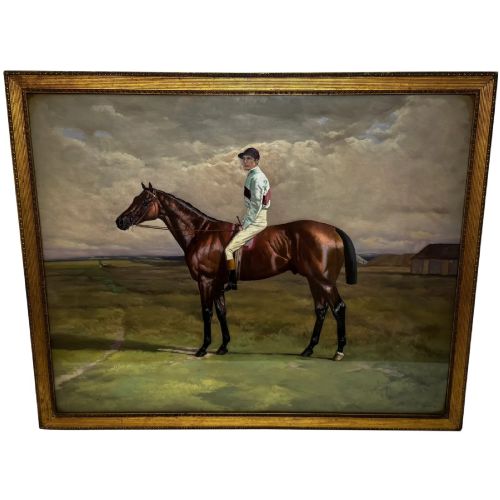
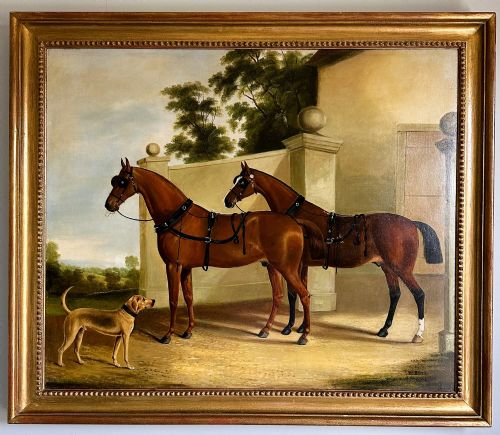
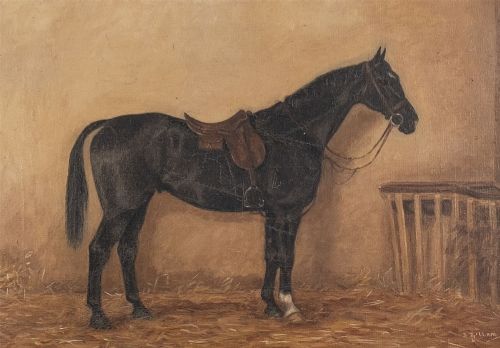
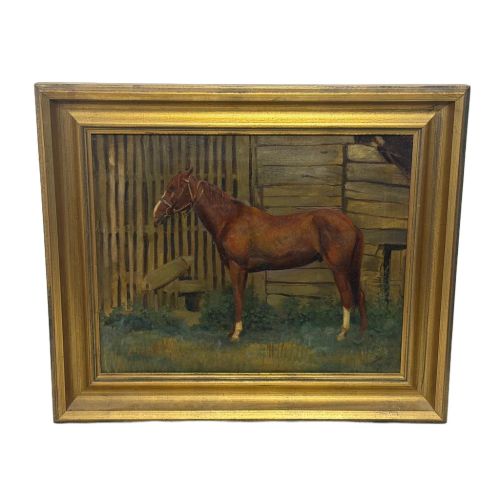
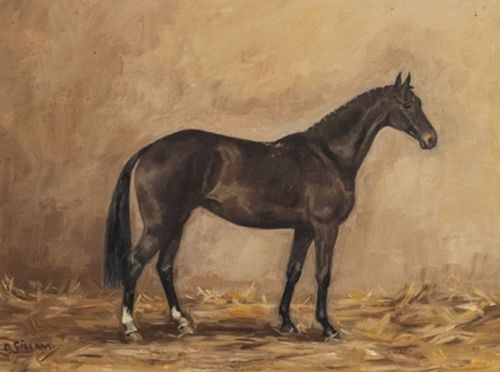
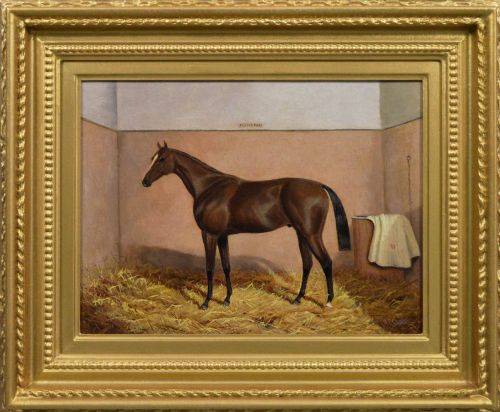
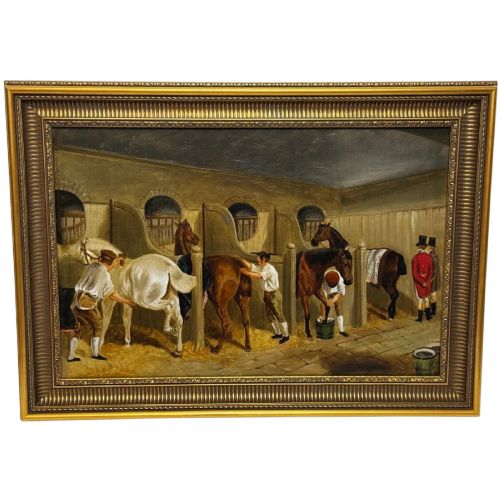
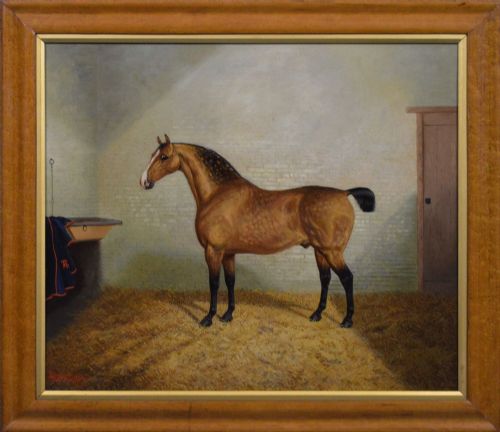
These works comprise oil paintings executed on canvas, depicting horses, hounds, and rural sporting subjects. Collectors searching for brown equestrian canvas art encounter 19th-century and early 20th-century portrayals of racehorses, hunters, and stable scenes.
The selections span Victorian and Edwardian periods, featuring individual animal portraits alongside broader coaching and racing compositions. Many pieces highlight named thoroughbreds, working horses, and countryside animals rendered by period painters.
Materials and Techniques
Artists built these compositions utilising oil paint applied to woven canvas supports, often stretched over wooden frames and housed in giltwood moulding. The layering of oil pigments allowed painters to capture the sheen of a horse's coat and the textures of stable interiors.
Framing typically involved gilt or gilt wood surrounds that complemented the earthy tones of the pigment palette. These physical components define the material structure of the works seen across the inventory.
Brown Equestrian Canvas Art Retail Price Guide 2026
Typical asking prices for brown equestrian canvas art among the pieces listed under this phrase on Sellingantiques today, from the lower quarter to the upper quarter. They describe what is for sale here now, not the wider market.
Distinctions in Execution
The proficiency of the anatomical drawing and the expressive handling of the animal's form separate standard decorative works from accomplished academic pieces. Master painters rendered muscle structure, light reflection on hair, and realistic posture with distinct precision.
Condition of the canvas, stability of the oil layers, and originality of the period frame influence the integrity of each piece. Works bearing documented provenance or attribution to known equine artists command closer attention from collectors.
Henry Barraud·Albert Clark·Sir Edwin Henry Landseer·Fred Fitzpatrick·John Ferneley Senior·John Frederick Herring
The Brown Equestrian Canvas Art Glossary
- Canvas
- A heavy woven fabric used as a support surface for oil painting. It provides the textured base upon which the pigment is applied.
- Giltwood
- Wood carved and coated with a thin layer of gold leaf or metallic gilt powder. This material is standard for period picture frames.
- Equine Portrait
- A painting specifically focused on recording the likeness and conformation of an individual horse. These works often name the animal and its owner.
- Sporting Art
- A genre of painting dedicated to equestrian subjects, hunting, racing, and rural pastimes. It gained significant popularity during the Victorian era.
Brown Equestrian Canvas Art: Frequently Asked Questions
What periods do these paintings date from?
The available works primarily span the nineteenth and early twentieth centuries, encompassing Victorian and Edwardian periods.
Specific dates within the listings stretch from the early 1800s through to mid-century examples.
How were these canvas works originally displayed?
These oil paintings were mounted in wooden frames, frequently finished with gilt or gold leaf to highlight the artwork.
They traditionally hung in country houses, estate offices, and stable block rooms.
How do I identify a named racehorse portrait?
Inscriptions on the canvas, stretcher bars, or framing often record the specific name of the horse, owner, or race victory.
Comparative study of nineteenth-century racing records helps verify the identities of noted animals.
What subjects besides horses appear in these artworks?
Compositions frequently incorporate hunting hounds, stable dogs, farm animals, and rural landscape backdrops.
Scenes range from solitary stable portraits to dynamic racing and coaching environments.