



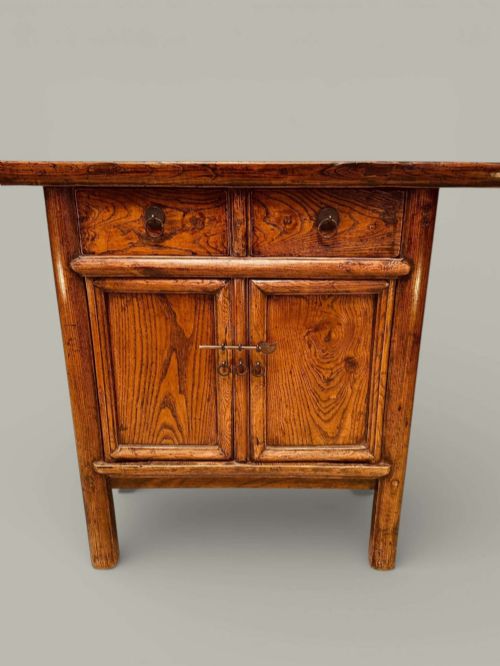
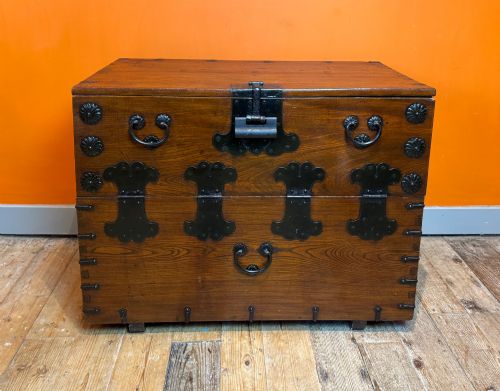
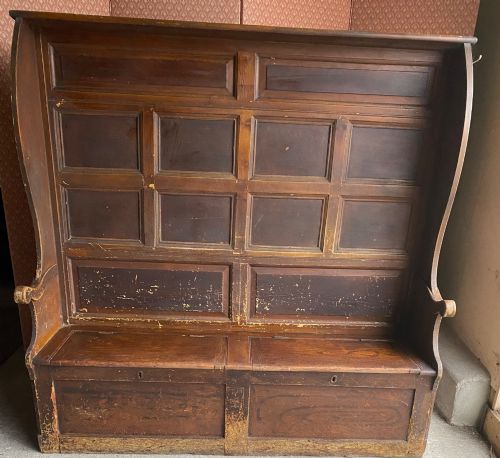
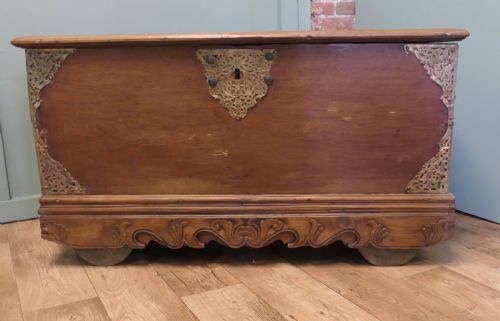

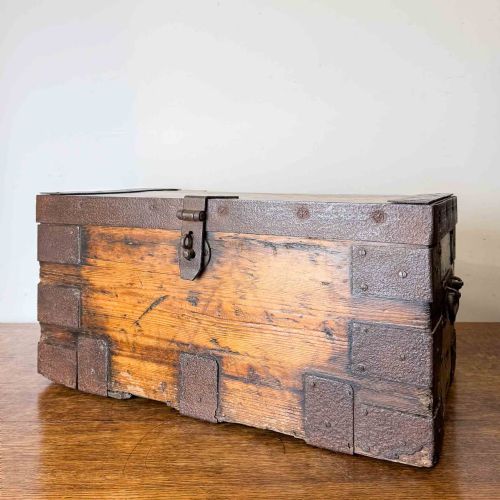


Brown Elm Coffer
These brown elm coffer pieces offer sturdy historic storage, prized for their rich timber grain and honest vernacular character.
Brown Elm Coffer
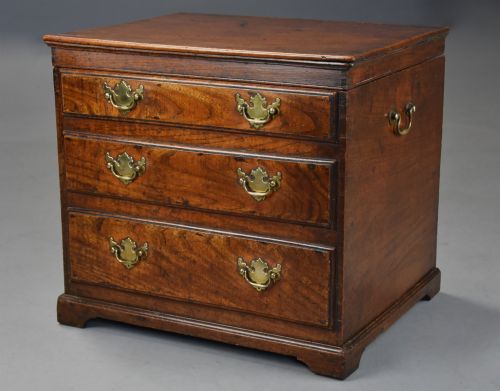
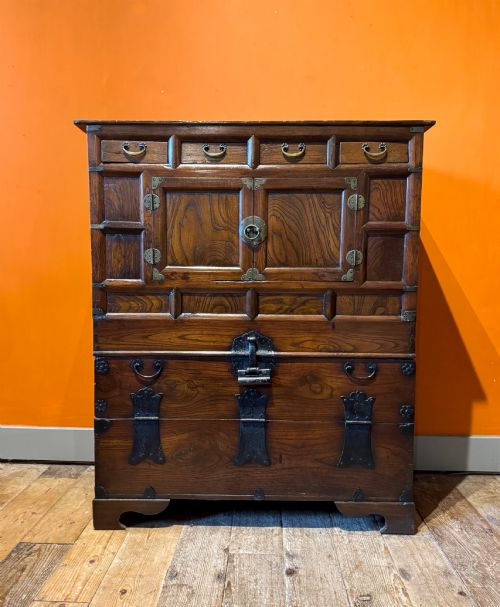
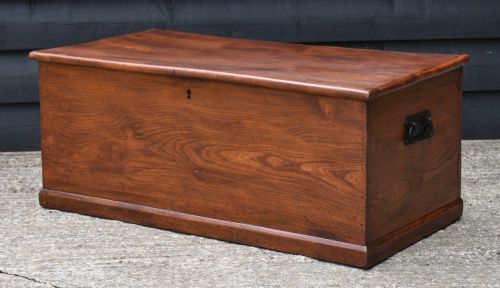
A brown elm coffer provides practical storage through robust timber construction dating primarily from the eighteenth and nineteenth centuries. Buyers searching for a brown elm coffer encounter traditional vernacular forms ranging from simple six-plank blanket boxes to mule chests fitted with lower drawers.
Many examples reflect regional country styles including Georgian English and rustic French traditions, alongside related domestic forms like dough bins and bible boxes. The predominant material is elm, selected for its tough interlocking grain and rich warm colour.
Materials and construction
Makers built these pieces using solid timber boards of elm, often supplemented with pine for internal linings or structural elements. Burr elm is also utilised in select refined examples, displaying highly figured grain patterns across the primary surfaces.
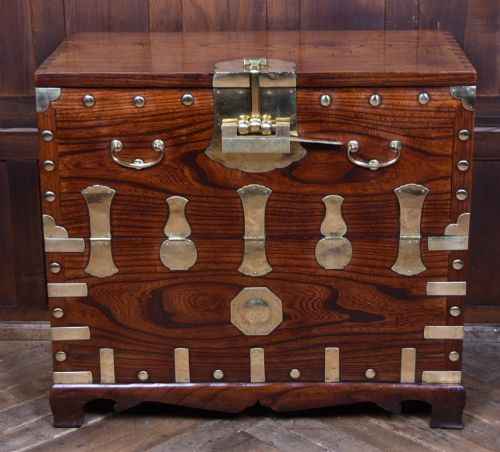
Iron and brass hardware such as strap hinges, carrying hoops, hasps and corner mounts provide functional reinforcement. Joinery relies on traditional methods suited to domestic utility and heavy everyday service.
Brown Elm Coffer Retail Price Guide 2026
Typical asking prices for brown elm coffer among the pieces listed under this phrase on Sellingantiques today, from the lower quarter to the upper quarter. They describe what is for sale here now, not the wider market.
Current listings feature eighteenth and nineteenth century periods alongside styles from English, French, and Chinese regional traditions.
Assessing quality
Quality rests upon the selection of the timber and the integrity of the original construction, with burr figuring and rich natural patination elevating certain pieces above standard utility boxes. The retention of original iron or brass mounts and functional hinges distinguishes superior survivals from later replacements.
Proportion and regional form define the character of each piece, where clean vernacular lines and undisturbed surface finishes demonstrate superior craftsmanship compared to heavily altered or over-restored examples.
The Brown Elm Coffer Glossary
- Cofer
- A large solid chest used historically for storing valuables, linens or documents. These pieces often feature sturdy board construction and hinged lids.
- Six-plank coffer
- A primitive chest constructed from six individual boards joined directly at the edges without a complex frame. This represents an ancient method of box building.
- Mule chest
- A storage chest fitted with one or more drawers beneath the main compartment. This form bridges the evolution between simple coffers and modern drawer chests.
- Dough bin
- A domestic wooden trough with a fitted lid, historically utilised for kneading bread dough. These containers share the sturdy elm construction typical of country furniture.
- Bible box
- A small tabletop desk or storage box designed to hold sacred texts and writing implements. They frequently feature hinged sloping lids and initialled panels.
Brown Elm Coffer: Frequently Asked Questions
What is a brown elm coffer?
A brown elm coffer is a traditional storage chest made from elm timber, valued for its durability and distinct grain pattern.
These pieces typically date from the eighteenth and nineteenth centuries and served various domestic storage purposes.
How old are these coffers?
The pieces available range primarily across the eighteenth and nineteenth centuries, reflecting Georgian and country vernacular traditions.
Exact dating relies on construction methods, timber patination and historical joinery techniques visible on the individual box.
Where were they made?
They originate from various European country workshops, encompassing English, French and regional vernacular styles.
The utilitarian design reflects the local wood-working traditions and the ready availability of tough elm timber.
How do I care for elm furniture?
Maintain the wood by keeping it away from direct heat sources and sudden humidity changes to prevent timber splitting.
Apply a light application of traditional beeswax periodically to nourish the surface and preserve the natural colour.
Can I use a coffer as a coffee table?
Their flat lids and solid construction make these chests suitable for alternative domestic functions like low tables.
Ensure items placed on the surface do not trap moisture or scratch the historic timber finish.