

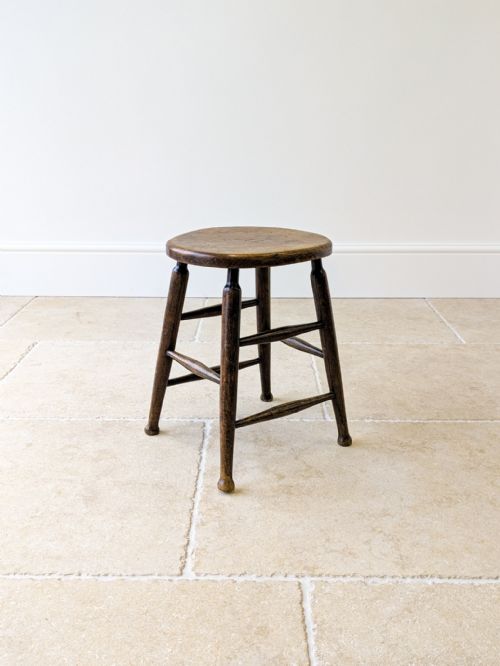
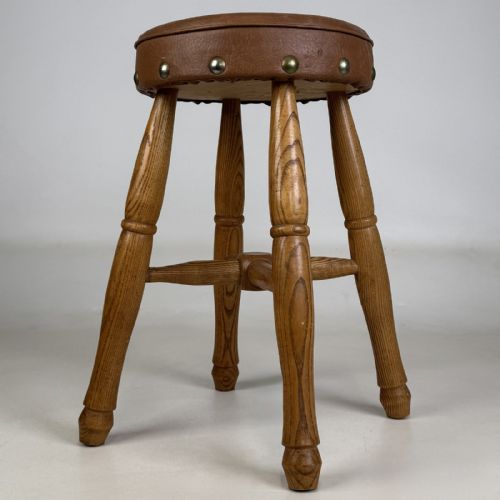
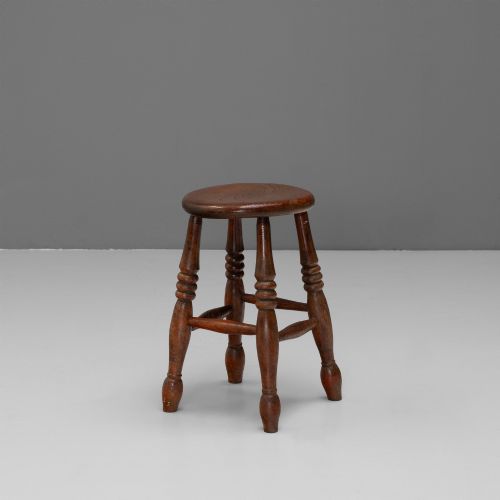
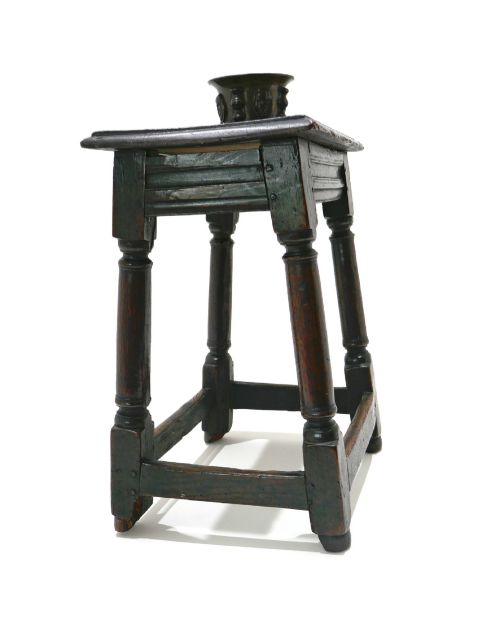
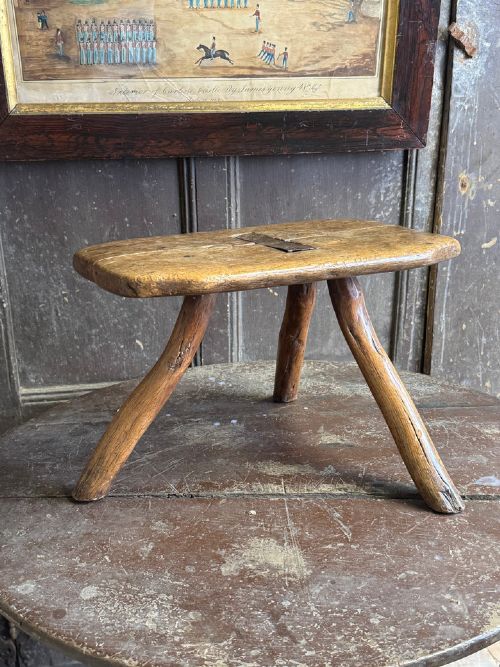
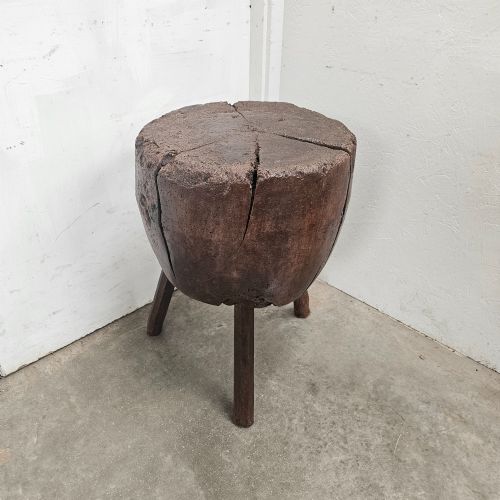
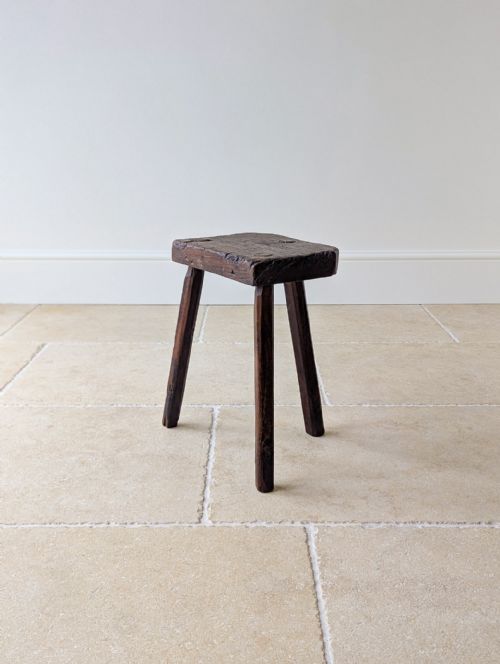
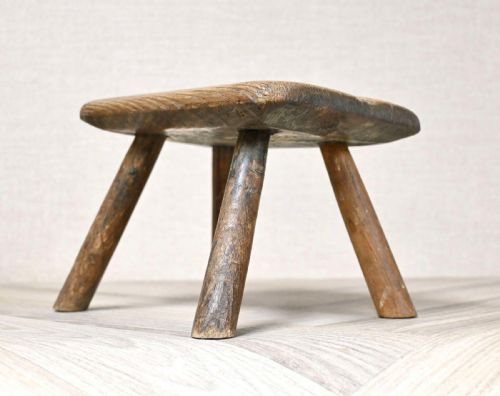
Brown Country Stool
A brown country stool offers unpretentious utility, bringing raw timber character and centuries of functional design into modern interiors.
Brown Country Stool
A brown country stool represents the utilitarian seating and work platforms shaped by provincial makers across the eighteenth and nineteenth centuries. These pieces encompass vernacular forms designed for specific tasks, from dairy work to tavern socialising.
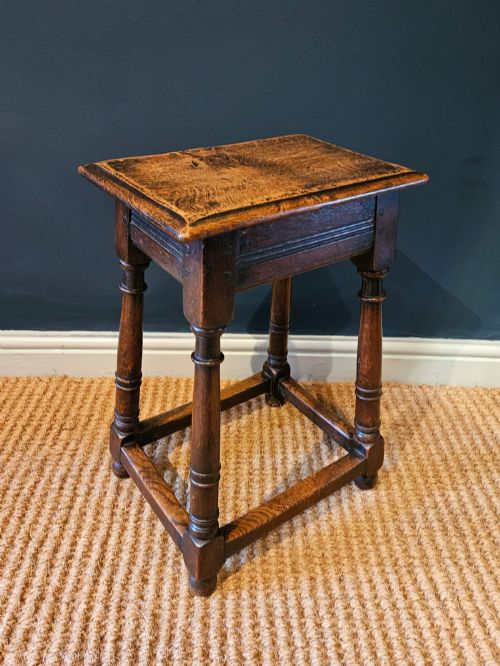
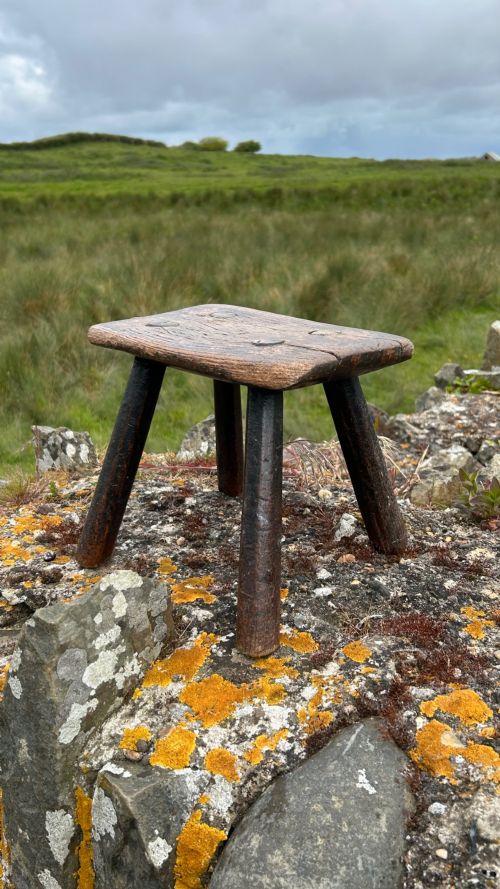
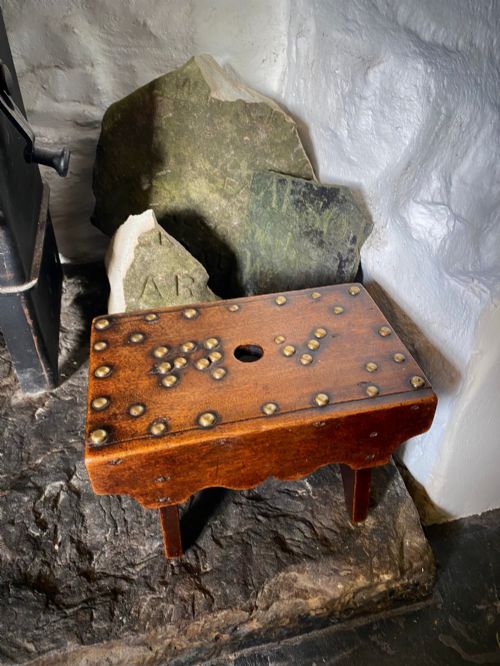
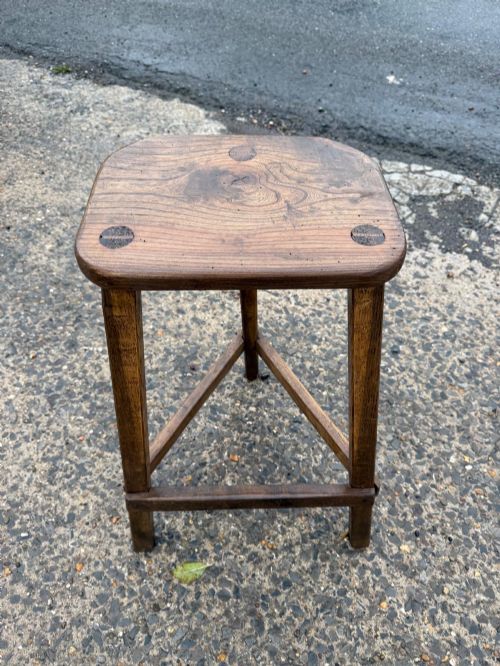
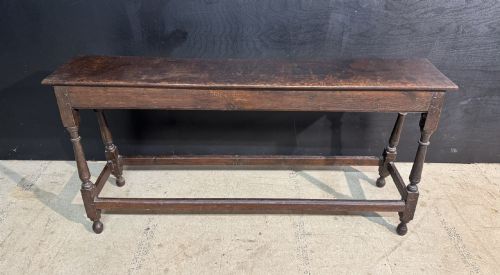
The selections available here lean heavily toward nineteenth-century examples alongside earlier Georgian pieces. Forms range from simple three-legged milking stools and pub tavern seats to robust joint stools and low hearth benches.
Timbers such as oak, elm, ash, and beech dominate these listings, reflecting the local woods accessible to country carpenters and village blacksmiths. Each piece carries the marks of daily domestic or agricultural labour.
How they were made
Construction relies on solid hardwoods combined with traditional joinery methods like mortise and tenon joints or wedged through-tenons. Country makers utilised green wood techniques, allowing legs to shrink and lock tightly into bored seats as the timber dried.
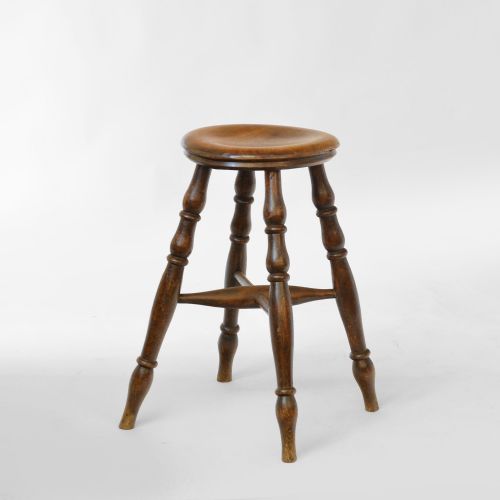
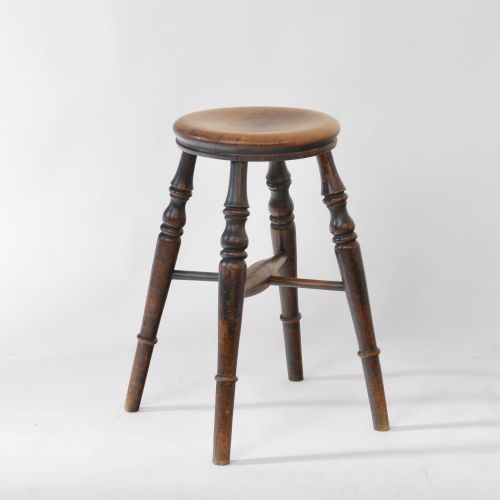
Surfaces show the physical evidence of hand tools, including adzed dished tops, turned spindles, and splayed hedgerow legs designed for stability on uneven floors. Iron brackets, blacksmith repairs, and pegged frames reinforce the structural integrity of these utilitarian objects.
Brown Country Stool Retail Price Guide 2026
Typical asking prices for brown country stool among the pieces listed under this phrase on Sellingantiques today, from the lower quarter to the upper quarter. They describe what is for sale here now, not the wider market.
The inventory records vernacular items spanning Georgian, Victorian, and primitive country styles.
What varies in quality
Quality rests upon the integrity of the original construction and the character of the timber rather than decorative elaboration. Superior examples retain their original surface patination, uncompromised legs, and honest structural repairs from working life.
Proportion and seating geometry separate standard utilitarian items from exceptional vernacular pieces. A well-balanced splay in the legs and a deeply sculpted or figured seat distinguish the finer survivals of country craftsmanship.
The Brown Country Stool Glossary
- Joint stool
- A sturdy wooden seat constructed with mortise and tenon joints pegged together, common in seventeenth and eighteenth-century households.
- Vernacular
- An architectural or design style created by local artisans using regional materials without academic training.
- Splayed legs
- Support legs angled outward from the centre to provide greater stability on uneven floors.
- Dished top
- A seat surface carved into a shallow concave depression to fit the human body comfortably.
- Tavern stool
- A tall public house seating form, typically featuring an oval top and robust turned underframing.
Brown Country Stool: Frequently Asked Questions
How do I use a country stool at home?
Country stools function well as side tables, bedside surfaces, or plant stands in addition to their original seating purpose. Their modest dimensions allow them to fit easily into small corners or narrow hallways.
Placing an antique stool next to a modern sofa introduces warmth and textural contrast through aged timber surfaces.
How can I tell an eighteenth-century stool from a nineteenth-century one?
Eighteenth-century pieces often display heavier oak construction with pegged joints, deep patination, and vernacular styling typical of early provincial joinery. They frequently show signs of substantial wear and structural evolution over centuries of use.
Nineteenth-century variants frequently incorporate elm seats, ash legs, or beech turnings, reflecting specialised trade production in workshops across Britain and France.
Why do some country stools have only three legs?
Three-legged construction ensures that a stool remains stable on uneven stone or dirt floors without rocking. This practical design was essential for dairy workers and agricultural labourers operating in barns or fields.
The tripod geometry naturally distributes weight evenly across the supporting points.