

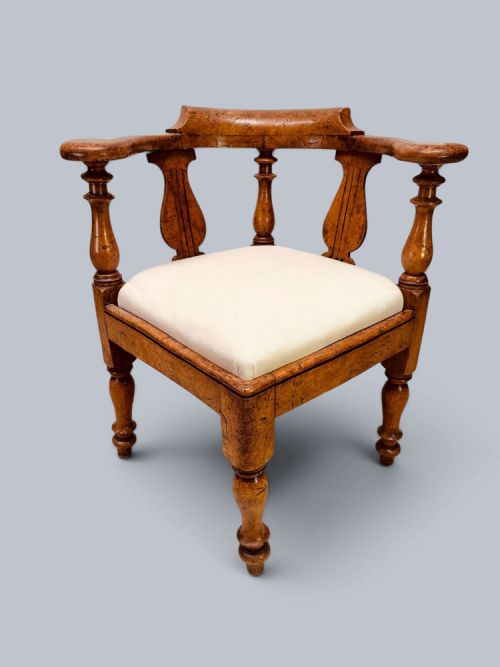
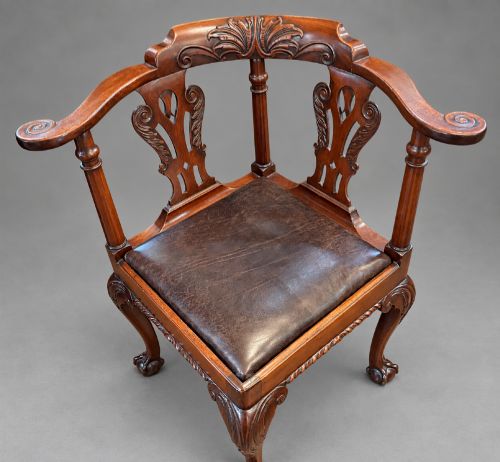
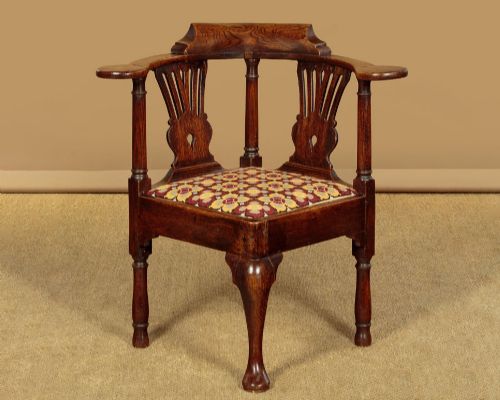
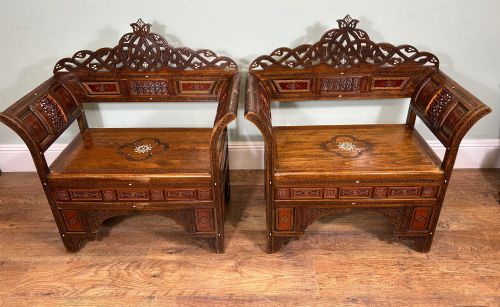
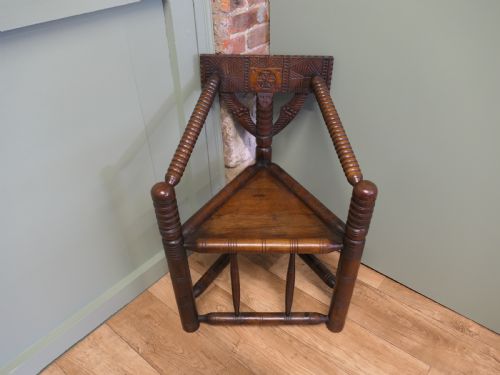
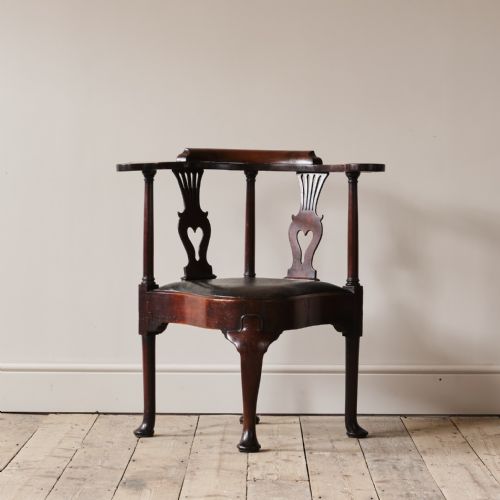

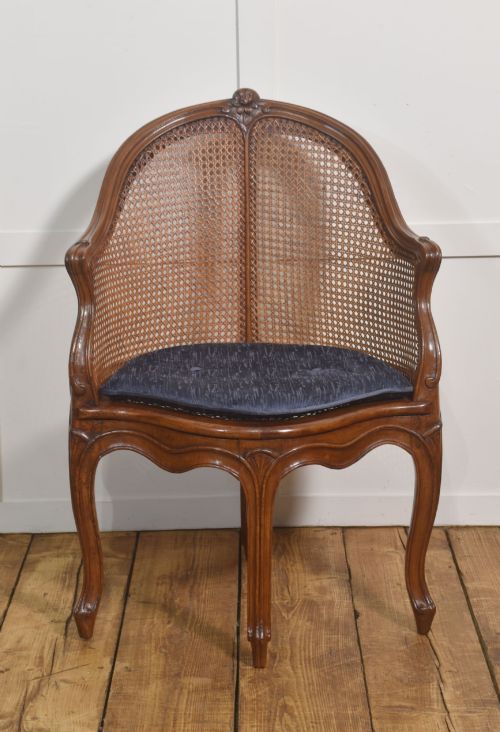
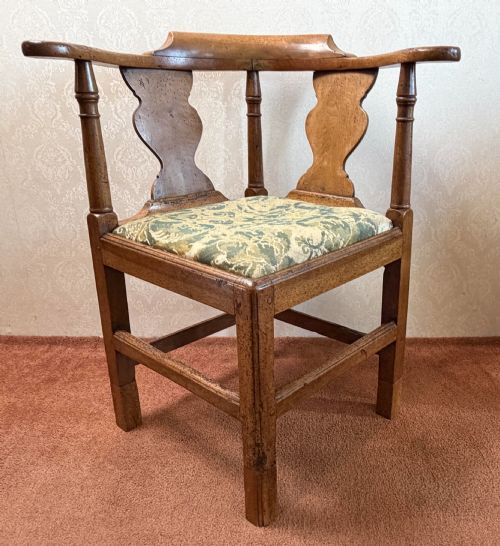
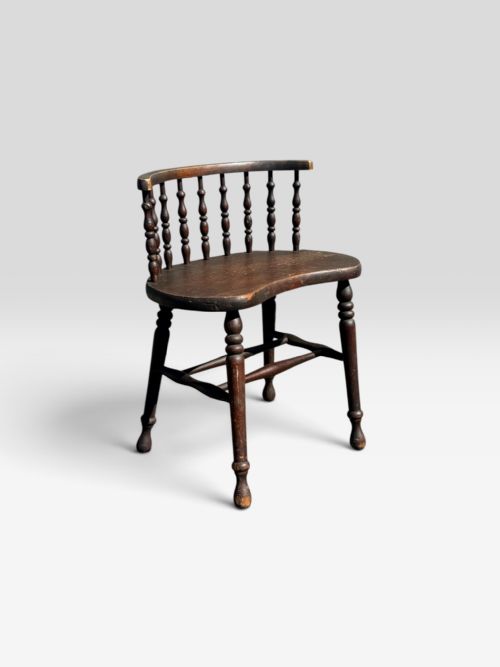
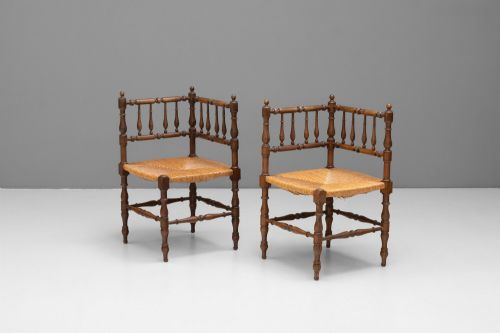
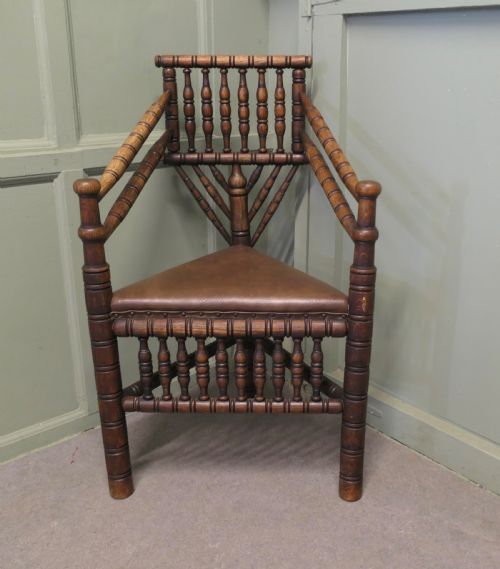
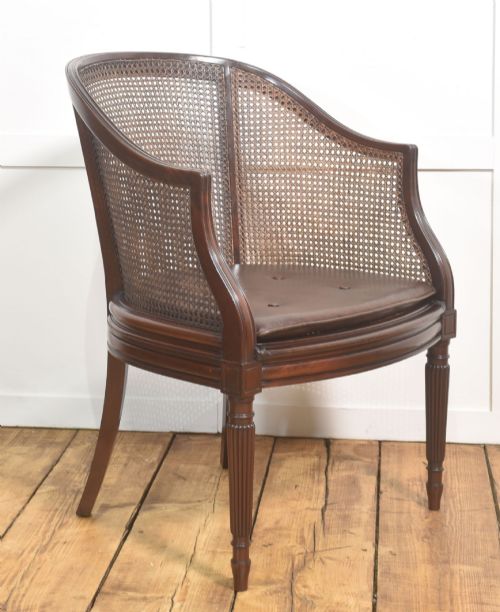
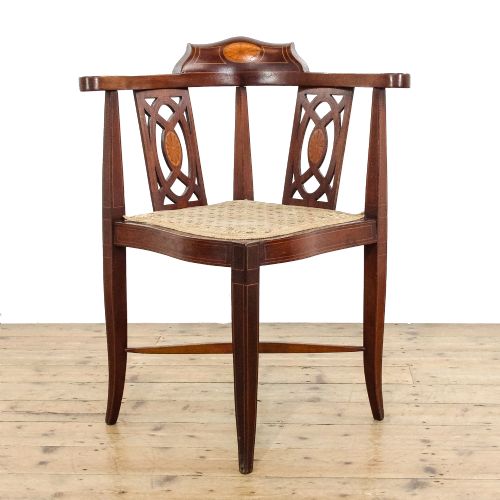
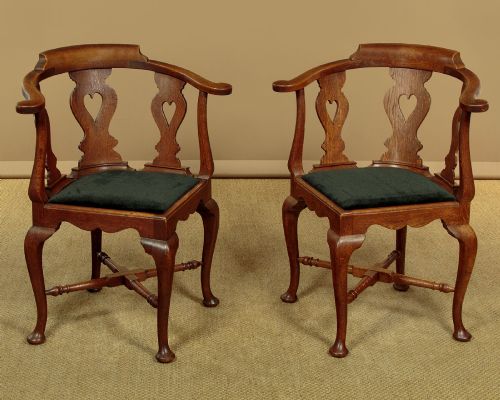
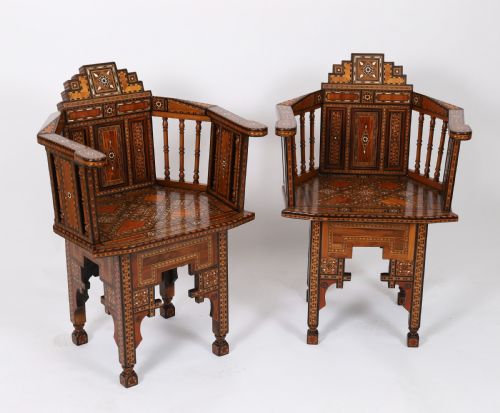
Brown Corner Chair
A brown corner chair fits neatly into neglected angles while offering a sturdy seat shaped for conversation.
Brown Corner Chair
A brown corner chair provides a practical seating option designed specifically to occupy the junction of two walls. These pieces emerge in styles ranging from Georgian and Victorian to Edwardian iterations.
The most common version met on this page is the mahogany or oak corner chair originating from the 18th or 19th Century. These examples often feature curved backs and corner posts built for stability in domestic interiors.
How they were made
Cabinet makers constructed these seats primarily using hardwoods like oak, mahogany, and walnut. Timber selection dictated the strength of the intersecting rails and the longevity of the frame.
Joinery techniques involved sturdy mortise and tenon joints to withstand the stress placed upon the diagonal corner configuration. Decorative elements occasionally incorporated boxwood stringing, cane panels, or fabric upholstery.
Brown Corner Chair Retail Price Guide 2026
Typical asking prices for brown corner chair among the pieces listed under this phrase on Sellingantiques today, from the lower quarter to the upper quarter. They describe what is for sale here now, not the wider market.
Some historic iterations double as massive, heavy wooden thrones where the local storyteller could hold court in the corner.
What varies in quality
The sophistication of the timber grain and the crispness of any carved detailing separate standard examples from finer outputs. Superior pieces display carefully selected walnut or mahogany veneers alongside harmonious proportions.
Structural integrity depends on the original tightness of the frame and the retention of supportive corner blocks. Unrestored surfaces with undisturbed patina command greater appreciation among traditional collectors.
The Brown Corner Chair Glossary
- Corner Chair
- A seat designed to fit squarely into the intersection of a room with a diagonal orientation and a semi-circular backrest. These items function well as writing or occasional seats.
- Mahogany
- A durable tropical hardwood possessing a rich reddish-brown hue favoured by 18th Century cabinet makers. This material takes a fine polish and resists warping.
- Inlay
- A decorative technique where contrasting materials such as boxwood or mother-of-pearl are inserted into recesses carved into the primary wood surface. This adds geometric or floral ornamentation to the chair frame.
- Cane
- Material woven from rattan peel to form a light, breathable panel for seats or backrests. This technique lightens the visual weight of heavy hardwood frames.
- Turned
- Wood shaped on a lathe to create symmetrical cylindrical or spindle components. Turner's chairs utilise this method extensively for structural posts and spindles.
Brown Corner Chair: Frequently Asked Questions
How do I place a brown corner chair in a room?
Position the seat directly into an empty room junction to utilise awkward architectural space effectively. It serves as an ideal reading spot without obstructing pathways.
Alternatively, pull the piece slightly away from the walls to display the curved back and arm design from multiple angles.
What is the difference between Georgian and Edwardian versions?
Georgian versions rely on solid mahogany or walnut construction with robust joinery and understated structural lines. They frequently function as desk or reading seats.
Edwardian iterations often incorporate delicate mahogany framing, lighter satinwood or boxwood inlay, and sometimes cane panels or upholstered seat pads for decorative salon use.
How were these chairs originally used?
These seats were positioned in domestic parlours, bedrooms, or studies where space was at a premium. The diagonal design allowed occupants to converse comfortably while remaining out of the main traffic flow.
Certain sturdy examples were specifically utilised as writing or reading chairs within corners of libraries.
How do I care for antique wood furniture?
Maintain the timber by keeping the piece away from direct heat sources and fluctuating humidity levels. Apply suitable wax polish sparingly to nourish the dry wood grain.
Avoid harsh chemical cleaners that can strip the historic polish and diminish the natural surface lustre.