

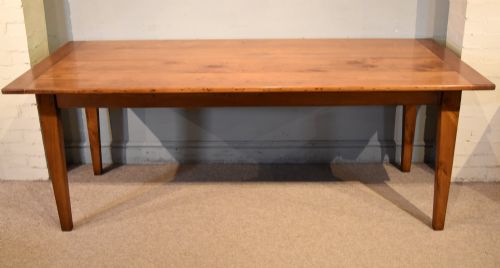
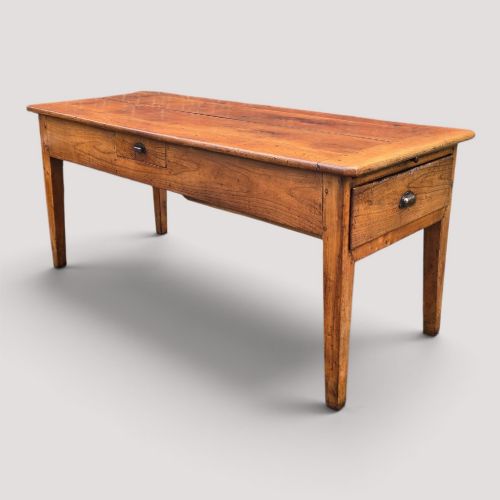
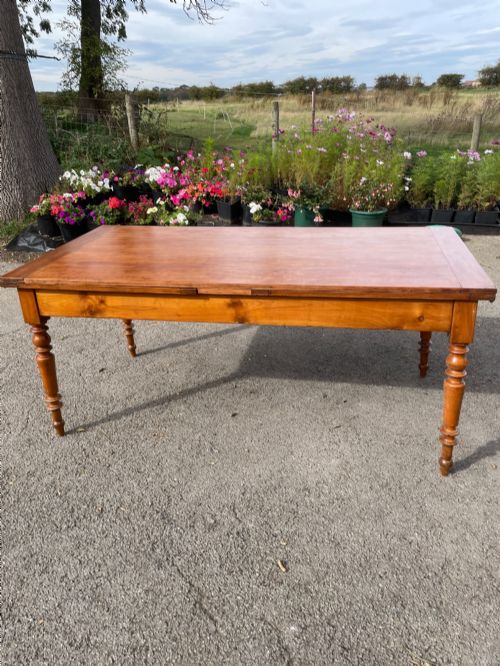
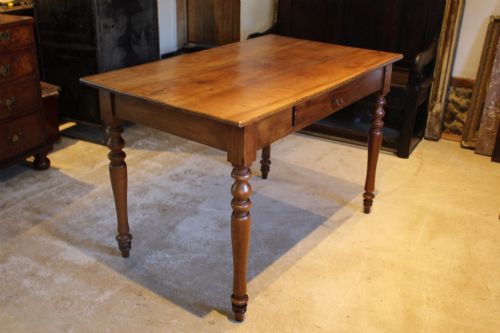
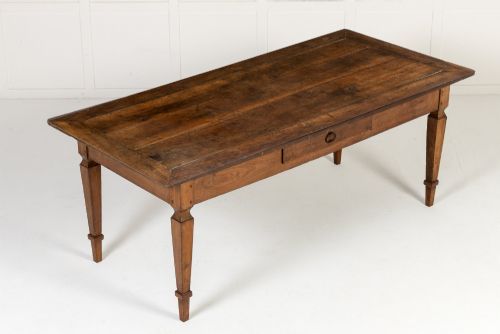
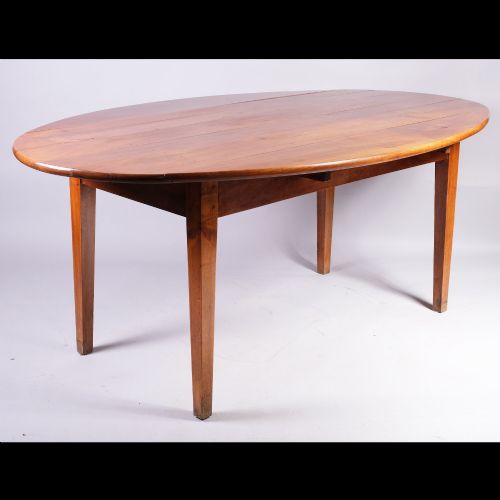
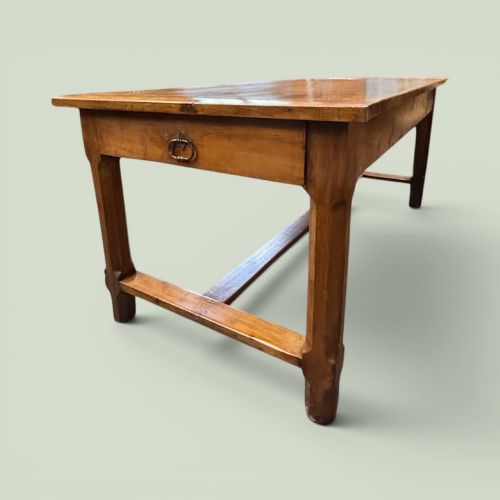
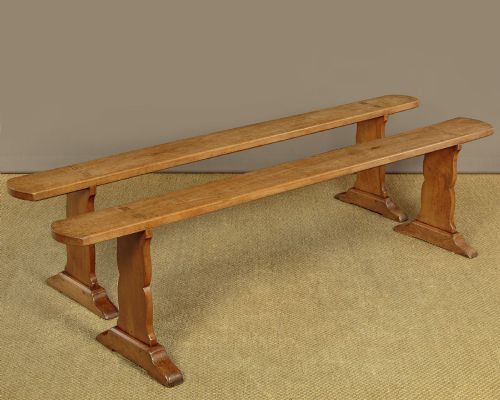
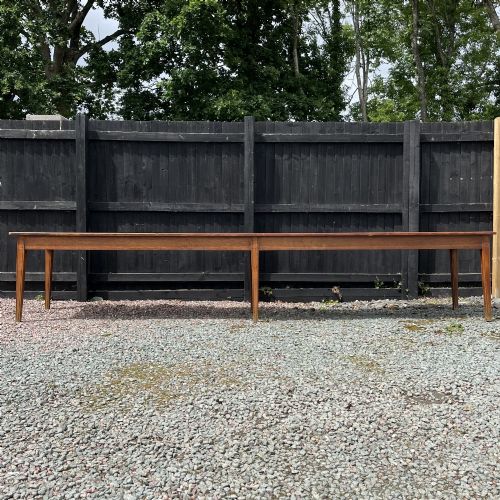
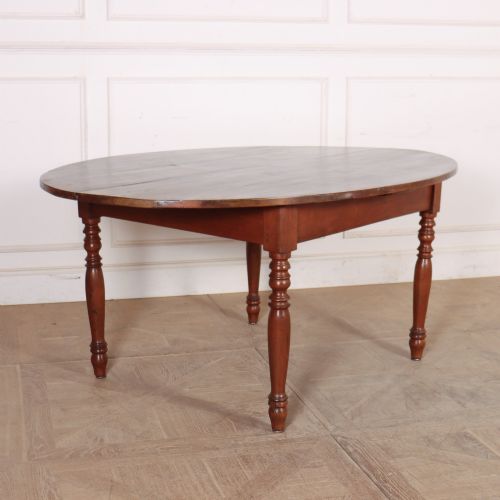
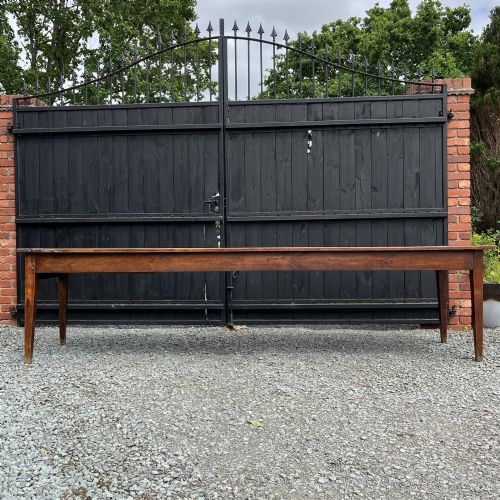


Brown Cherrywood Kitchen Table
These brown cherrywood kitchen table examples bring warmth and utility to a room through dense fruitwood grain and honest nineteenth century construction.
How they were made
Construction relies upon solid cherrywood and fruitwood timber selected for density and character, supplemented by structural iron or metal and brass fittings where appropriate. Joinery follows traditional provincial methods suited to heavy daily domestic use.
Surface details include sliding bread boards, extension leaves, and integrated drawers built into the timber framing. Legs range from simple straight supports to shaped cabriole profiles characteristic of French country furniture.
What varies in quality
Proportions and scale separate standard examples from grander pieces, with exceptionally long timbers or tall manor house formats commanding attention. The presence of functional additions such as double drawers or extending leaves alters the utility and execution of the design.
The depth of the natural wood patina and the crispness of provincial carving on legs and aprons determine the visual distinction of each table. Timber selection also varies, with denser fruitwood grain offering a richer surface texture.
Brown Cherrywood Kitchen Table Retail Price Guide 2026
Typical asking prices for brown cherrywood kitchen table among the pieces listed under this phrase on Sellingantiques today, from the lower quarter to the upper quarter. They describe what is for sale here now, not the wider market.
Materials across these listings are strictly confined to timber, cherrywood, fruitwood, brass, iron, and metal.
The Brown Cherrywood Kitchen Table Glossary
- Cherrywood
- A dense, close-grained timber harvested from cherry trees, prized for its warm reddish-brown colour and smooth polishing qualities. It darkens naturally with exposure to light over time.
- Bread slide
- A pull-out wooden board integrated beneath the table top, historically used for slicing bread or expanding workspace in busy kitchens. It runs on concealed wooden runners.
- Cabriole leg
- A furniture leg that curves outward and then tapers inward, inspired by the motion of an animal leg. This style appears frequently on provincial French tables.
- Refectory table
- A long, narrow dining table traditionally built for communal dining halls, adapted over centuries into domestic farmhouse formats for everyday use.
- Fruitwood
- A collective term for timber sourced from fruit-bearing trees such as cherry, apple, and pear. These woods are dense and yield subtle grain patterns.
Brown Cherrywood Kitchen Table: Frequently Asked Questions
How do I maintain cherrywood?
Clean the surface with a damp cloth and dry it immediately to preserve the natural timber finish. Avoid placing the table near direct heat sources to prevent the wood from splitting.
Apply natural beeswax periodically to nourish the cherry grain and maintain its characteristic warm lustre without building up heavy synthetic lacquers.
Are these tables suitable for daily use?
These pieces were originally built for heavy domestic tasks in farmhouses and manor kitchens. Their solid fruitwood construction makes them robust enough for regular family dining.
Using mats and coasters helps protect the historic patina from everyday moisture and heat marks while you enjoy using the table.
How can I tell the period?
Dating relies on examining the construction methods, tool marks on the underside, and the specific style of the legs and drawer joints. Nineteenth century examples often show hand-cut joinery and signs of significant timber shrinkage.
Comparing the hardware, such as brass pulls or iron brackets, alongside regional French design traits helps confirm whether a piece belongs to the eighteen hundreds or the Edwardian era.
What is a bread slide used for?
The integrated pull-out board provided extra workspace in historical kitchens for kneading dough or slicing loaves. It tucked away neatly beneath the main top when not required.
Modern owners often utilise the slide as an occasional shelf or keep it extended to appreciate the mechanical ingenuity of provincial cabinetmakers.