

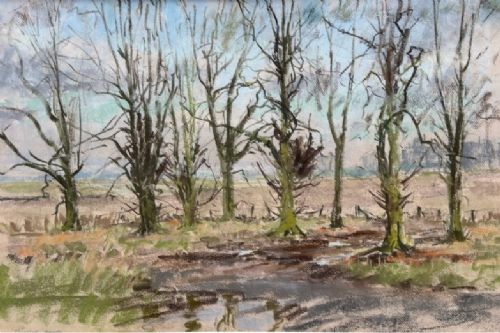
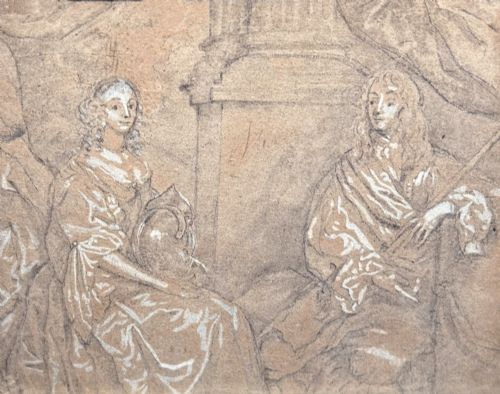
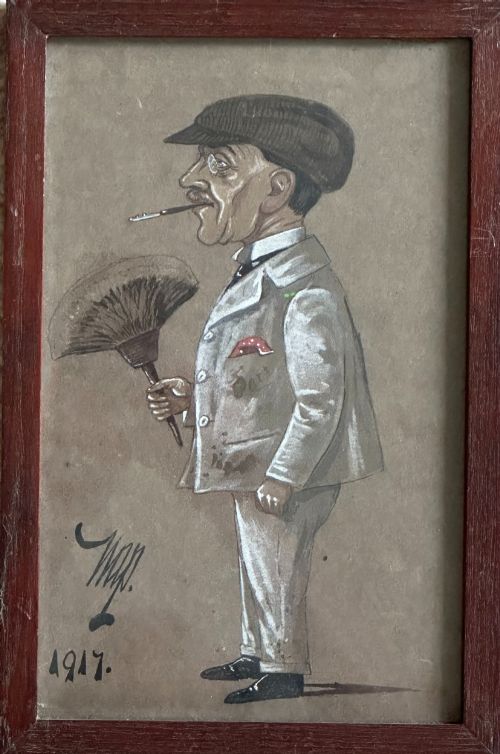
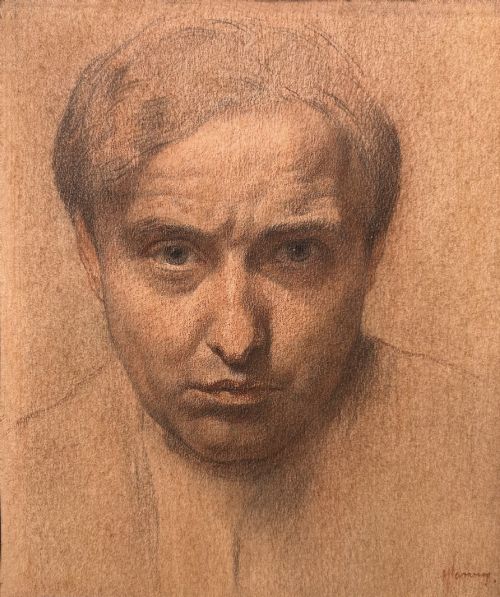


Brown Chalk Drawing
These brown chalk drawing works capture fleeting likenesses and studies on paper through the tactile warmth of earth-toned pigments.
Brown Chalk Drawing
A brown chalk drawing brings together portraits, caricatures, and figure studies executed across various historical periods, spanning from the seventeenth century through the Edwardian era. These original works on paper often utilise toned backgrounds to heighten contrasts and build depth through simple, direct marks.
Buyers frequently encounter framed portraits and character studies, including works by named artists such as George Richmond and Cecil Charles Windsor Aldin. The selection ranges from academic realism to expressive caricatures, reflecting diverse artistic intentions from preliminary sketches to finished gallery pieces.
Materials and techniques
Artists typically executed a brown chalk drawing on paper or toned paper, frequently combining chalk with charcoal, graphite, and ink to enrich tonal gradations. These mediums allowed draftsmen to lay down soft shadows and sharp outlines with equal ease.
Finished pieces are commonly housed behind glass within wooden frames, protecting the delicate pigment layers from airborne dust and moisture.
Brown Chalk Drawing Retail Price Guide 2026
Typical asking prices for brown chalk drawing among the pieces listed under this phrase on Sellingantiques today, from the lower quarter to the upper quarter. They describe what is for sale here now, not the wider market.
The listings span multiple centuries, incorporating materials such as charcoal, ink, glass, and toned paper alongside traditional chalk.
Judgement of quality
Quality rests upon the sureness of the draftsman's hand and the expressive vitality captured in the lines. A successful sheet demonstrates confident handling of shadow and light, breathing life into a portrait or study without relying on excessive detail.
The integration of the paper tone into the overall composition distinguishes finer examples from more rigid academic exercises. Preservation of the friable chalk pigment without excessive smudging also marks a well-kept survival.
Peter Lely·Herbert Johnson Harvey·Cecil Charles Windsor Aldin·Robert Faulkner·John Macallan Swan·George Richmond
The Brown Chalk Drawing Glossary
- Chalk
- A soft drawing material made from prepared earths and minerals, offering rich, matte lines. It allows the artist to blend tones smoothly across the surface of the paper.
- Toned paper
- Paper manufactured or prepared with a neutral or tinted hue rather than plain white. This provides a mid-tone ground that lets the artist build highlights with white chalk and shadows with dark chalk.
- Graphite
- A form of crystalline carbon used for fine underdrawing and precise linear work. It often accompanies softer chalk marks in preparatory studies.
- Academic realism
- A style of painting and drawing produced under the influence of European academies of art. It prioritises accurate anatomical observation and careful tonal finish.
Brown Chalk Drawing: Frequently Asked Questions
How should I frame a chalk drawing?
Ensure the artwork sits behind glass with a mount that prevents the paper from touching the glazing directly. This prevents condensation from disturbing the friable pigment.
Keep the framed piece away from direct sunlight to prevent the paper from yellowing and the chalk tones from fading over time.
What is toned paper?
Toned paper provides a pre-colored background, usually in shades of grey, tan, or brown, rather than stark white. This allows artists to work bidirectionally by adding both dark shadows and white highlights.
The mid-tone ground unifies the composition and speeds up the sketching process by reducing the need to cover every millimeter of blank white space.
Are these drawings preliminary sketches?
Some sheets function as rapid preparatory studies for larger paintings, capturing gestures or facial expressions quickly. Others were created as finished independent portraits intended for display.
Signatures, detailed framing, and complete composition often indicate whether a piece was meant to stand alone as a finished artwork.