



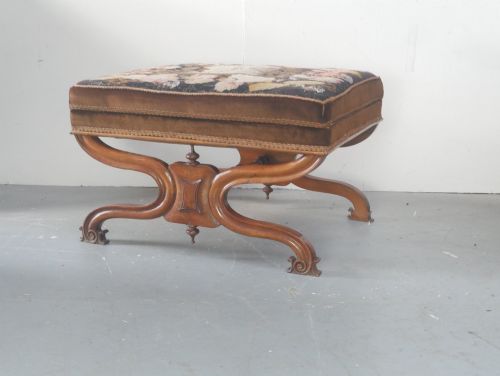
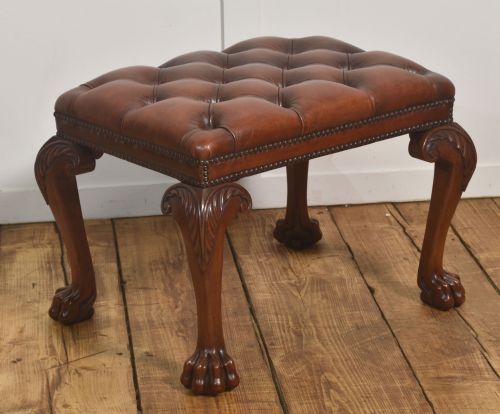
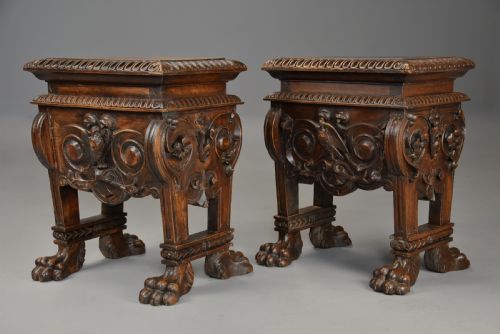
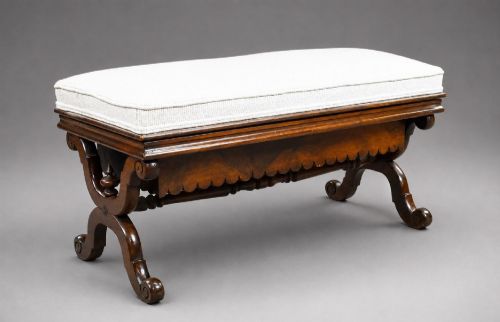
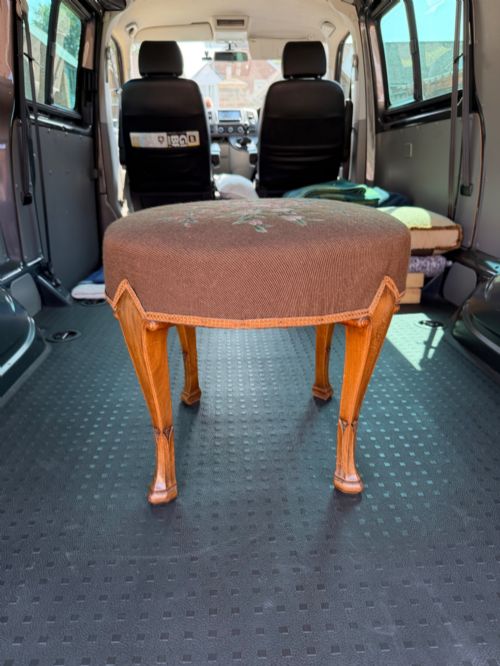
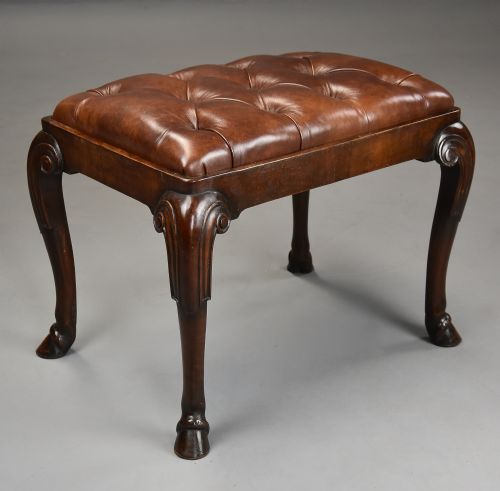
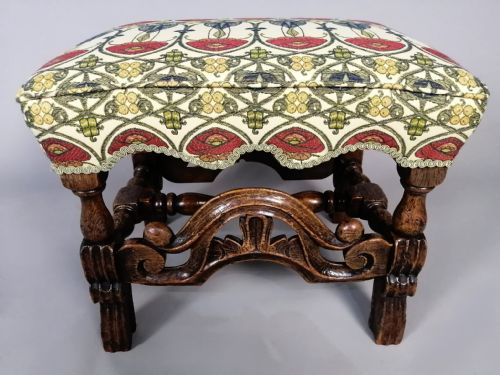
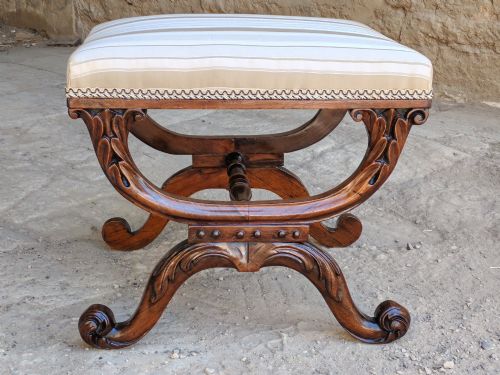
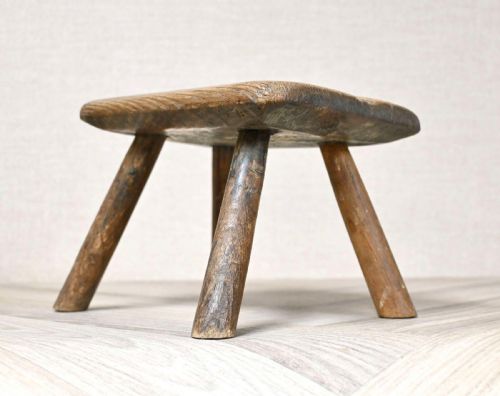
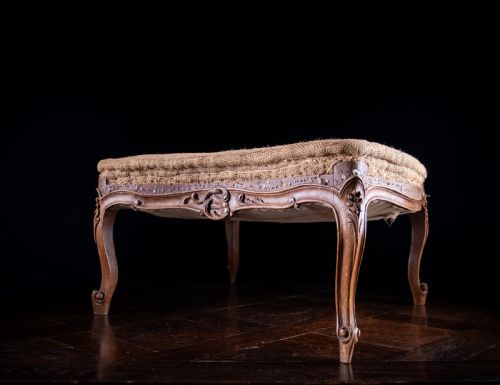
Brown Carved Footstool
A brown carved footstool offers solid timber construction and period character, bringing practical low seating and traditional craft directly to a room.
Brown Carved Footstool
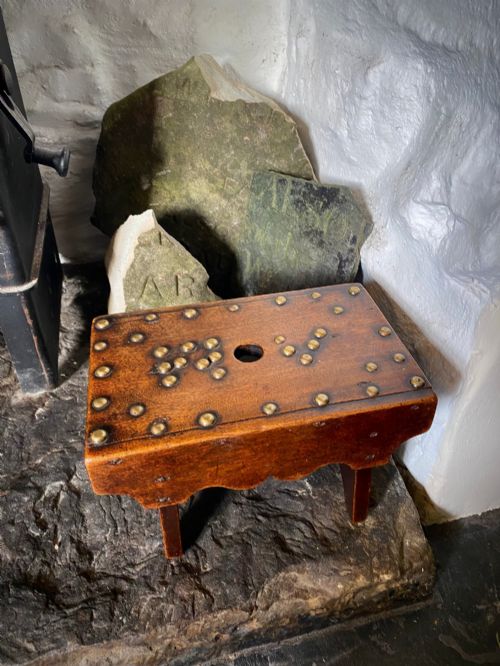
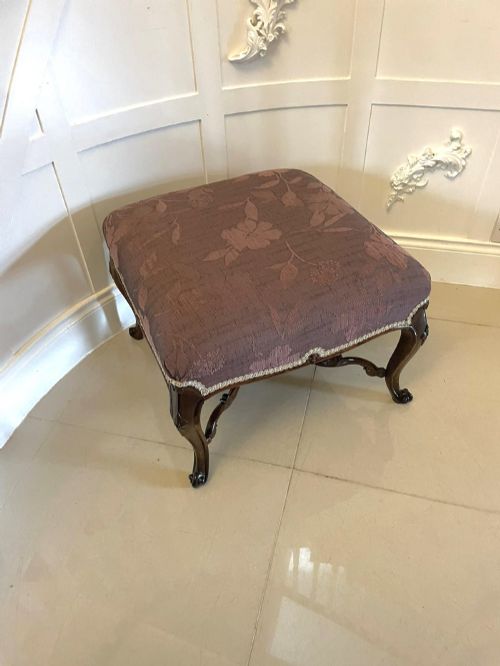
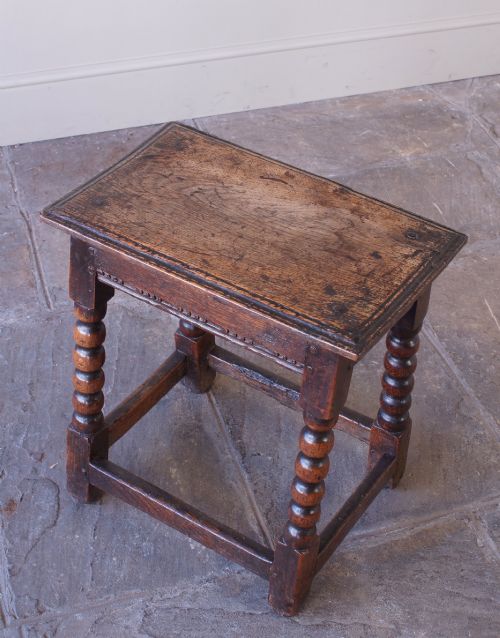
A brown carved footstool brings together sturdy timber frames and detailed surface work, ranging from low hearth seating to jointed forms. Buyers searching for a brown carved footstool will encounter pieces spanning several centuries, including Victorian designs, earlier joint stools, and country vernacular pieces.
Forms vary from low dressing stools and piano seats to joint stools and large hearth benches. Each object serves a functional role while displaying the distinctive carving styles of its period, from Jacobean motifs to Queen Anne cabriole legs.
How they were made
Construction relies heavily on traditional solid hardwoods like oak and walnut, joined using pegged or jointed methods suited to heavy daily use. Cabinetmakers shaped these timbers by hand, utilising chisels and gouges to apply relief carving to rails, aprons, and legs.
Upholstered versions integrate textile, leather, or fabric padding held with traditional tacking over webbing or stuffing. Surface finishes are kept to natural polishes or waxes that protect the timber grain without masking its natural colour.
Brown Carved Footstool Retail Price Guide 2026
Typical asking prices for brown carved footstool among the pieces listed under this phrase on Sellingantiques today, from the lower quarter to the upper quarter. They describe what is for sale here now, not the wider market.
Listings feature woods including oak, walnut, mahogany, rosewood, and yew wood, spanning centuries of cabinetmaking tradition.
What varies in quality
The standard of a carved footstool rests on the crispness of the timber carving and the integrity of the frame construction. Pieces featuring deep, well-defined hand-carving and tight joinery sit at the higher end of the range, showing careful attention to proportion and detail.
Secondary elements such as original upholstery, sturdy leg turnings, and well-seasoned timber distinguish finer examples from simpler vernacular pieces. The harmony between the timber frame and its carved ornamentation dictates the overall presence of the stool.
Liberty
The Brown Carved Footstool Glossary
- Joint stool
- A traditional wooden stool built with mortise and tenon joints, pegged together for high structural rigidity. These sturdy pieces often date to the seventeenth century or follow earlier vernacular traditions.
- Cabriole leg
- A furniture leg that curves outward in a convex shape and then tapers inward in a concave arc, ending in a pad or foot. This stylistic feature appears frequently on eighteenth-century and Victorian walnut designs.
- Hearth stool
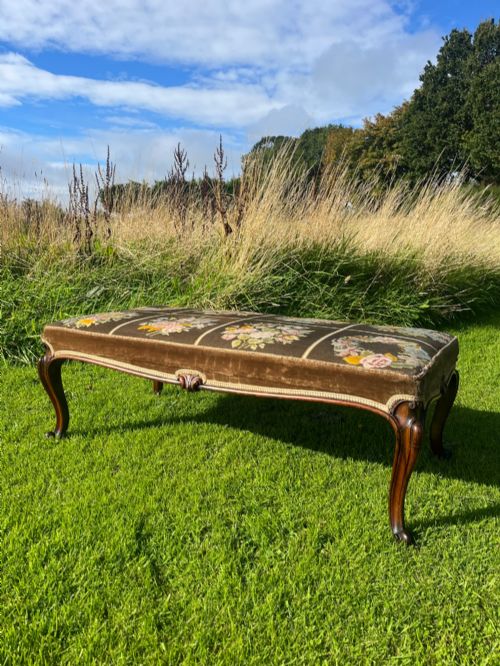
- A long, low stool designed to sit near a fireplace for convenient seating close to the warmth. They often feature generous proportions and upholstered tops.
- Needlepoint
- Hand-stitched canvas embroidery utilising wool or silk yarn, frequently used for traditional stool upholstery. This decorative textile work adds colour and texture to period seating.
Brown Carved Footstool: Frequently Asked Questions
What is a joint stool?
A joint stool is an early wooden seat constructed with pegged mortise and tenon joinery rather than glue. They were built to withstand heavy daily use in domestic settings.
Many surviving examples date from the seventeenth and eighteenth centuries, valued for their robust frames and straightforward utility.
Where should I place a footstool?
These low stools work well beside a fireplace as a hearth seat, or positioned in front of an armchair for resting feet. Smaller examples also function effectively as plant stands or bedside furniture.
Their compact scale allows them to move easily around a room as needed.
How do I care for antique wood?
Maintain the timber by applying a traditional beeswax polish occasionally and buffing it with a soft cloth. Keep wooden stools away from direct heat sources and strong sunlight to prevent drying and splitting.
Regular dusting preserves the surface finish and natural colour of the walnut or oak.
How can I tell the period?
Dating relies on examining the timber species, joinery methods, and the style of any carved ornamentation. Seventeenth-century pieces typically show pegged oak construction, while Victorian examples often feature walnut with cabriole legs.
Comparing the tool marks and construction details helps establish the likely era of manufacture.