





Brown Carpet
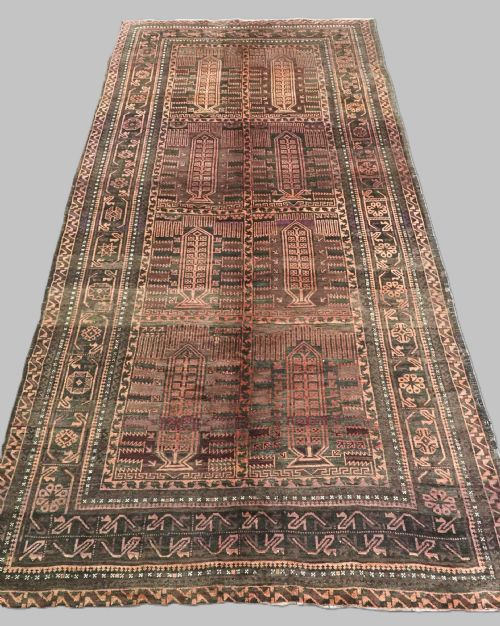
When shopping for a brown carpet, you encounter handwoven tribal rugs, runners, and flatweaves from Central Asia, Persia, and the Caucasus created for nomadic and village daily use.
Brown Carpet
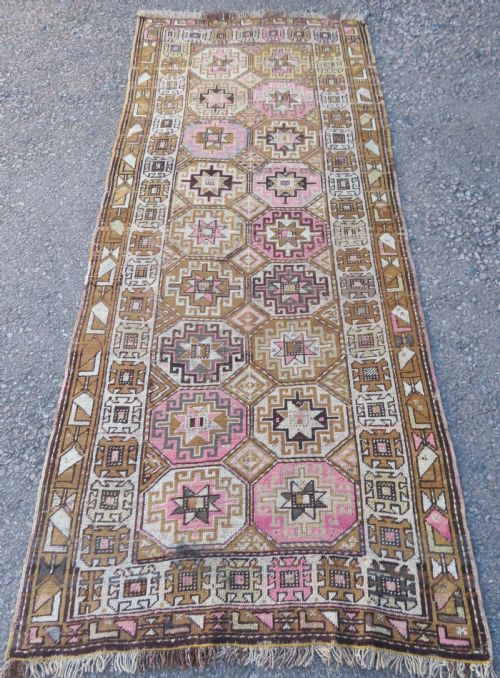
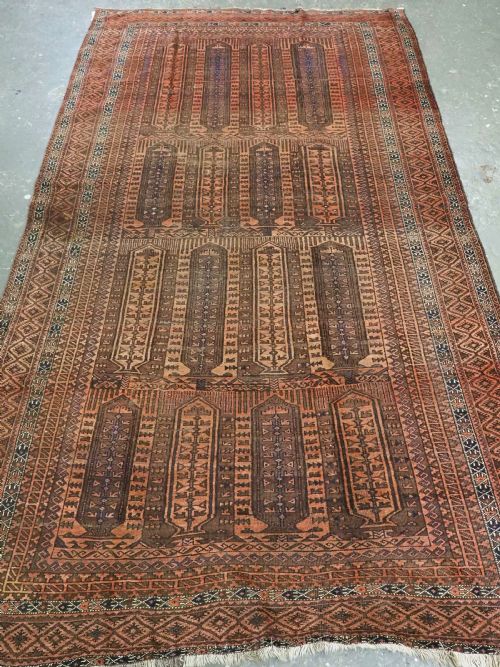
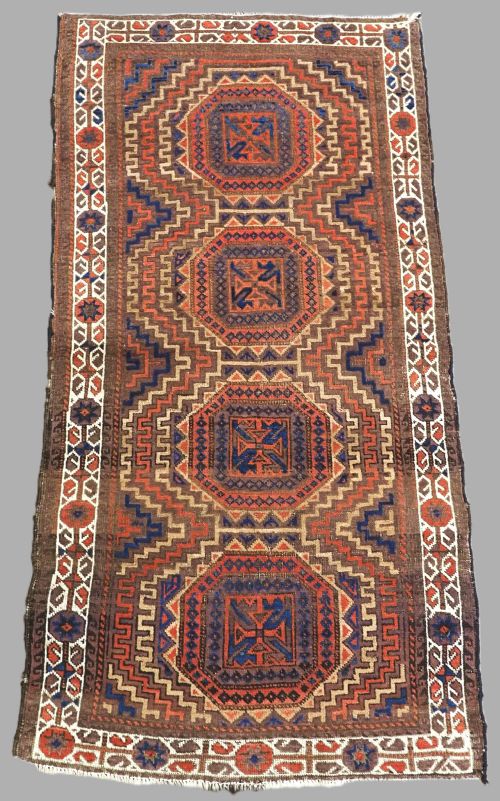
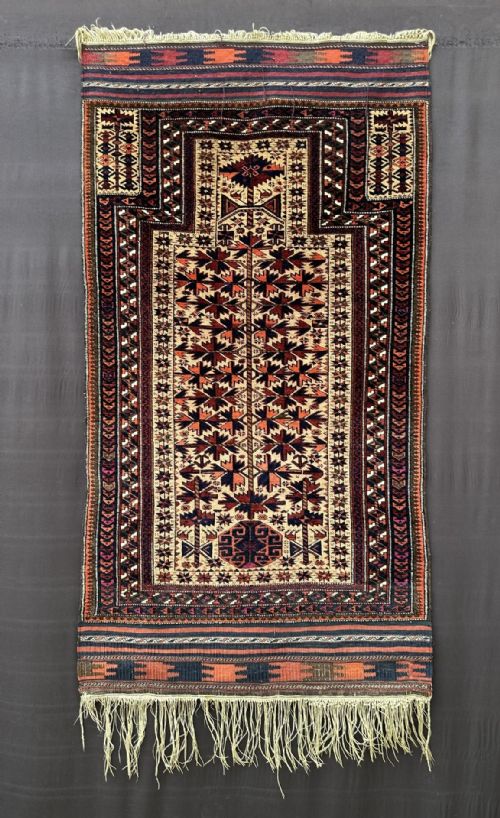
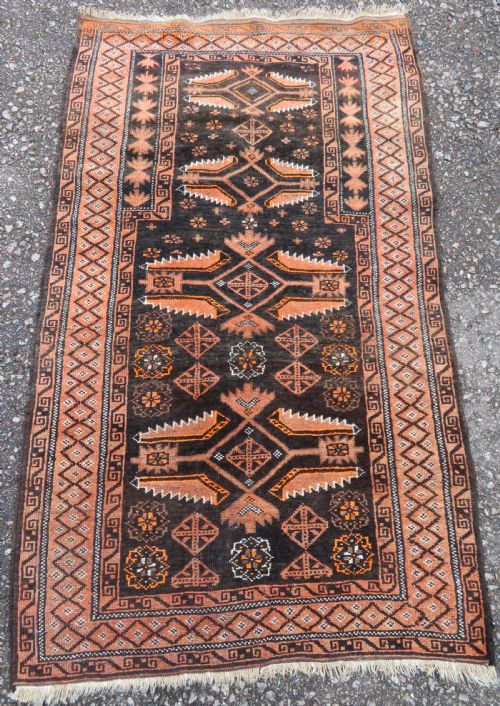
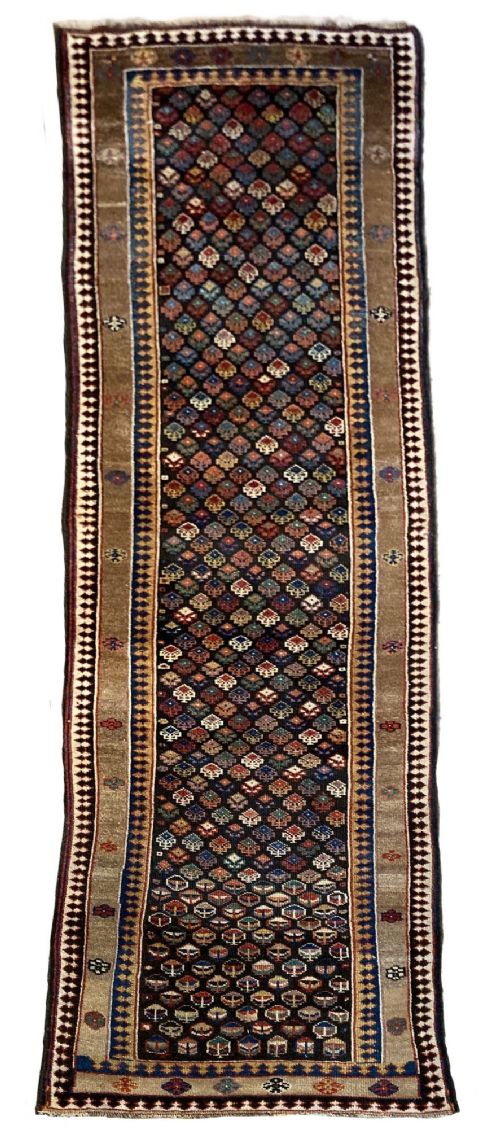
A brown carpet in this context spans antique and vintage tribal textile forms including main carpets, long rug runners, prayer rugs, and yurt rugs. These pieces originate primarily from Turkmen, Baluch, Kurdish, and Caucasian village weavers across the nineteenth and early twentieth centuries.
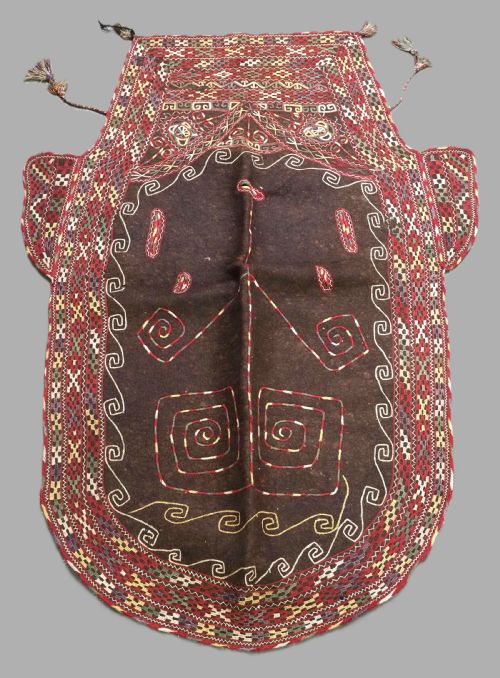
The version most commonly met on this page is the wool tribal rug or flatweave utilising earthy natural tones, distinctive geometric guls, and traditional border motifs. Formats range from compact mats to room-sized kilims and specialised utilitarian pieces such as torba face panels.
Materials and construction
Construction relies primarily on wool spun by hand, occasionally supplemented by cotton, goat hair, or camel wool for structural warp and weft threads. Dyes derived from natural sources provide the deep brown, red, and indigo palettes characteristic of these regional textiles.
Weaving techniques combine knotted pile with flatweave kilim structures, embroidery, and mixed-method assembly where multiple panels join to form larger floor coverings or domestic containers.
Brown Carpet Retail Price Guide 2026
Typical asking prices for brown carpet among the pieces listed under this phrase on Sellingantiques today, from the lower quarter to the upper quarter. They describe what is for sale here now, not the wider market.
Listings span periods from the eighteen-seventies through the nineteen-thirties, documenting wool, natural dyes, and goat hair across tribal weaving traditions.
Assessing quality in regional textiles
Quality rests upon the precision of the knotting or flatweave structure, the stability of the natural dyes, and the integrity of the wool foundation. Tightly packed knots and resilient pile signal a high standard of craftsmanship.
Design execution also dictates standard; pieces demonstrating clear regional motifs, balanced symmetry, and well-executed secondary borders represent the finer end of historical production.
Finnigan s Manchester·Yaqoub Khani Tribe
The Brown Carpet Glossary
- Gul
- A primary medallion or repeating octagonal motif found frequently in Turkmen and Central Asian carpet design. These emblems often identify specific tribal lineages.
- Kilim
- A flatwoven textile produced without a pile by tightly interweaving warp and weft strands. This technique creates a lightweight fabric utilised for rugs, bags, and coverings.
- Mihrab
- A niche design element indicating the direction of prayer, characteristic of Islamic prayer rugs. The pointed arch shape focuses the visual field of the textile.
- Torba
- A small storage bag or trapping traditionally hung inside a nomad tent. Surviving examples often display intricate face designs separated from their original backing.
- Warp
- The vertical foundation threads stretched tightly on the loom before weaving begins. Weft threads pass horizontally through these structural strands to secure the design.
Brown Carpet: Frequently Asked Questions
How were these rugs used originally?
Nomadic and village communities utilised these textiles for ground cover inside tents and dwellings, as well as for storage bags, animal trappings, and ceremonial blankets.
Heavier pile carpets provided insulation against cold earthen floors, while flatweaves and smaller bags served practical domestic transport functions.
How do I distinguish regional styles?
Regional attribution relies on examining the specific geometry of the guls, the structure of the border guards, and the colour palette employed by the weaver.
Turkmen pieces frequently feature repeated octagonal motifs, whereas Baluch and Kurdish examples incorporate distinct prayer arches, shrub patterns, or banded flatweave sections.
What materials are typical for these pieces?
The primary material across these listings is handspun wool, often dyed with natural extracts derived from plants and minerals to achieve stable, rich earthy tones.
Some specialised pieces incorporate goat hair, camel wool, or cotton for structural strength, alongside supplementary silk or wool embroidery thread.
How do I care for an antique wool rug?
Maintenance requires gentle vacuuming without a rotating power head to protect the historical pile and fragile kilim ends from undue physical strain.
Professional cleaning tailored for antique textiles preserves the integrity of the natural dyes and prevents fibre degradation over extended periods of domestic use.