


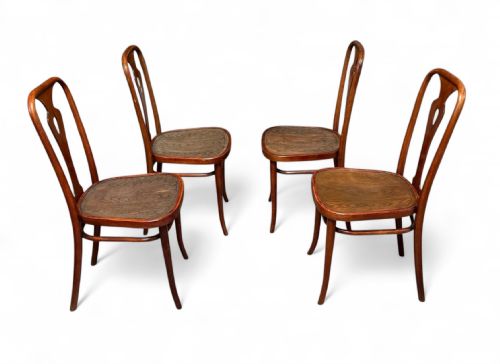


Brown Bentwood Cafe Chairs
Brown bentwood cafe chairs are robust seating staples built for bustling hospitality spaces, offering timeless curves and reliable daily durability.
Brown Bentwood Cafe Chairs
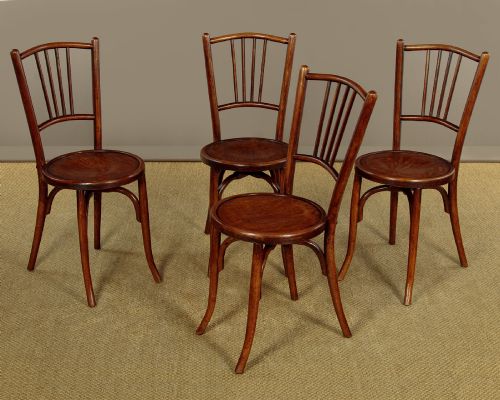
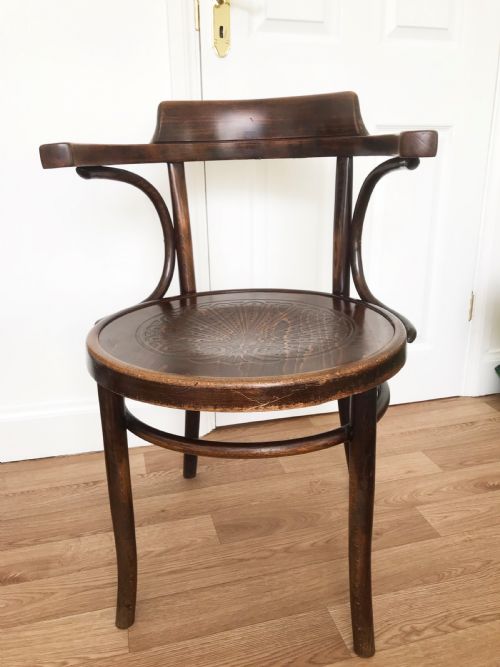
When you search for brown bentwood cafe chairs, you encounter seating solutions historically designed for European coffee houses and dining rooms. The pieces available here span the nineteenth century, the Edwardian era, and the early decades of the twentieth century. These items primarily manifest as dining chairs, armchairs, and carvers originating from notable continental workshops.
You are most likely to meet sets of four or six bistro dining chairs alongside matched sets of varying sizes. These chairs typically feature classic circular or embossed plywood seats supported by steam-bent frames. Their enduring appeal lies in their capacity to combine lightweight agility with commercial resilience.
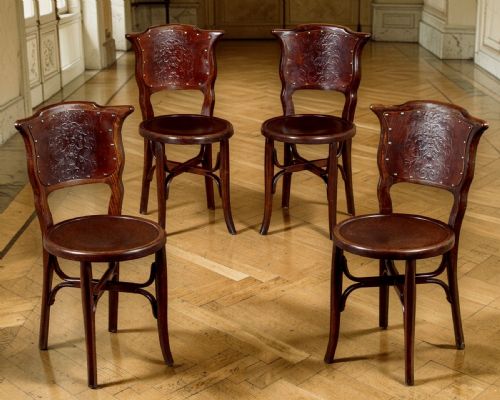
The aesthetic vocabulary encompasses Victorian country charm, Edwardian refinement, and distinct Art Nouveau flourishes. Origins trace across Austrian production as well as British institutional settings such as the Cafe Royal in London. Buyers frequently select these forms to anchor domestic dining spaces with authentic historical character.
Materials and construction methods
Makers utilised solid beech and beechwood for the structural frames, taking advantage of the timber's unique response to steam. Subjecting the wood to moisture and heat allowed artisans to bend straight lengths into sweeping, continuous curves without fracturing the grain.
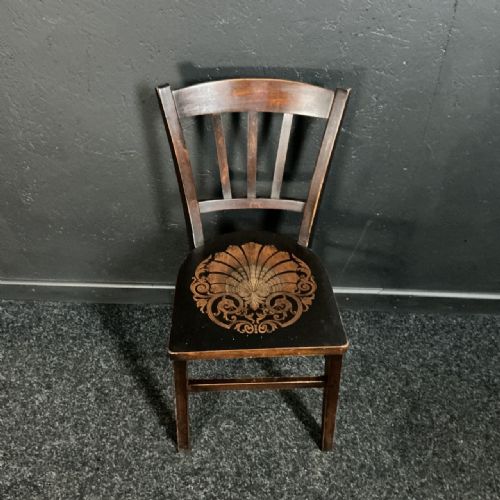
Seats incorporate either plain solid timber or plywood stamped with intricate embossed patterns for decorative detail. Selected models integrate subtle additions such as brass studs to secure components or upholstery elements.
Stained wood finishes provide the characteristic warm brown coloration while highlighting the natural grain of the underlying beech. This streamlined construction method eliminated heavy joinery, producing frames held together with minimal hardware.
Several chairs served patrons at the historic Cafe Royal in London before finding their way into contemporary collections.
Factors of distinction
The integrity of the steam-bent frame dictates the overall structural merit of each piece. Superior examples maintain the original tension and alignment of the curves without developing excessive slack or distortion over decades of service.
The clarity and depth of the embossed patterns on plywood seats separate standard utility models from finer artistic productions. Crisp detailing indicates superior stamping dies and careful selection of the initial wood laminates.
Attribution to prominent design houses elevates the standing of individual chairs above anonymous commercial output. Stamped maker marks or paper labels preserved underneath the seat provide tangible evidence of origin.
Codina·Thonet·J & J Kohn
The Brown Bentwood Cafe Chairs Glossary
- Bentwood
- Wood that has been shaped by applying steam and pressure to create permanent curves. This technique revolutionised furniture production by replacing heavy mortise and tenon joints.
- Carver
- An armchair featuring arms, traditionally positioned at the head of a dining table. These pieces offer a wider seat and supportive side rests.
- Bistro chair
- A lightweight, utilitarian chair built for commercial hospitality environments like cafes and brasseries. They are designed for easy stacking and movement.
- Embossed plywood
- Manufactured wood pressed with metal dies to imprint decorative patterns into the surface. This method added visual texture to flat chair seats.
- Beechwood
- A dense, pale hardwood prized for its elasticity and strength during the steam-bending process. It takes stains evenly to produce a rich brown finish.
Brown Bentwood Cafe Chairs: Frequently Asked Questions
How do I clean brown bentwood cafe chairs?
Maintain the surface using a soft, dry cloth to remove dust and prevent moisture accumulation on the aged timber. Avoid harsh chemical cleaners that can degrade the vintage stained wood finish.
Nourish the wood periodically with a traditional paste wax to preserve the sheen of the beech. Inspect the joints regularly to ensure the bentwood frame remains stable.
Can these chairs handle daily dining use?
These pieces were originally engineered for demanding commercial hospitality environments like cafes and restaurants. Their resilient steam-bent construction handles routine domestic seating comfortably.
Distribute weight evenly and avoid standing on the seats to protect the bentwood curves. Proper placement away from direct heat sources prevents the timber from drying out.
How do I identify a Thonet chair?
Look for manufacturer stamps, paper labels, or branded signatures burned directly into the underside of the wooden seat. Distinctive proportions and fluid curved joinery also point toward the firm's output.
Compare the silhouette against known catalogue designs from the late nineteenth and early twentieth centuries. Expert attribution relies on a combination of these structural and documentary clues.
What is the difference between a carver and a dining chair?
Carvers feature integrated armrests designed to provide additional support for the person sitting at the head of the table. Standard dining chairs lack arms to allow for compact tucking beneath table surfaces.
Matching sets often combine armchairs with armless counterparts to create a cohesive dining arrangement. Both types share the same bentwood construction principles and materials.