


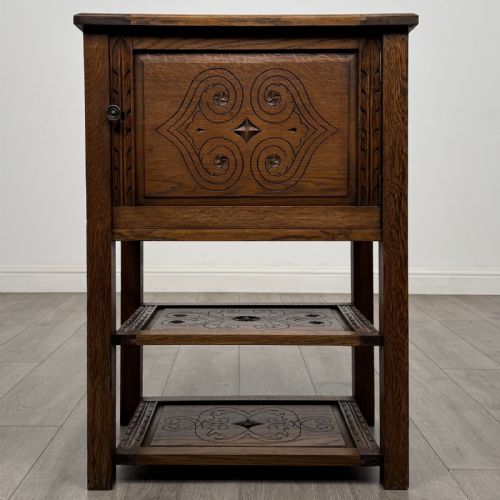
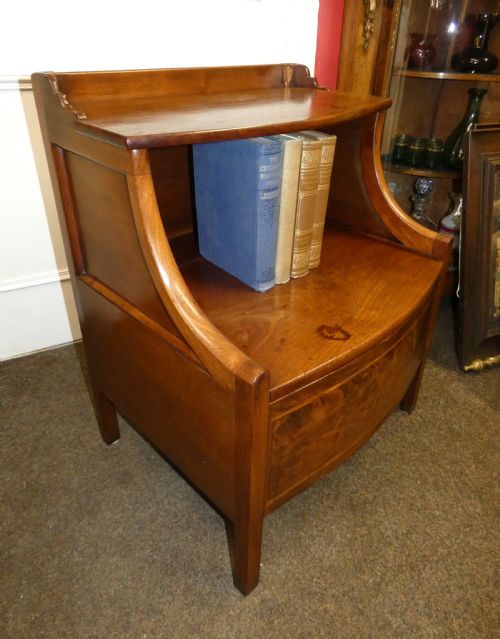
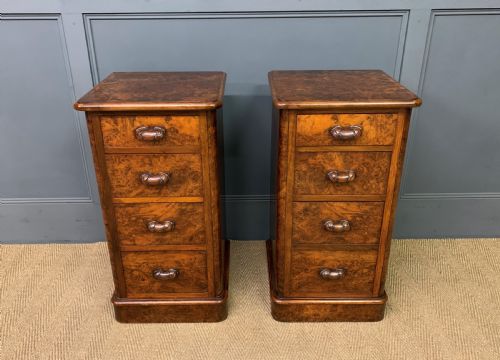
Brown Bedside Storage
Brown bedside storage comprises practical wooden cabinets and chests designed for nightly convenience by the bed.
Brown Bedside Storage
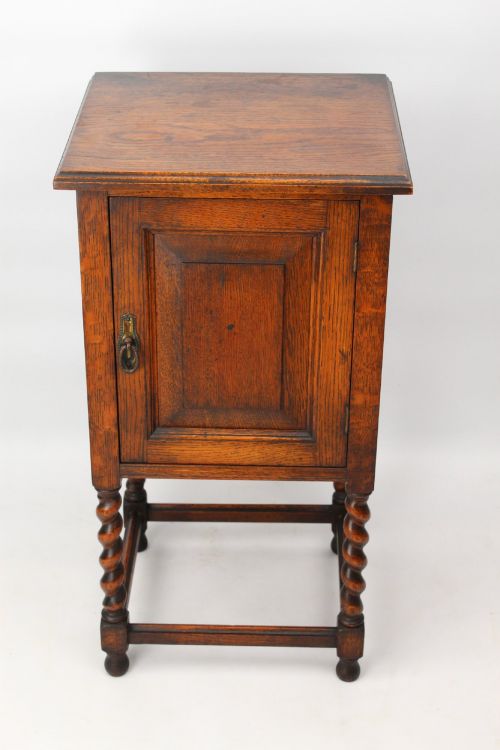
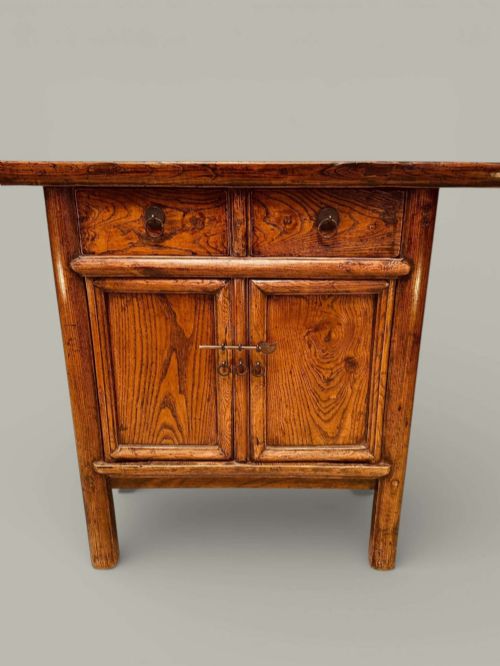
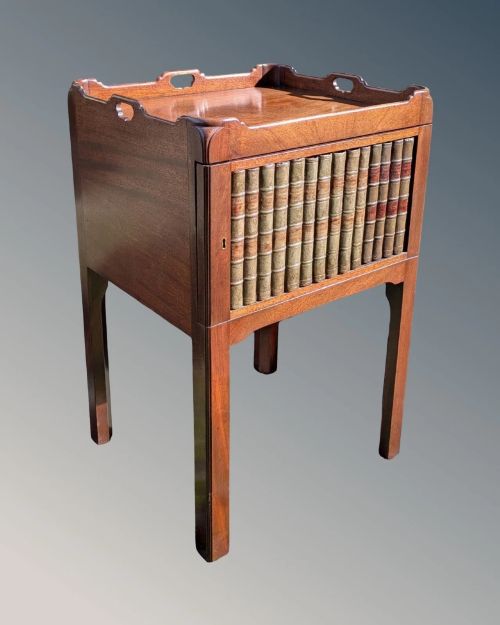
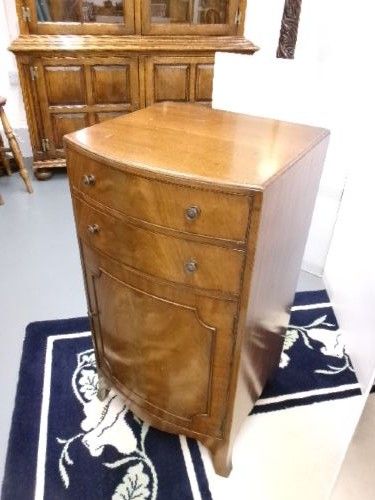
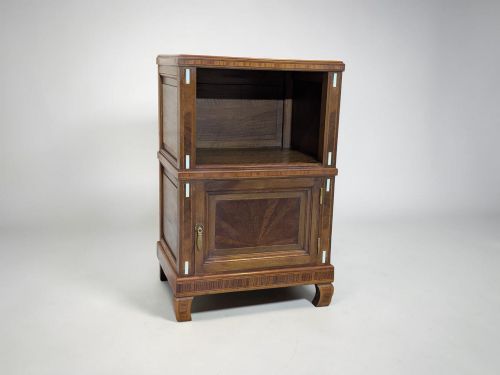
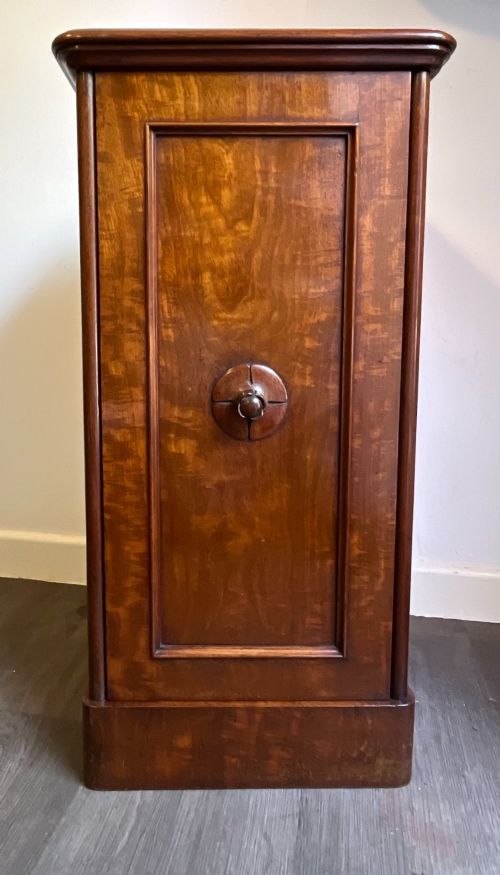
Brown bedside storage encompasses functional furniture designed to sit beside a bed, primarily taking the form of bedside cabinets, commodes, small chests of drawers, and side cabinets. These pieces emerge across multiple eras, stretching from the Georgian and Victorian periods through Edwardian workshops into the 1930s Art Deco era.
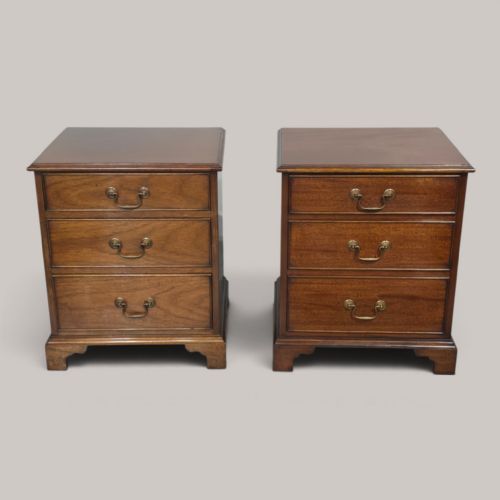
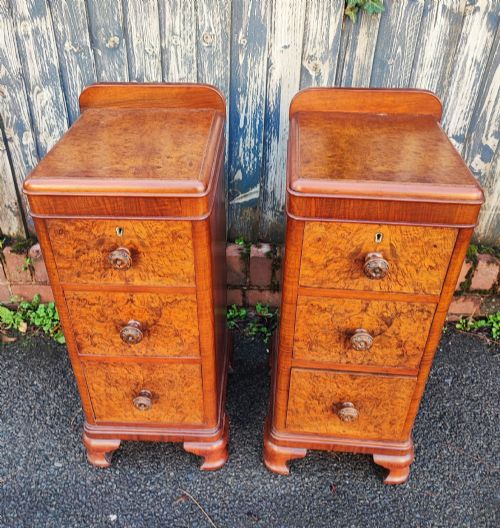
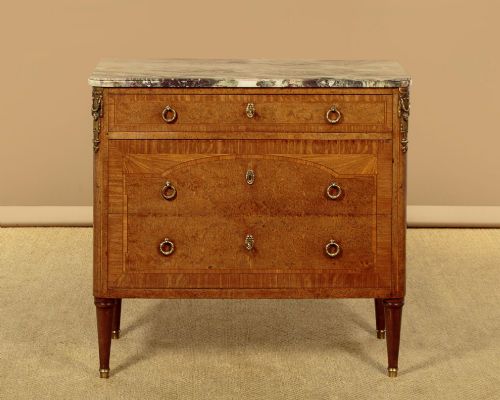
Buyers will most frequently encounter mahogany and oak pieces from the nineteenth and early twentieth centuries. The selection ranges from simple cupboards and pot cupboards to pairs of tall chests and cabinets featuring inlaid decoration or marble tops.
Originating to hold chamber pots or nighttime necessities, these brown wooden items continue to serve as compact storage solutions in modern bedrooms. Their forms adapt easily to domestic use, offering surface space alongside enclosed cupboards or drawers.
Materials and construction
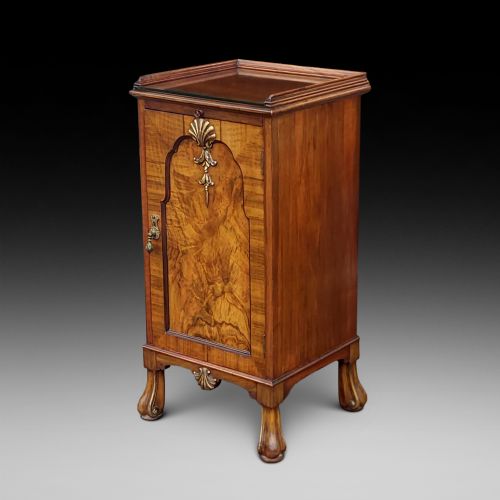
Cabinetmakers constructed these brown bedside storage pieces primarily using solid hardwoods such as mahogany, oak, and walnut, frequently applying flame mahogany veneer or burr walnut for decorative effect. Brass hardware, including handles and hinges, appears regularly alongside occasional marble tops and iron fittings.
Construction techniques combine traditional joinery with period stylistic details like baluster turned legs, carved friezes, and inlaid woodwork. Workshop methods range from straightforward panelled cupboards to serpentine chests of drawers and bow front designs reflecting Sheraton Revival or Gothic influences.
Brown Bedside Storage Retail Price Guide 2026
Typical asking prices for brown bedside storage among the pieces listed under this phrase on Sellingantiques today, from the lower quarter to the upper quarter. They describe what is for sale here now, not the wider market.
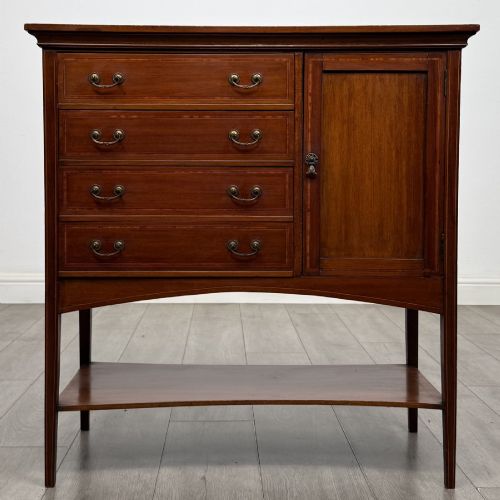
Common storage formats include pot cupboards, small chests of drawers, pedestal cabinets, and side tables equipped with doors or sliding shelves.
Defining characteristics
The degree of refinement in the timber selection and decorative detailing establishes the distinction between standard utilitarian cupboards and finer cabinetmaking. Pieces employing figured walnut, flame mahogany veneer, or delicate inlaid patterns demonstrate superior craftsmanship compared to plain utility items.
Structural integrity relies upon the selection of solid secondary woods, precise joinery, and the retention of original brass handles or turning. Matched pairs and items retaining undisturbed surface patination command particular attention among traditional storage options.
The Brown Bedside Storage Glossary
- Pot cupboard
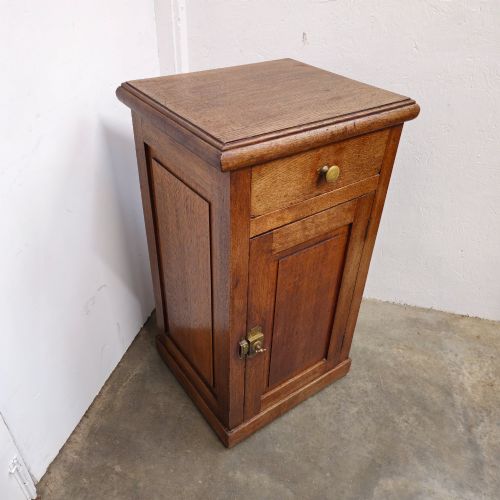
- A small bedside cabinet originally built to enclose a chamber pot behind a single door. These compact cupboards form a large portion of early bedside storage.
- Commode
- A low cabinet or chest enclosing storage space, sometimes referencing earlier bedside sanitation furniture. Many examples double as general bedside storage units.
- Flame mahogany veneer
- A sliced layer of mahogany timber displaying a distinctive swirling, flame-like grain pattern. Cabinetmakers applied this to drawer fronts and door panels for visual depth.
- Serpentine
- A gently curved furniture front that undulates outward and inward. This shape requires advanced woodworking skill and appears on select Edwardian chests.
- Baluster turned legs
- Furniture supports shaped on a lathe to resemble architectural balusters. These turned supports lift cabinets off the floor.
Brown Bedside Storage: Frequently Asked Questions
How were these cabinets used originally?
Historically, these items served to house chamber pots, candles, books, and personal valuables within arm's reach of the bed. Many functioned as night tables or pot cupboards.
Over time, their internal layouts adapted to hold modern bedside items while preserving their traditional exterior appearance.
How do I identify a Victorian piece?
Victorian brown bedside storage often employs solid mahogany or burr walnut with heavier proportions and robust joinery. Details can include turned wooden feet, panelled doors, and straightforward brass handles.
These pieces reflect the manufacturing styles popular during the nineteenth century, prior to the lighter Edwardian aesthetic.
Are matched pairs common?
Matched pairs of bedside cabinets and chests appear frequently across nineteenth and early twentieth-century listings. Cabinetmakers often produced matching pairs to flank larger double beds.
Finding a balanced pair depends on matching timber grains, dimensions, and overall decorative style from the same period.
How do I style these in a modern room?
Placing a vintage wooden cabinet next to a modern bed introduces warmth and textural contrast to the room. The enclosed storage keeps contemporary clutter hidden away.
Pairing dark wood finishes with neutral walls highlights the natural grain of mahogany, oak, or walnut.