





Brown Background Oil Painting
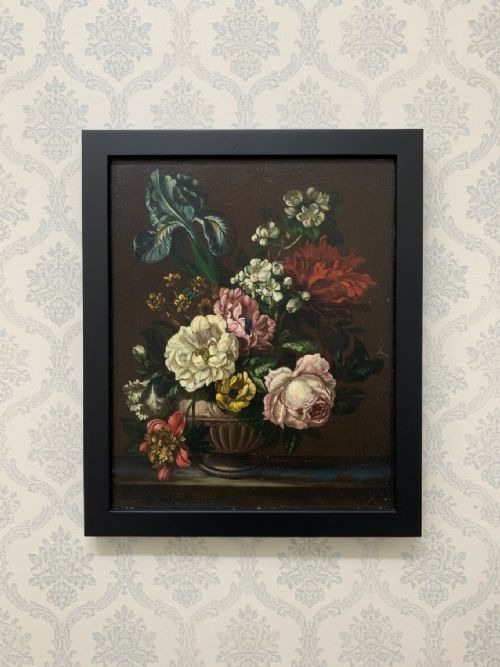
A brown background oil painting brings deep shadow and focused subject matter into a room, drawing the eye straight to portraits or still lifes.
Brown Background Oil Painting
A brown background oil painting groups together works where dark, tonal grounds frame figures, animals, flowers, or objects. These pieces span from the seventeenth century through to the Edwardian period, capturing everything from Dutch school still lifes to formal portraiture.
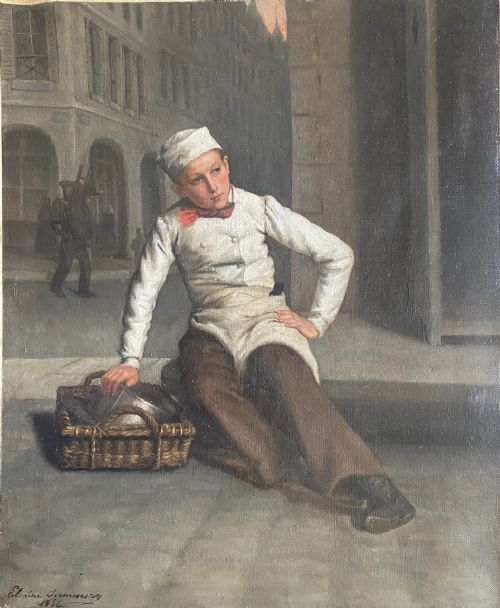
The version most commonly met on this page is the nineteenth-century portrait or still life, where the dark backdrop isolates the subject and creates a striking sense of depth. You will encounter works on canvas, wood panel, and canvas board, often housed in timber frames.
Materials and technique
Artists built these works using oil paint applied to canvas, wood panels, or canvas boards. The medium allowed for rich layering and smooth blending, essential for creating the deep, shadowy brown tones that define the background.
Many of these paintings survive within their original timber frames, which provide structural support and complete the visual presentation of the artwork.
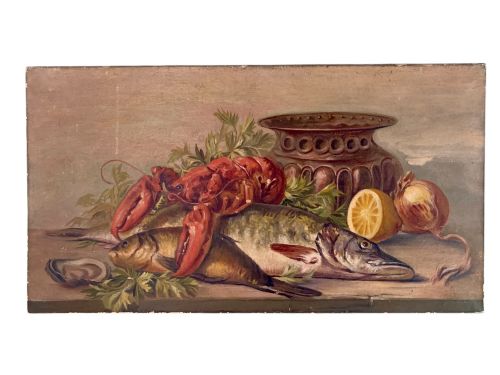
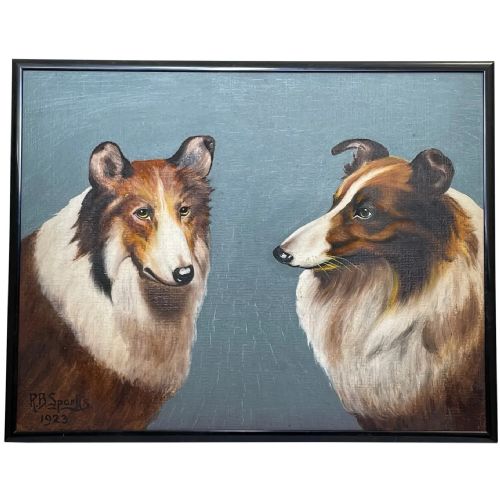
Subjects range from military officers and botanists to lobsters, rough collie dogs, and elegant ladies in nineteenth-century dress.
Judging quality in the work
Quality rests in the handling of light and shadow across the subject, where skilful brushwork separates a compelling portrait or still life from a stiffer composition. The depth achieved in the dark background dictates how well the central figure stands out.
The preservation of the paint surface and the integration of the panel or canvas within its frame matter greatly. Stronger pieces retain their original tension and clarity without heavy, disfiguring overpaint.
Margaret Sarah Carpenter·Georges Goursat Sem·John Irvine·Eden Upton Eddis·William Huggins·Lemuel Francis Abbott·Sir Oswald Hornby Joseph Birley·Henry Wyatt·John Ward Dunsmore·Samuel van Hoogstraten
The Brown Background Oil Painting Glossary
- Canvas board
- A stiff board covered with primed canvas used as a painting surface. It offers a rigid alternative to stretched fabric while maintaining a traditional texture.
- Wood panel
- A flat wooden support used by artists instead of fabric. Panels provide a completely rigid base that often survives centuries with minimal distortion.
- Dutch School
- A grouping of artists working in the Netherlands during distinct periods, known for mastery of light and shadow. Their still lifes and portraits heavily influence later European painting.
- Still life
- An artwork depicting inanimate subject matter, typically commonplace objects or natural items such as flowers and lobsters. These compositions rely on careful arrangement and tonal contrast.
Brown Background Oil Painting: Frequently Asked Questions
What periods do these paintings cover?
The selection spans from the seventeenth century through the Regency, Victorian, and Edwardian eras, reaching into the early twentieth century.
This broad timeline includes Dutch school works, French realism, and formal British portraiture.
How should I hang a dark painting?
Place the piece on a wall with good directional lighting to bring out the subtle details hidden within the brown background.
Avoid direct sunlight to protect the oil pigments and the wooden frame over time.
What supports were commonly used?
Artists painted on stretched canvas, wood panels, and canvas boards depending on the period and the desired finish.
Wood panels frequently appear in earlier works, while canvas dominates the nineteenth-century pieces.
Are original frames usually included?
Many listings feature the original timber frames that have housed the paintings for decades or centuries.
These frames complement the artwork and provide essential protection for the edges of the canvas or panel.