

Brown Art Pottery
Brown art pottery brings rich earth tones and textured glazes to vases, jugs, and plaques dating from the Victorian era onward.
Brown Art Pottery
When you search for brown art pottery, you encounter a diverse selection of vessels, plaques, and jardinieres originating from British potteries and continental workshops. The pieces span the nineteenth century, the Arts and Crafts movement, and the Art Nouveau period.
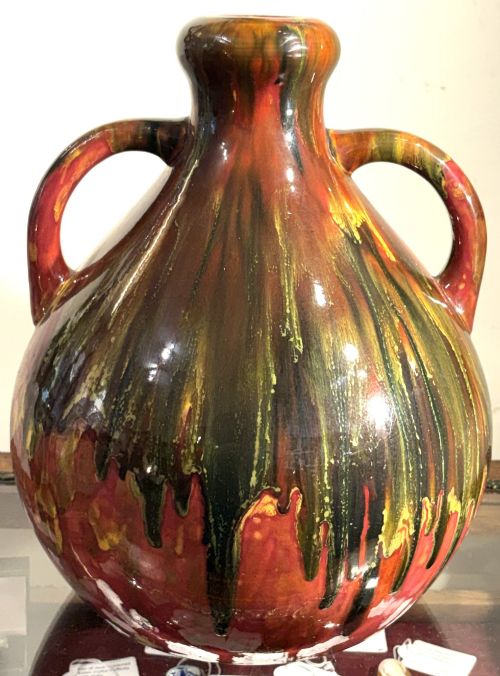
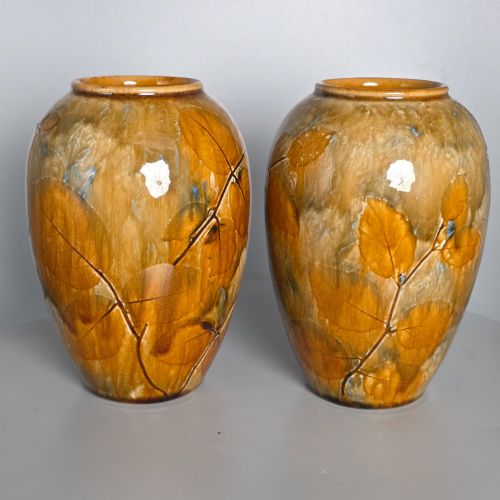
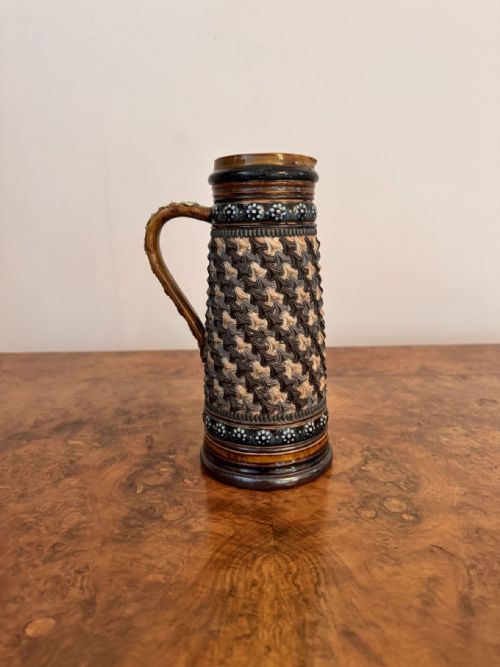
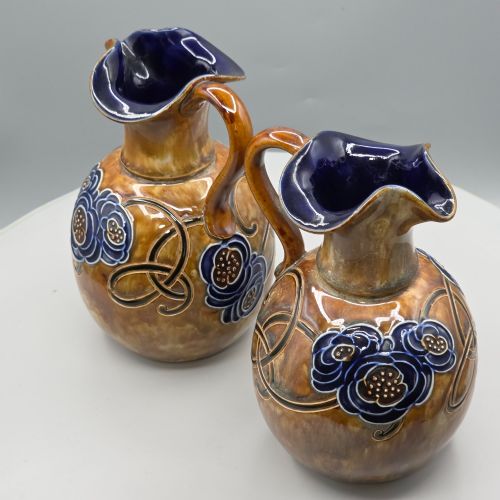
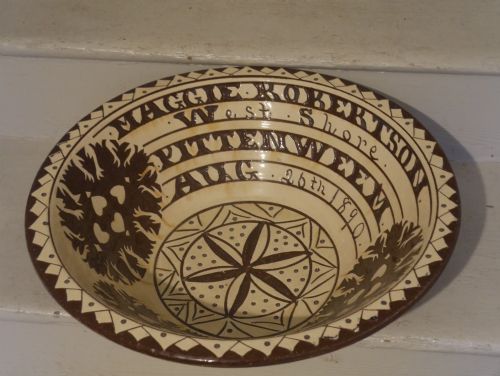
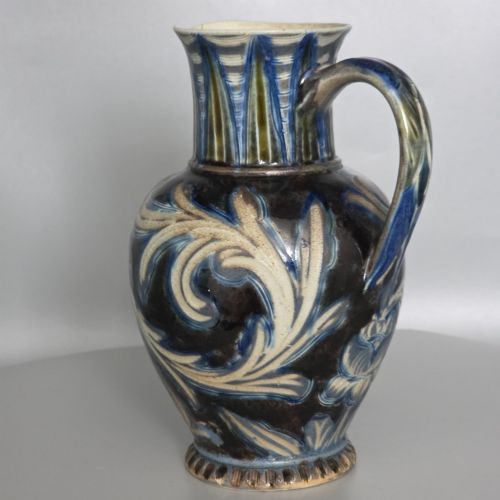
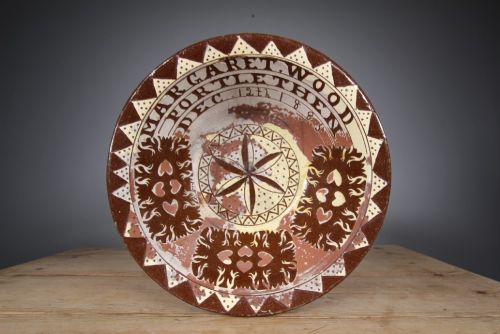
You are most likely to meet stoneware jugs, earthenware vases, and slipware bowls bearing salt glazes or lead glazes. These utilitarian and decorative objects showcase the deep metallic tones and rich brown finishes favoured by late Victorian and Edwardian makers.
How they were made
Potters shaped earthenware, terracotta, and stoneware on the wheel or pressed them into moulds before applying slips and glazes. The use of lead glaze and salt glaze produced durable, lustrous surfaces across vases, ewers, and teapots.
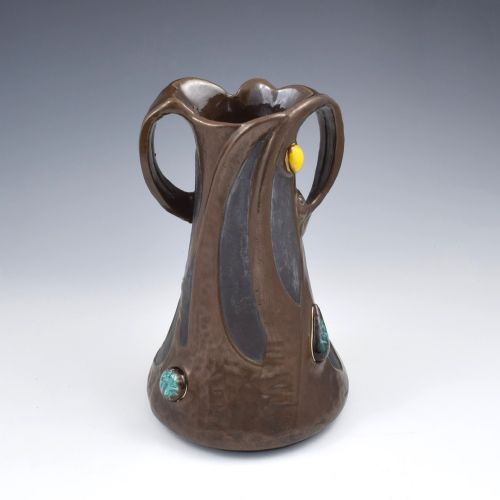
Firing techniques in kilns determined the depth of the brown coloration, from iron rust finishes to deep copper effects. Artisans often incised patterns or added jewelled cabochons directly into the clay body before the final glaze firing.
The inventory records numerous salt-glazed and slip-decorated vessels originating from British and continental potteries.
What varies in quality
The standard of modeling and the crispness of incised decoration separate standard production items from exceptional studio pieces. Hand-thrown vessels with well-balanced proportions demonstrate greater maker skill than simple mass-moulded forms.
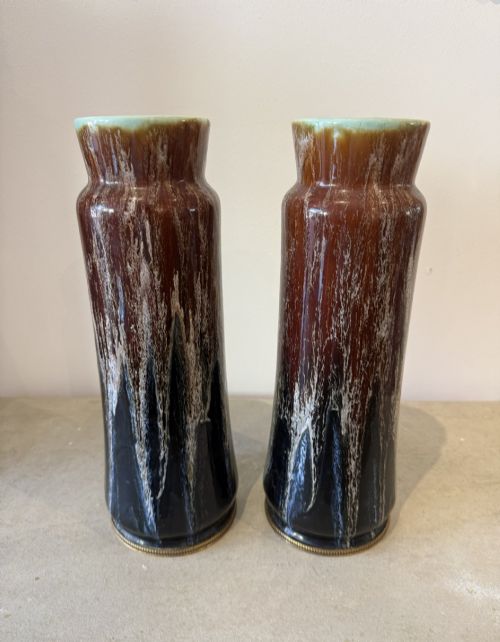
The complexity and richness of the glaze application determine the visual depth of the finish. Subtle tonal variations and carefully controlled kiln reactions indicate superior craftsmanship compared to flat, uniform surfaces.
Royal Doulton·Doulton Lambeth·Burmantofts·Boch Freres·Sherwin And Cotton·Julius Dressler
The Brown Art Pottery Glossary
- Stoneware
- A robust ceramic fired at high temperatures until vitrified and impervious to liquids. It forms the body of many nineteenth-century jugs and vases.
- Slipware
- Pottery decorated with a thin mixture of clay and water applied before firing. It creates contrasting linear patterns on bowls and teapots.
- Salt glaze
- A glassy finish created by throwing common salt into the hot kiln during firing. It produces a textured surface with an orange-peel appearance.
- Jardiniere
- An ornamental ceramic pot designed to hold a large plant or floral arrangement. These vessels frequently feature Art Nouveau motifs and deep glazes.
- Lead glaze
- A traditional coating containing lead oxide that melts during firing to form a shiny, transparent layer over earthenware. It enhances the underlying clay colour.
Brown Art Pottery: Frequently Asked Questions
What is brown art pottery?
Brown art pottery encompasses ceramic vessels, plaques, and decorative objects produced primarily during the nineteenth and early twentieth centuries. These pieces utilise rich earth-toned glazes, slip decoration, and stoneware bodies to achieve distinctive tactile surfaces.
Makers across Britain and Europe embraced this aesthetic during the Arts and Crafts and Art Nouveau periods. The category includes everything from utilitarian dairy bowls and teapots to highly ornamented exhibition vases.
How do I identify Doulton Lambeth pieces?
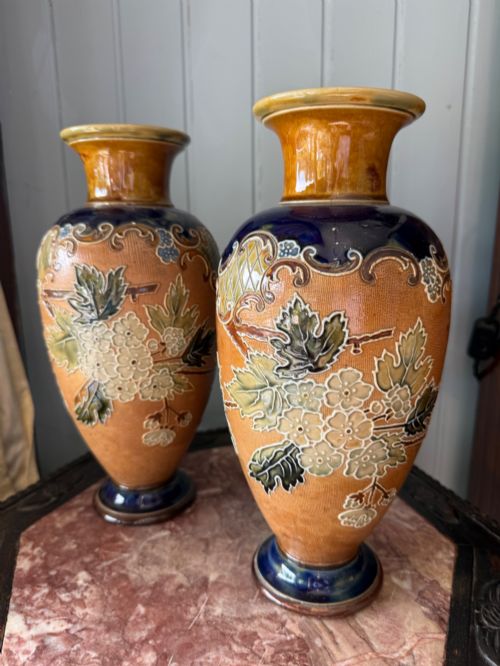
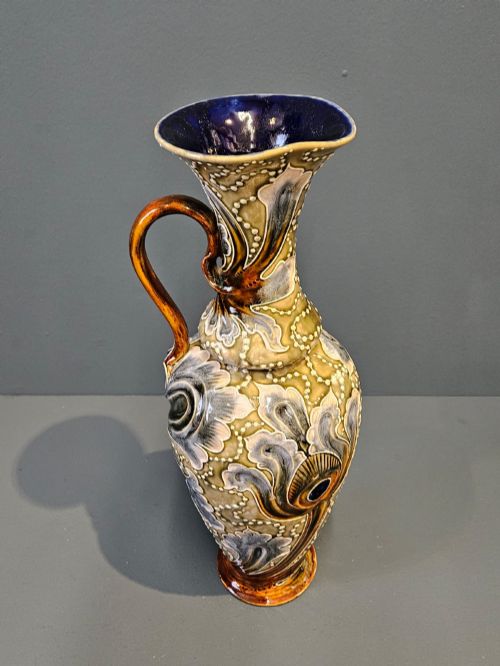
Doulton Lambeth wares typically feature dense stoneware bodies decorated with incised patterns, applied beadwork, and rich brown or salt-glazed finishes. Many examples bear specific artist monograms alongside the factory stamp.
The studio employed notable ceramicists who signed their work, allowing collectors to trace individual pieces to specific makers. The combination of impressed factory marks and hand-carved ornamentation distinguishes these items from standard commercial ceramics.
Where were slipware bowls used?
Slipware bowls served practical functions in dairies and kitchens before collectors prized them for their rustic aesthetic. Potters utilised local clays and slip trailing to create durable vessels for daily food preparation and storage.
Over time, these utilitarian kitchen items transitioned into decorative objects displayed for their folk art qualities. The warm brown slip decoration provides a direct link to early rural pottery traditions.
How should I display pottery at home?
Displaying brown art pottery involves placing pieces where natural light can catch the varied textures of salt glazes and metallic finishes. Grouping items by period or form creates a coherent visual arrangement on shelves or side tables.
Ensure heavy stoneware vessels and jardinieres sit on stable, level surfaces capable of supporting their weight. Pairing dark ceramics against neutral backgrounds highlights the depth of the brown glazes.