

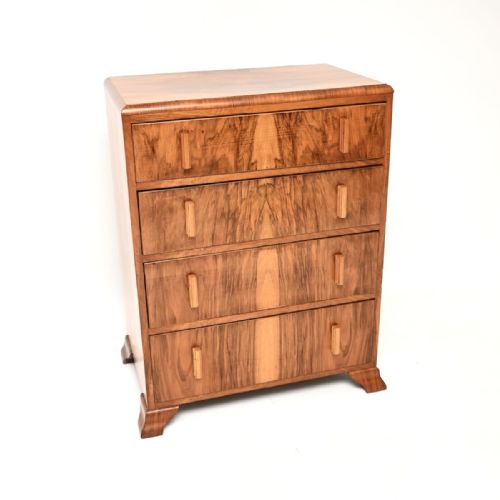
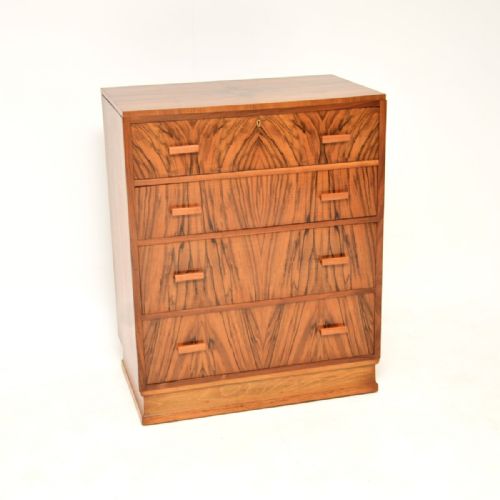


Brown Art Deco Dresser
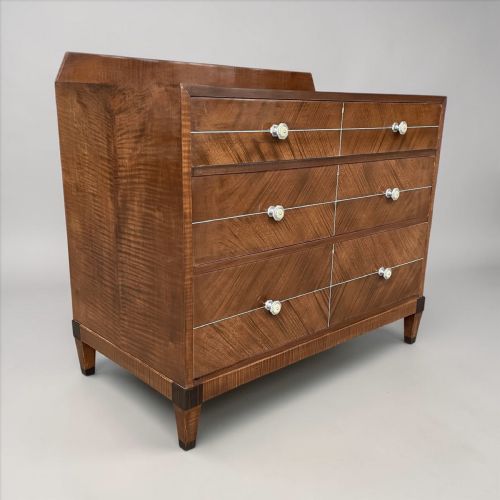
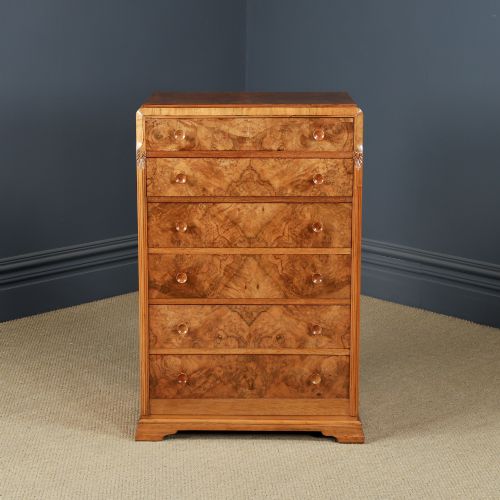
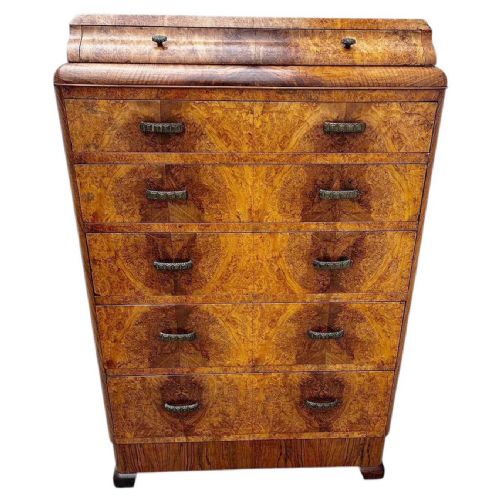
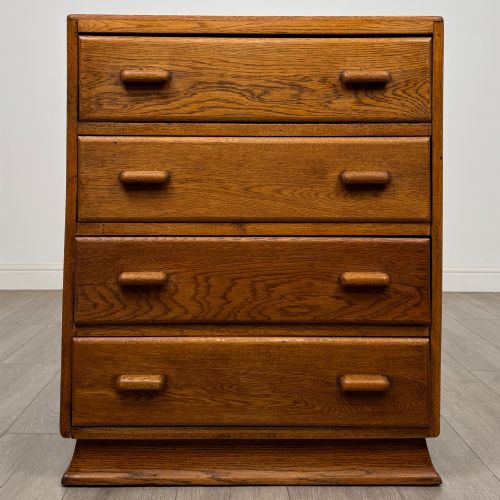
These brown art deco dresser pieces bring striking geometric form and rich timber grain to a room.
Brown Art Deco Dresser
A brown art deco dresser typically takes the form of a walnut chest of drawers or commode, originating mainly from the 1930 period alongside earlier examples from 1910, 1920, and the Edwardian era. These pieces serve as practical storage furniture while displaying the characteristic clean lines and restrained ornamentation of the style.
The version most commonly met on this page is an English or French chest of drawers featuring multiple stacked drawers. Makers such as the Bowman Brothers and Heal's produced notable examples during these decades, combining everyday utility with distinct modernist design.
Forms span from standard upright chests of five or six drawers to low commodes and sideboards. The emphasis remains on functional storage paired with decorative timber surfaces that anchor a bedroom or living space.
How they were made
Cabinet makers utilised solid woods like oak for underlying structures while applying figured and burr walnut veneers to external surfaces. This technique allowed craftsmen to showcase complex, swirling wood grain patterns across wide drawer fronts and cabinet doors.
Metal components such as brass and chrome provide functional handles and decorative accents that contrast with the dark brown timber. Original wooden handles also appear on Edwardian and Art Deco pieces, maintaining a cohesive natural finish.
Brown Art Deco Dresser Retail Price Guide 2026
Typical asking prices for brown art deco dresser among the pieces listed under this phrase on Sellingantiques today, from the lower quarter to the upper quarter. They describe what is for sale here now, not the wider market.
Listings span the Edwardian era through to 1930, featuring walnut, oak, burr walnut veneer, brass, and chrome.
What varies in quality
The selection of timber veneer dictates the visual impact of the piece, with heavily figured burr walnut and book-matched patterns representing the higher end of craftsmanship. Plain walnut surfaces offer a more subdued appearance by comparison.
Attribution to documented workshops like Heal's or the Bowman Brothers elevates a piece beyond standard anonymous production. The precision of the drawer construction and the integrity of the original handles further separate standard items from superior examples.
Bowman Brothers·Heal's
The Brown Art Deco Dresser Glossary
- Burr Walnut
- A specialised wood cut from the abnormal growth of a walnut tree, yielding dense and swirling grain patterns. It is prized for its decorative qualities on drawer fronts.
- Veneer
- A thin layer of superior wood glued to a base of secondary timber. This method prevents warping while displaying expensive grain across large surfaces.
- Commode
- A low chest of drawers or cabinet. French examples from earlier decades often incorporate this term.
- Edwardian
- The period spanning the reign of King Edward VII, preceding the Art Deco movement. Pieces from this era often feature simpler wooden handles.
Brown Art Deco Dresser: Frequently Asked Questions
What is a brown art deco dresser?
A brown art deco dresser is a chest of drawers or cabinet made primarily during the 1930s, utilising rich walnut and burr walnut veneers.
These pieces combine practical storage with the bold, streamlined aesthetics characteristic of the period.
How do I identify an art deco chest?
Art deco chests are distinguished by their geometric forms, symmetrical grain patterns, and minimal carved ornamentation.
They often feature contrasting hardware made of brass or chrome, alongside stepped or rounded cabinet profiles.
Where were these dressers made?
The pieces recorded here originate predominantly from English workshops and factories, alongside French examples.
Notable makers like Heal's and the Bowman Brothers produced significant designs during the early twentieth century.
How do I care for walnut veneer?
Walnut veneer requires protection from direct sunlight and excessive moisture to prevent fading and lifting of the wood.
Regular dusting with a soft, dry cloth preserves the polished finish of the burr grain.