



Brown and White Ceramics
Brown and white ceramics bring earthy warmth and tactile weight to any room, offering the quiet charm of traditional earthenware and porcelain.
Brown and White Ceramics
Brown and white ceramics encompass an array of domestic and decorative objects produced across the nineteenth and twentieth centuries. Collectors encounter sturdy earthenware utility pieces alongside delicate porcelain figurines and tableware created in diverse regional styles.
Buyers frequently find Staffordshire pottery dogs, spill holders, and alphabet mugs decorated in these natural tones. Each piece records the domestic routines and decorative tastes of past eras through functional ceramic forms.
How they were made
Potters shaped earthenware and porcelain bodies by hand or in moulds before applying rich glazes and enamels. Firing techniques determined the depth of the brown pigments against the white ceramic base.
Factories such as Derby and Volkstedt utilised specialised kilns to achieve fine porcelain details, whilst regional potteries focused on robust utilitarian earthenware. Enamel decoration was often hand-painted over the initial glaze.
Brown and White Ceramics Retail Price Guide 2026
Typical asking prices for brown and white ceramics among the pieces listed under this phrase on Sellingantiques today, from the lower quarter to the upper quarter. They describe what is for sale here now, not the wider market.
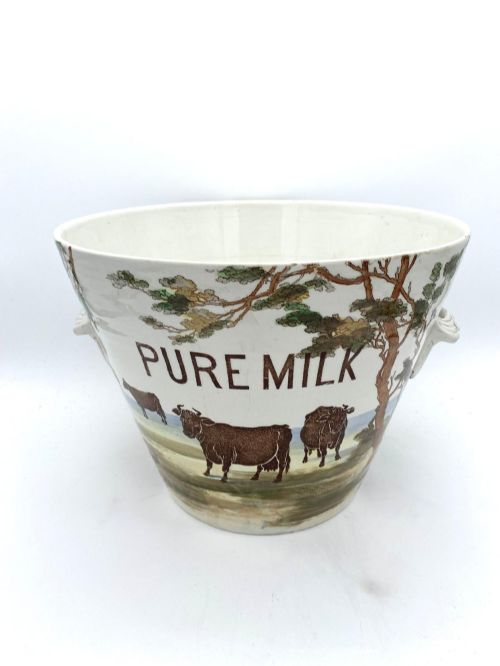
Listings span earthenware and porcelain, featuring Victorian dairy pails, Staffordshire animal figures, and twentieth-century tableware.
What varies in quality
Quality rests upon the crispness of the moulded form and the control shown in the glaze application. Finer pieces display clear details on figures and well-aligned transfer or hand-painted decoration.
Early porcelain items demonstrate superior refinement in the paste and delicate modelling compared to heavier utilitarian earthenware. The precision of the brushwork and the stability of the fired body set superior examples apart.
Derby·Royal Albert Crown China·Volkstedt Triebner, Ens and Eckert
The Brown and White Ceramics Glossary
- Earthenware
- A porous ceramic body fired at lower temperatures, commonly used for domestic items and dairy pails. It requires a glaze to become impermeable.
- Porcelain
- A fine, vitrified ceramic material fired at high temperatures until white and semi-translucent. It forms the base for delicate eighteenth and nineteenth-century figures.
- Staffordshire
- A major English pottery region known for producing earthenware figures, animals, and tableware. These items often feature characteristic brown and white colouring.
- Bocage
- An ornamental background of applied ceramic foliage and leaves found behind figures. It appears frequently on eighteenth-century porcelain animal models.
- Spill holder
- A hollow ceramic vase designed to hold taper matches for lighting fires. They often accompany Victorian mantel figures.
Brown and White Ceramics: Frequently Asked Questions
What are brown and white ceramics?
Brown and white ceramics comprise glazed earthenware and porcelain objects ranging from utilitarian dairy items to decorative Victorian figures.
These pieces reflect the manufacturing methods and domestic fashions of the Georgian, Victorian, and early twentieth-century periods.
How were Staffordshire dogs used?
Staffordshire dogs served as decorative mantel ornaments in Victorian homes, often displayed as facing pairs.
Potters produced these spaniels and other animal figures in varying sizes to suit different domestic interiors.
How do I care for antique pottery?
Antique pottery requires gentle dusting with a dry cloth and protection from sudden temperature changes. Water should be kept away from unglazed areas and old repairs.
Displaying pieces out of direct sunlight preserves the stability of the glazes and enamels over time.
How do I date an antique ceramic?
Dating relies on examining the ceramic body, glaze characteristics, and any maker marks stamped or painted underneath. Style and moulding techniques also provide clues to the period of manufacture.
Comparing construction details with documented examples helps establish the likely decade of production.