
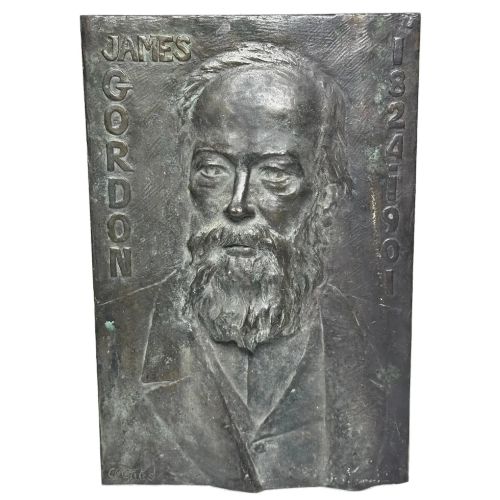
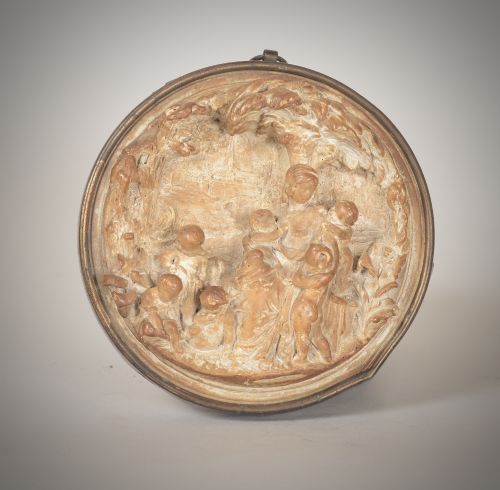
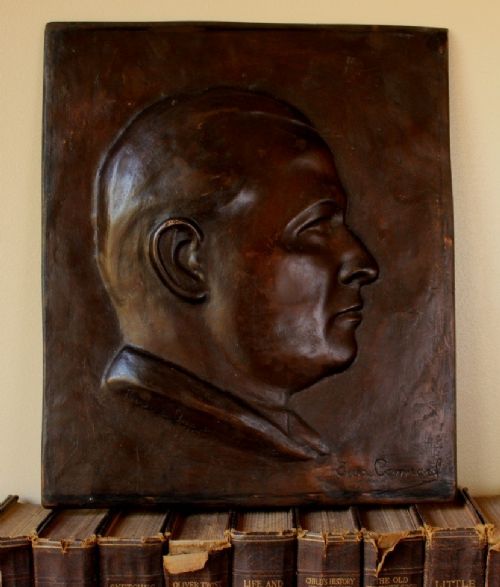
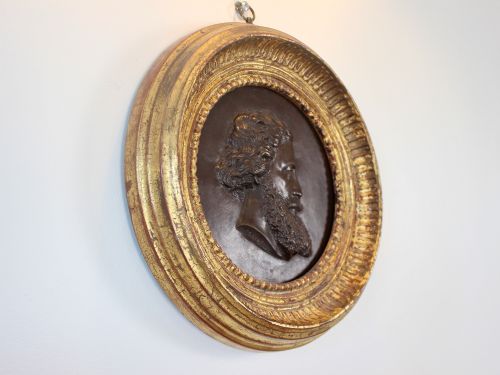


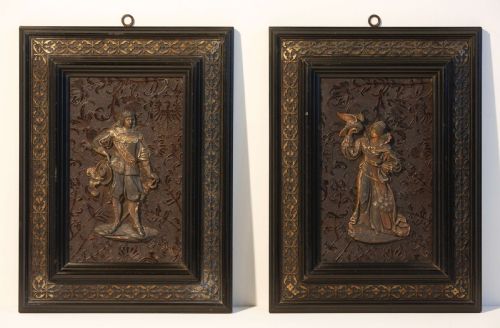


Bronze Wall Plaque Relief
A bronze wall plaque relief brings sculptural depth and historic character directly onto a room's wall through cast metal.
Bronze Wall Plaque Relief
A bronze wall plaque relief is a flat-backed sculptural panel designed for hanging, showing raised figures, portraits, or architectural scenes. When searching this phrase, buyers encounter varied formats ranging from small portrait roundels to larger commemorative castings.
The pieces on this page span several centuries, with a strong representation of nineteenth-century foundry work alongside Edwardian and Art Deco examples. Makers produced these items for domestic display, international exhibitions, and grand tour souvenirs.
Subjects stretch from classical muses and historical figures to heraldic crests and satirical scenes. Materials extend beyond pure bronze to include copper, brass, terracotta, and plaster castings mounted in wood or metal frames.
Materials and casting methods
Foundries utilised traditional casting techniques, pouring molten bronze or brass into moulds to capture fine facial details and high-relief drapery. Many pieces rely on copper, white metal, or cast iron finished with a patinated bronze surface.
Some works incorporate organic materials, mounting terracotta reliefs inside wooden panels or framing plaster casts within giltwood surrounds. Artisans then applied chemical patination or gilding to enhance the depth of the sculpted surface.
Listings feature pieces spanning from the eighteenth century through the Art Deco period, incorporating bronze, copper, terracotta, and plaster.
Evaluating craftsmanship
The integrity of the patina and the quality of any associated mounting frame also influence the overall standard of the object. Finer pieces show considered hand-finishing rather than flat, industrial mass production.
Alice Gates·Eugene Canneel·Ernst Wahliss·Smith Beck and Beck·Gustav Grohe·Coalbrookdale
The Bronze Wall Plaque Relief Glossary
- Relief
- A sculptural technique where figures project from a flat background. High relief stands out significantly, while low relief remains closer to the plane.
- Patina
- The surface coloration and sheen acquired through age or chemical treatment. This finish protects the metal and adds visual depth.
- Roundel
- A circular panel or plaque used for decorative wall display. These often feature portrait profiles.
- Grand Tour
- A nineteenth-century tradition of cultural travel across Europe. Souvenirs included classical bronze plaques and architectural reliefs.
- Putto
- A chubby male child figure often depicted in Renaissance and classical art. They appear alongside muses and allegorical scenes.
Bronze Wall Plaque Relief: Frequently Asked Questions
How do I hang a heavy bronze plaque?
Most heavy metal plaques use integrated rear hanging loops or require sturdy picture wire secured to wall anchors.
Ensure the wall fixing matches the weight of the bronze or cast iron panel to prevent accidental slips.
Can I polish a bronze relief?
Polishing removes the historic patina that gives older bronze its character and depth.
Experts generally advise against aggressive cleaning, preferring a gentle dusting with a soft dry cloth.
What subjects are most common?
Portraits of historical figures, classical mythological scenes, and heraldic crests dominate the surviving pieces.
Exhibition medals and commemorative jubilee plaques also appear frequently across nineteenth-century examples.
How do I date an antique plaque?
Dating relies on stylistic clues, foundry signatures, and the type of metal alloy used in the casting.
Clothes, hairstyles, and lettering styles help narrow down whether a piece belongs to the Victorian era or later Art Deco periods.