

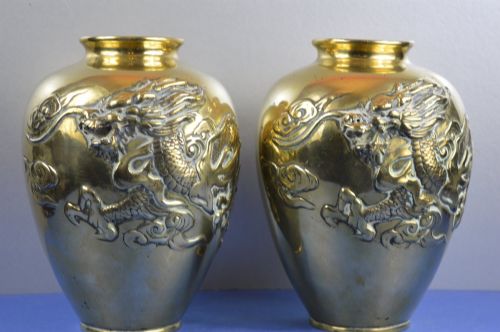


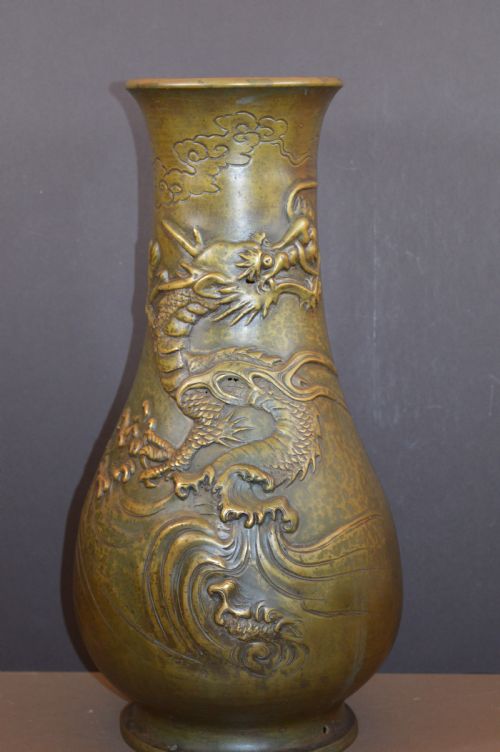


Bronze Urn C1880
These bronze urn c1880 examples are substantial nineteenth-century metalwork vessels offering striking decorative presence for any interior.
Bronze Urn C1880
When you search for a bronze urn c1880, you encounter nineteenth-century metalwork vessels created in both European and Asian workshops. The selection here leans heavily toward Chinese and Japanese vases and bowls alongside French ormolu pieces.
Most entries belong to the Victorian era or the late nineteenth century, spanning Qing Dynasty and Meiji Period aesthetics. Forms range from heavy dragon vases and altar vessels to French cassolettes and cloisonné bowls.
Buyers frequently find pairs in this category, often possessing considerable weight and height. These objects served primarily decorative functions in period drawing rooms and formal spaces.
How they were made
Foundry workers utilised traditional casting techniques in bronze, incorporating patinated surfaces, gilt bronze, and ormolu mounts. Makers also combined bronze with iridescent glass and enamel work to achieve contrasting textures.
Asian pieces often display cast or applied dragon motifs and intricate surface details characteristic of late Qing and Meiji craftsmanship. French examples rely on precision casting and fire gilding to produce classical cassolette forms.
Bronze Urn C1880 Retail Price Guide 2026
Typical asking prices for bronze urn c1880 among the pieces listed under this phrase on Sellingantiques today, from the lower quarter to the upper quarter. They describe what is for sale here now, not the wider market.
Several heavy dragon vases on offer weigh more than a newborn domestic cat.
What varies in quality
The degree of artistic ambition in the casting work separates standard production vessels from exceptional pieces. Heavier pairs with intricate relief decoration or complex multi-part construction demand greater skill from the foundry.
Surface finish also distinguishes finer examples, particularly where patination, fire gilding, or enamel cloisonné work remains crisp and well-preserved. The integration of secondary materials like glass or ormolu mounts further defines the standard of execution.
Richardson's
The Bronze Urn C1880 Glossary
- Ormolu
- Gilt bronze mounted onto decorative objects, created by applying a mercury and gold amalgam to cast bronze. This French technique yields a bright golden finish.
- Cassolette
- A decorative vessel designed to function either as a vase or a burner for perfumes. These pieces typically feature a reversible lid.
- Cloisonné
- An enamelling technique where metal wire is soldered to a bronze body to form compartments filled with paste and fired. The resulting surface shows coloured patterns divided by thin metal lines.
- Patinated Bronze
- Metal treated with chemicals to produce a stable coloured surface layer rather than bare metallic shine. Dark brown and green tones predominate.
- Tsubo
- A traditional Japanese jar or vase form with a bulbous body and a narrow neck. These vessels often display fine quality casting from the Meiji period.
Bronze Urn C1880: Frequently Asked Questions
What is a bronze urn c1880?
These items are nineteenth-century decorative metalwork vessels originating from European, Chinese, and Japanese workshops.
They encompass heavy vases, altar vessels, cassolettes, and cloisonné bowls created during the Victorian period.
How were these vessels used?
Period households placed these substantial bronze pieces on mantelpieces, tables, and pedestals as purely decorative ornaments.
Some forms like cassolettes held perfumes, while others served as formal display vases in prominent reception rooms.
How do I display a heavy bronze vase?
Due to significant weight ranging up to several kilograms, these vessels require sturdy support surfaces such as low side tables or strong cabinets.
Positioning them away from high-traffic areas protects both the piece and surrounding furniture from accidental impacts.
How can I tell French styles from Asian pieces?
French nineteenth-century items typically exhibit neoclassical or ormolu mounts influenced by Louis XVI design traditions.
Asian pieces from the Qing Dynasty and Meiji period feature distinct motifs such as dragons, altar forms, or intricate cloisonné enamelling.