

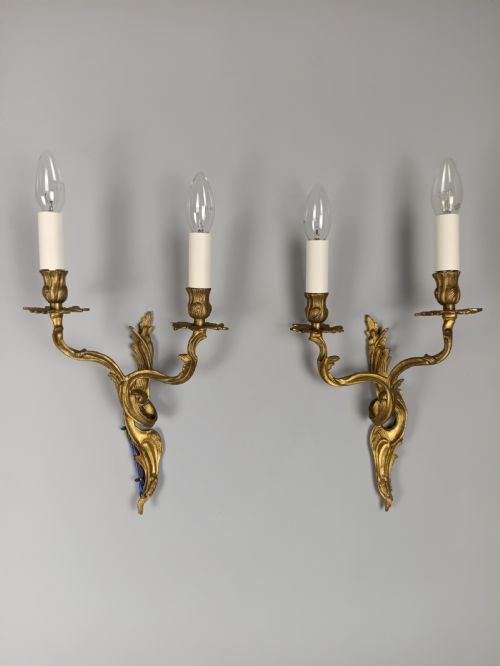
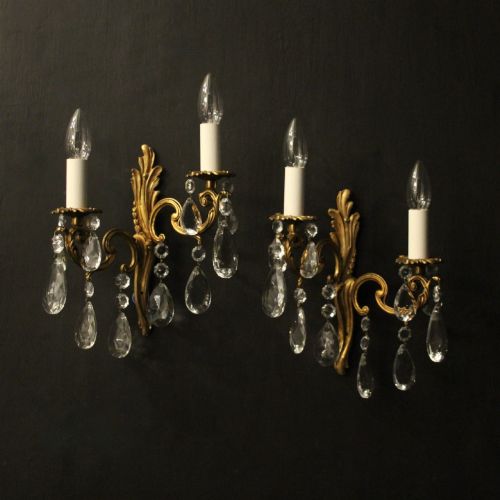
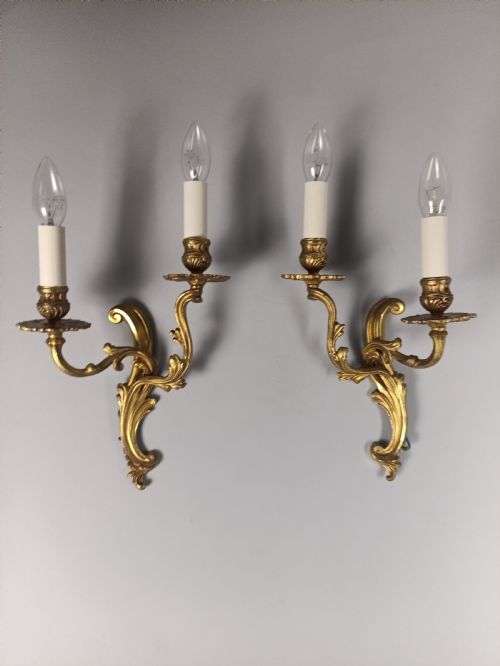
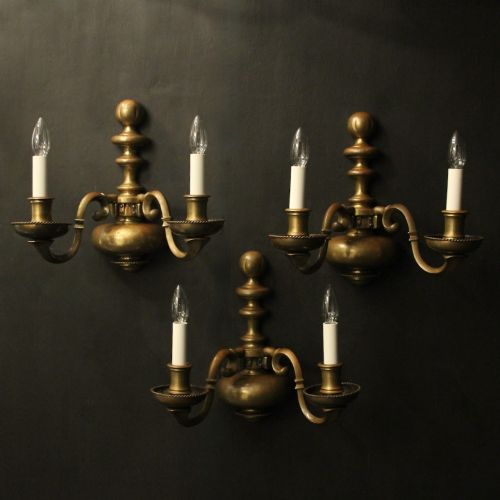
Bronze Twin Arm Lights
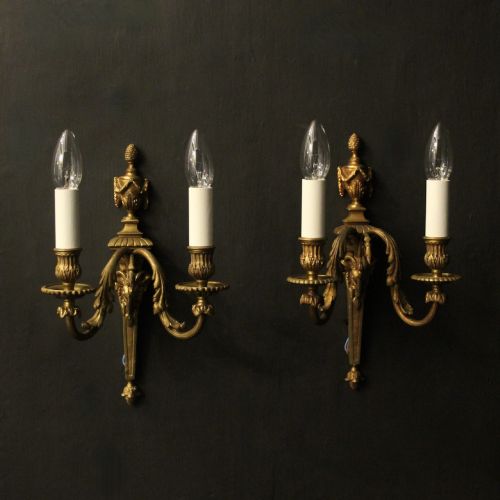
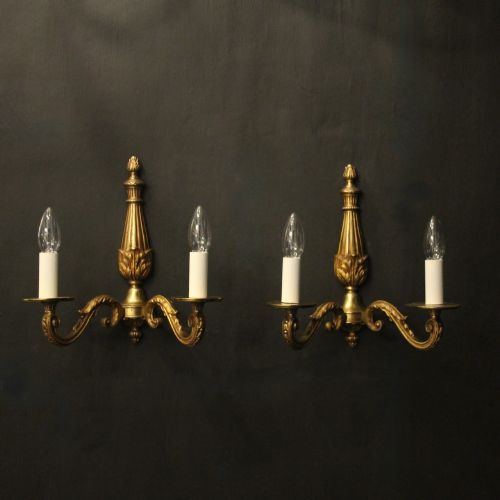
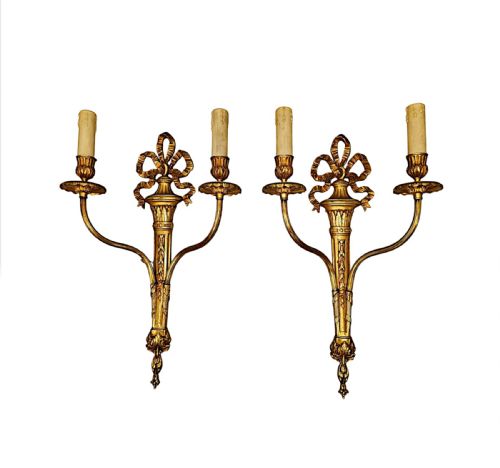
Bronze twin arm lights bring focused, period illumination to a wall, combining substantial metalwork with dual candle or bulb holders.
Bronze Twin Arm Lights
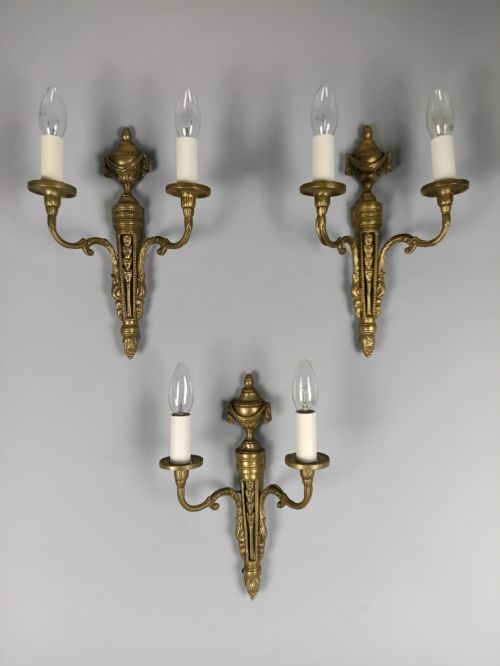
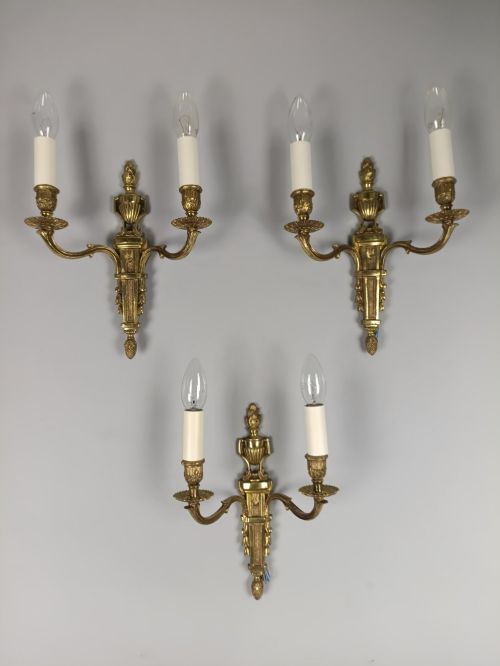
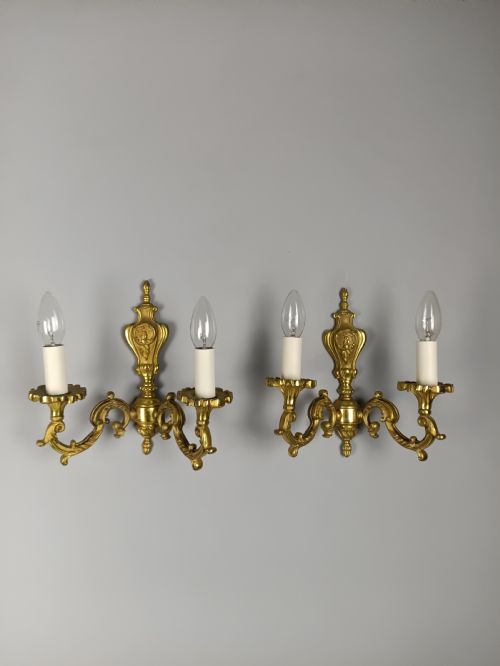
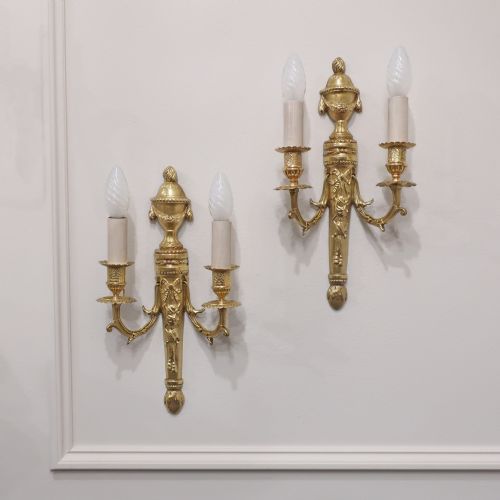
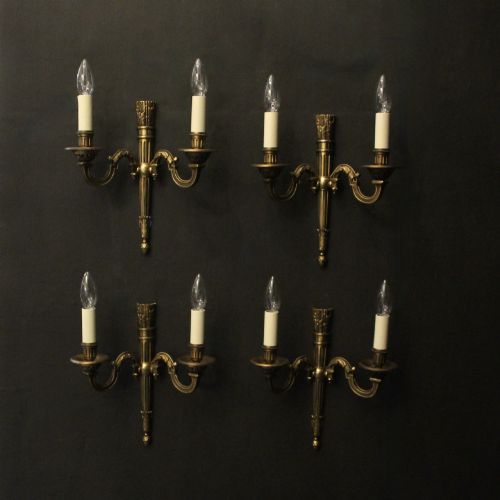
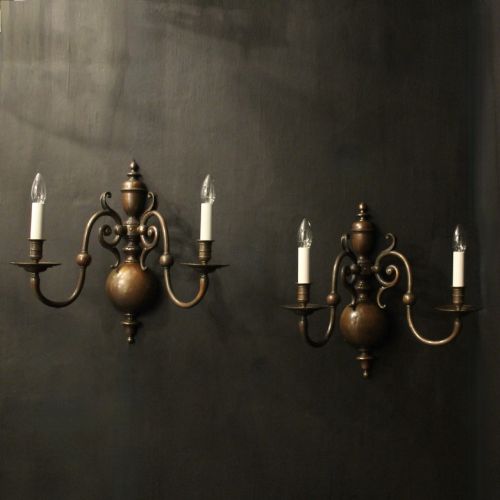
Bronze twin arm lights primarily manifest as wall lights, wall sconces, and candelabra designed to mount directly onto interior walls. Buyers seeking bronze twin arm lights will find pairs and sets predominantly originating from French and English workshops spanning the Victorian era through the early twentieth century.
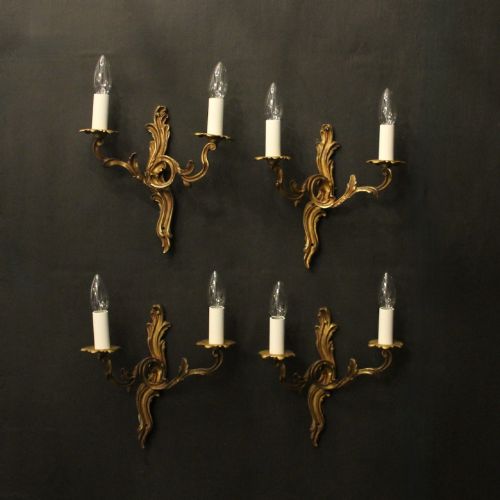
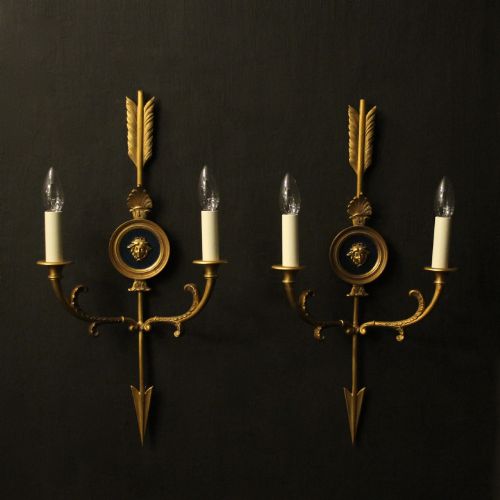
The prevailing aesthetic draws heavily upon continental design vocabularies, notably French Rococo, Empire, and Neoclassical styles. Pieces range from modest domestic pairs to larger matched sets intended for principal reception rooms.
Forms incorporate dual arms branching from a central backplate, occasionally adapted from earlier candlestick designs or paired with marble bases and crystal elements. English interpretations tend towards simpler country house aesthetics, while French examples lean into ornate chased ornamentation.
Materials and Construction
Construction relies primarily on cast bronze, brass, and related metal alloys finished with gilding, ormolu, or silver gilt. Metal components are cast in sections, chased by hand to sharpen details, and assembled via threaded rods or pins.
Gilding techniques include mercury gilding on earlier pieces and electroplating on later twentieth-century items, creating varying depths of metallic lustre. Surface treatments interact with applied patination to accentuate relief work on scroll arms and backplates.
Bronze Twin Arm Lights Retail Price Guide 2026
Typical asking prices for bronze twin arm lights among the pieces listed under this phrase on Sellingantiques today, from the lower quarter to the upper quarter. They describe what is for sale here now, not the wider market.
Listings feature periods spanning from the Victorian era and 1860s through to the 1930s, executed in bronze, brass, and gilt metals.
Distinctions in Quality
Quality rests principally in the crispness of the original metal casting and the depth of the subsequent hand-chasing. Superior examples exhibit sharply defined foliage, scrolls, and figural details, whereas lesser pieces show softer contours resulting from worn production moulds.
The integrity of the surface finish and the weight of the metal distinguish superior workshops from mass production. Thicker gauge bronze and durable, even gilding maintain their visual presence over decades of interior placement.
Casier
The Bronze Twin Arm Lights Glossary
- Ormolu
- Finely chopped high-zinc brass applied to objects via mercury amalgamation, producing a rich gold-coloured surface finish. This technique was widely utilised by Parisian bronze-makers during the eighteenth and nineteenth centuries.
- Backplate
- The flat or shaped metal section that fastens directly to the wall and supports the projecting arms. It often carries the principal decorative motifs of the fixture.
- Chasing
- The manual process of refining a metal casting with small hammers and punches to sharpen surface details and texture. Superior chasing separates high-end decorative metalwork from basic commercial production.
- Sconce
- A wall-mounted lighting fixture designed to carry candles or electric lamps. The term is frequently used interchangeably with wall light in period inventories.
- Louis XVI Style
- A neoclassical design movement characterised by straight lines, symmetry, classical urns, and subdued ornamentation. This aesthetic influences many of the nineteenth and early twentieth-century wall lights found on the market.
Bronze Twin Arm Lights: Frequently Asked Questions
How do I wire antique wall lights?
Wiring requires routing modern internal flex through the hollow cast arms and backplate to connect safely to mains electricity. Many pieces have already undergone conversion, but professional rewiring ensures compliance with current safety standards.
Qualified electricians can adapt most fittings using small-diameter cable that remains hidden within the historic metal structure.
How do I clean gilded bronze safely?
Dusting with a soft dry brush prevents the accumulation of particulate matter without disturbing fragile metallic surfaces. Avoid abrasive cleaners and chemical polishes that strip away historical gilding.
Gentle wiping with a microfiber cloth is sufficient for routine maintenance of both bright and faded gilt finishes.
How can I tell French and English pieces apart?
French examples often display heavier ornamentation rooted in Rococo or Empire traditions, featuring elaborate cast scrollwork and deep mercury gilding. English equivalents frequently employ simpler lines associated with country house or Adam revival styles.
Examining the backplate construction and casting thickness usually reveals the national origin of the workshop.