
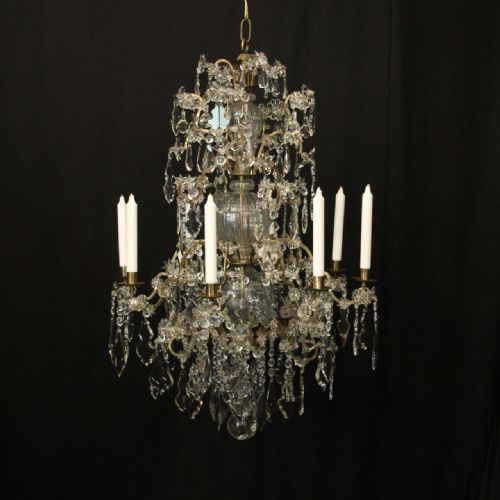


Bronze Tiered Chandelier
A bronze tiered chandelier brings tiered illumination and period weight to a room, offering multiple levels of light through cast metal and glass drops.
Bronze Tiered Chandelier
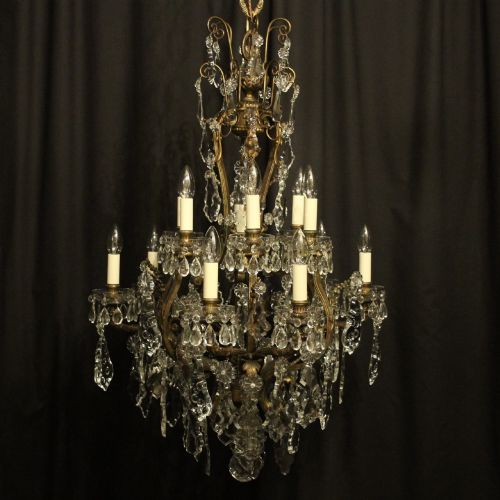
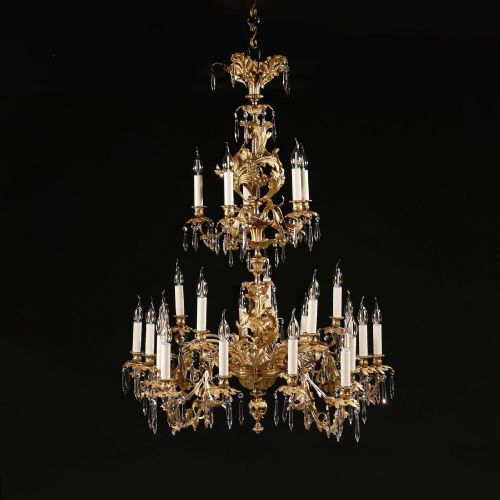
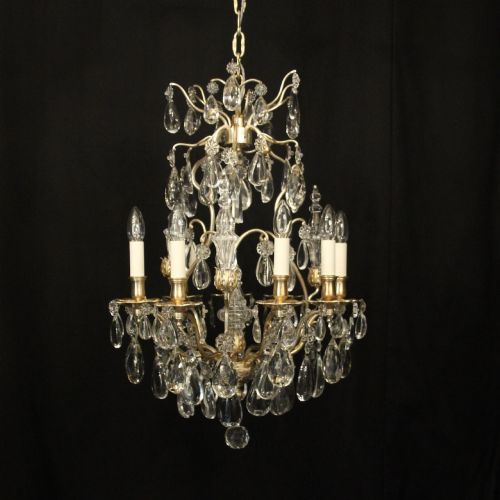
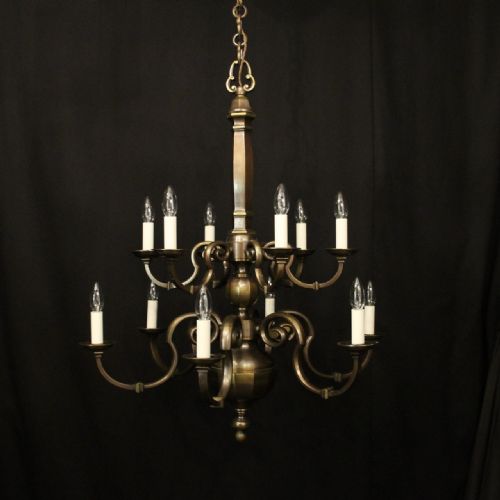
A bronze tiered chandelier is a multi-level ceiling light built from cast metal frames arranged in successive stages, carrying anywhere from nine to twenty-five lights. These fixtures appear frequently in French and Italian designs from the nineteenth and early twentieth centuries, often draped with crystal or cut glass drops.
The version most commonly met on this page is the French or Italian double-tiered chandelier in gilded or patinated bronze, dating from the nineteenth century or the decades up to 1930. Such pieces combine metal armatures with numerous candle branches or bulb holders, suspended by chains or rods from the ceiling.
How they were made
Metalworkers cast bronze, gilt bronze, or brass into structured frames and branching arms, frequently applying a layer of gold leaf or silver gilt to the metal surface. These foundational skeletons support tiers of varying diameters designed to distribute weight evenly across the ceiling drop.
Artisans embellished these frames by wiring or pinning cut glass and crystal prisms, drops, and tent structures to the metal tiers. The combination of reflective glass elements with polished or gilded bronze ensures that light disperses in multiple directions from the candle branches or electrical fittings.
Some twenty-five light chandeliers carry enough crystal drops to outnumber the guests at a dinner party.
What varies in quality
The refinement of the casting work separates standard production from exceptional examples, visible in the crispness of chased leaf motifs and the proportional balance between tiers. Heavier metal frameworks and intricate armature designs indicate a higher grade of manufacture.
The integration and clarity of the crystal or cut glass components also dictate the overall standard. Pieces set with hand-cut crystals and dense droplet arrays create richer light refraction than those with simpler pressed glass elements.
Baccarat
The Bronze Tiered Chandelier Glossary
- Tiered chandelier
- A ceiling light constructed with multiple vertical levels or stages of branching arms. This arrangement increases light capacity and creates a commanding visual presence in high-ceilinged spaces.
- Gilt bronze
- Bronze metal treated with a thin layer of gold or gold leaf applied to the surface. It provides a warm, reflective finish that resists tarnish.
- Electrolier
- A light fixture originally designed for gas or candles that has been converted to electricity, or built as an electric fitting from the start. The term frequently applies to larger nineteenth-century chandeliers adapted for modern wiring.
- Tent chandelier
- A lighting form featuring strings of small crystals gathered from a central ring up to a crown, forming a tent shape above the lower tiers. This style maximises the surface area for glass-borne light refraction.
- Ormolu
- Finely ground high-carat gold-mercury amalgam applied to a bronze object, common in French decorative arts. It yields a distinctive deep metallic lustre.
Bronze Tiered Chandelier: Frequently Asked Questions
What is a bronze tiered chandelier?
A bronze tiered chandelier is a hanging ceiling light featuring multiple vertical levels of metal arms designed to hold numerous lights. These fixtures combine cast bronze or gilt frames with branching tiers for expansive illumination.
Such pieces date largely from the nineteenth and early twentieth centuries, originating primarily from French and Italian workshops. They frequently incorporate crystal drops or cut glass elements to enhance their visual weight.
How were these chandeliers used?
These chandeliers served as primary light sources in large reception rooms, salons, and dining halls, where multiple tiers ensured adequate illumination across a wide space. Their size and tiered construction commanded attention in high-ceilinged interiors.
Historically, they burned candles before being adapted for gas or electricity as lighting technology advanced. Many surviving examples carry conversions from candles to electrical wiring while retaining their original metal and glass structure.
How do you clean a chandelier with crystal drops?
Cleaning involves wiping individual glass drops and crystal prisms with a soft cloth dampened in a mild cleaning solution while the pieces remain attached to the frame. Care must be taken around the gilt bronze or brass armatures to preserve the metal finish.
For thorough maintenance, some custodians gently lower the fixture or remove delicate glass components individually. Regular dusting prevents grime buildup in the intricate joints between the bronze tiers and crystal strands.
How can you tell periods apart?
Periods are distinguished by stylistic details and manufacturing techniques visible in the bronze work and glass cutting. Nineteenth-century pieces often display Rococo Revival or Neoclassical motifs with heavy cast bronze frames, whereas 1920 and 1930 examples may show simpler lines or Art Deco influences.
Makers and periods also register through the density of the crystal drops and the specific shade of gilding on the bronze. Archival records and stylistic markers help link a chandelier to eras such as the Grand Regency or Napoleon III periods.