

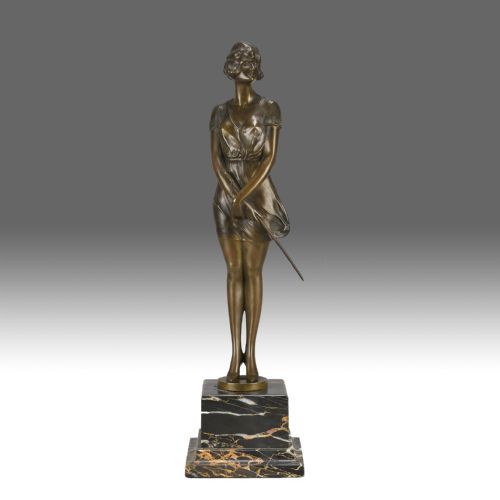


Bronze Standing Female Figure
A bronze standing female figure brings classical form, Art Deco energy, and patinated weight to a room.
Bronze Standing Female Figure
A bronze standing female figure spans centuries and aesthetics, from Regency torcheres to Art Deco dancers and Egyptian Revival sculptures. Buyers searching for a bronze standing female figure encounter works cast in metal, often paired with marble stands or incorporating gilt bronze and ormolu details. The selection ranges from grand nineteenth-century pieces to twentieth-century studies created by notable European sculptors.
The forms extend beyond standalone statues into functional objects like candlesticks, table mirrors, and floor lamps supported by female figures. Prominent artistic movements such as Art Nouveau, Belle Epoque, and Neoclassical styles heavily influence the design and posture of these subjects. Most pieces originate from French and Italian workshops, though Tibetan Buddhist statues and Khmer style interpretations also appear.
What varies in quality
The choice of base materials, such as solid multi-coloured marble versus simple plaster, indicates the original ambition of the piece. Foundries with renowned caster marks generally command higher regard for their metallurgical precision and artistic fidelity. Integrated elements like ormolu mounts and gilt bronze highlights must align seamlessly with the primary bronze body.
Bronze Standing Female Figure Retail Price Guide 2026
Typical asking prices for bronze standing female figure among the pieces listed under this phrase on Sellingantiques today, from the lower quarter to the upper quarter. They describe what is for sale here now, not the wider market.
Several ladies hold up lamps or mirrors, eternally serving as your most reliable household assistants.
Bruno Zach·Georges Van Der Straeten·Humphrey Hopper·Anders Zorn·Jules Dalou·Ferdinando de Luca·Pierre le Faguays·Gustav Adolf Daumiller
The Bronze Standing Female Figure Glossary
- Caryatid
- A sculpted female figure serving as an architectural support taking the place of a column or pier. This classical form appears frequently in nineteenth-century torcheres and candlesticks.
- Ormolu
- Gilt bronze produced by applying a finely ground high-carat gold-mercury amalgam to a bronze object. It provides a bright golden finish that contrasts against dark patinated bronze.
- Spelter
- A zinc alloy used as a less expensive alternative to bronze, often painted or electroplated to mimic bronze finishes. It is common in Edwardian figure mirrors.
- Torchere
- A tall stand or candlestick designed to carry a light source, frequently ornamented with figural shafts. These decorative furnishings illuminate corners and display rooms.
Bronze Standing Female Figure: Frequently Asked Questions
Where should I place a bronze standing female figure?
These figures suit stable surfaces like mantelpieces, sideboards, or dedicated pedestals where their weight is fully supported. Tall torcheres and floor lamps stand well in corners or framing doorways.
Keep them away from direct heat sources and excessive moisture to protect the bronze patina and any attached marble or gilt elements.
How do I clean a bronze sculpture?
Dust the surface gently with a soft, dry cloth to remove airborne particles without disturbing the underlying patination. Avoid abrasive cleaners, water, or commercial polishes that strip the historic finish.
Professional conservation is recommended if oxidation or heavy grime requires intervention.
What is the difference between bronze and spelter?
Bronze is a durable copper alloy that accepts fine detail and holds rich patinas over centuries of handling. Spelter is a softer zinc alloy that feels lighter and often shows flaking paint or surface wear where the plating fails.
Magnet testing can help distinguish them, as neither is magnetic, but bronze rings with a deeper resonance when struck gently.
How do I identify Art Deco figures?
Art Deco pieces typically feature streamlined geometry, stylised drapery, and dynamic poses associated with dancers and athletes from the interwar period. The materials often combine cold-painted bronze with ivory or marble bases.
Signatures from sculptors active in the nineteen-twenties frequently appear along the edge of the cast base.