






Bronze Souvenir Sculpture
These pieces of bronze souvenir sculpture bring the ancient monuments and classical figures of European travels directly onto a library shelf or desk.
Bronze Souvenir Sculpture
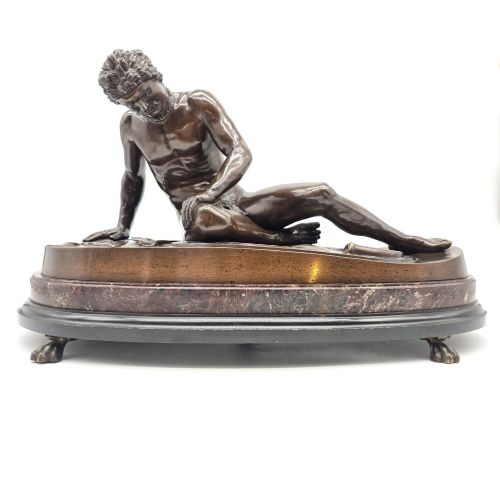
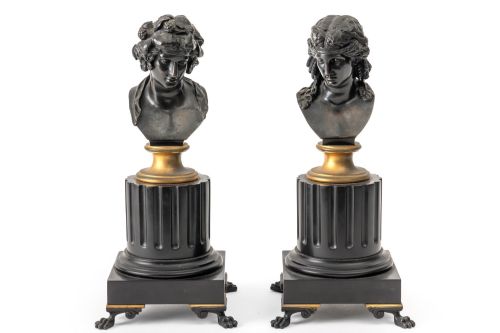
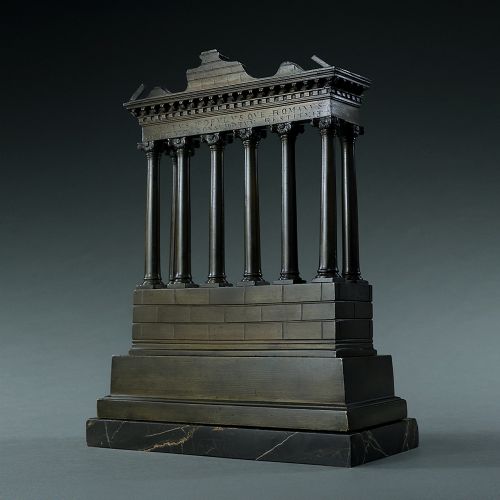
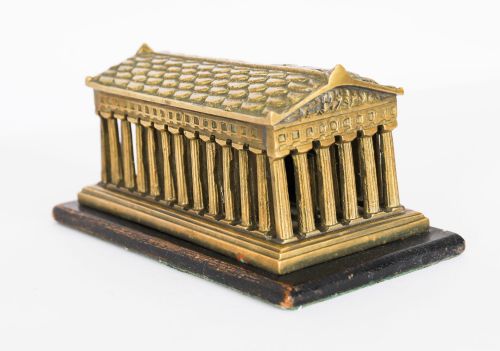
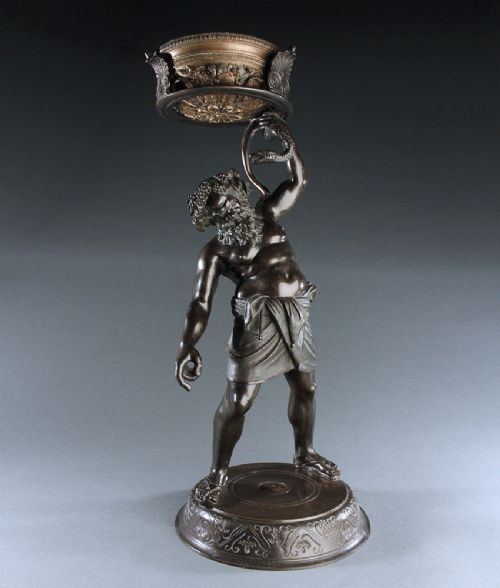
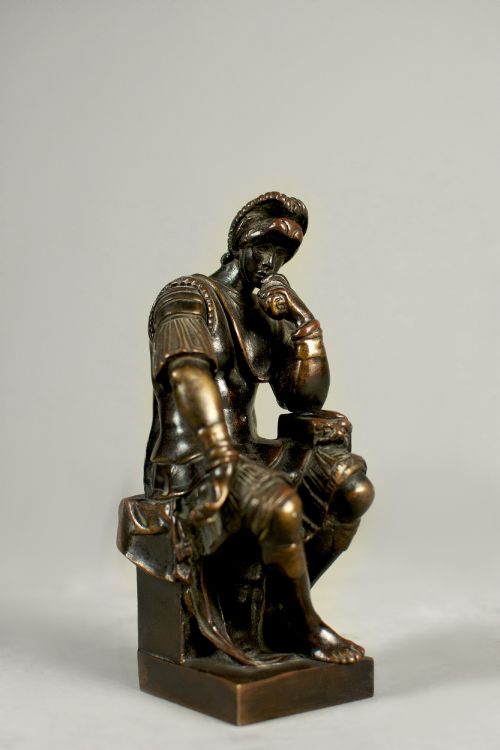
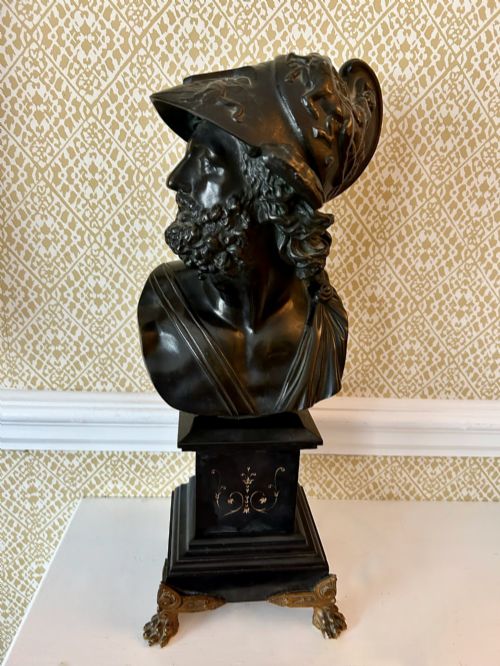
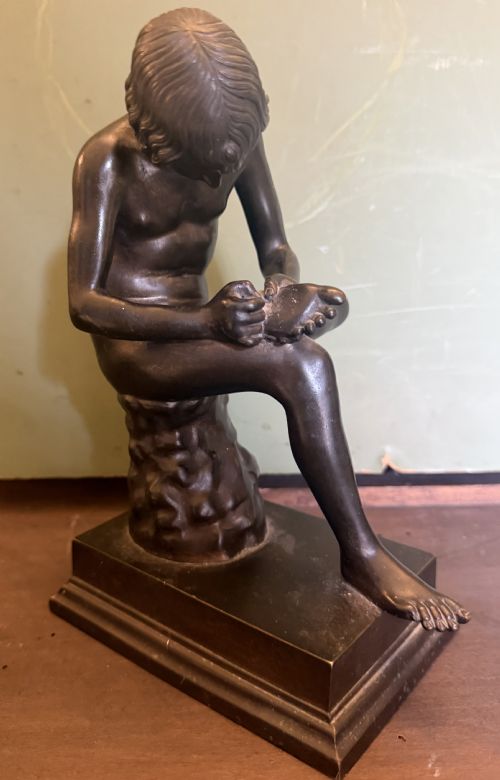
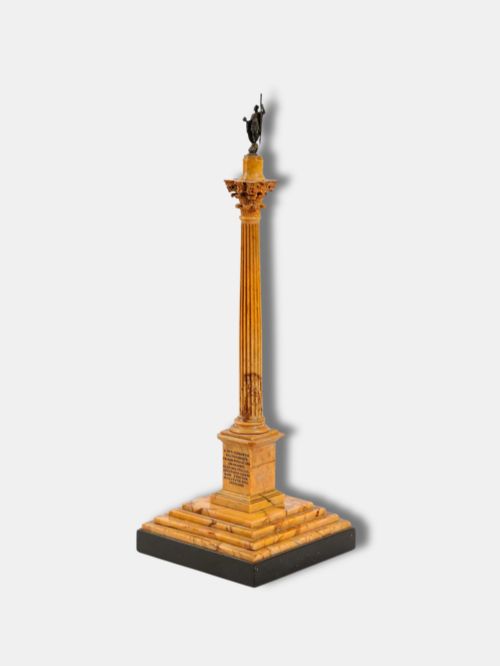
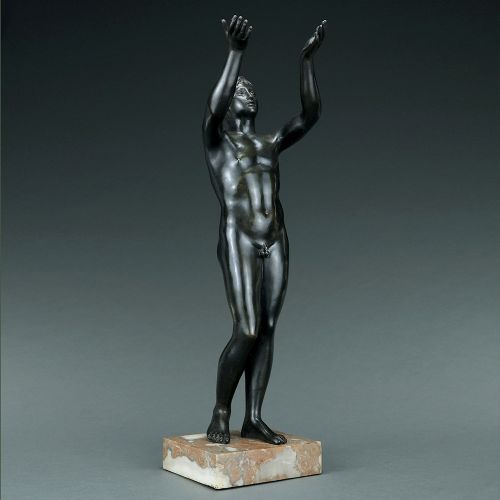
A bronze souvenir sculpture represents the classical antiquities, architecture and Renaissance masterpieces collected by travellers on the Grand Tour across Italy and France during the nineteenth century. Most examples found here take the form of reduced-scale statuettes, architectural models, busts or figural lamps cast in bronze and mounted upon stone plinths.
The subjects draw directly from renowned classical sculptures and ancient ruins, including figures like the Dancing Faun, Narcissus, Mercury and various imperial lions. Architectural models replicate famous columns, arches and obelisks from Rome, Naples and Venice, serving as tangible records of educational journeys through the Mediterranean.
How they were made
Foundry workers utilised traditional lost-wax or sand-casting techniques to reproduce complex classical forms in metal, often achieving notable precision in the musculature and facial expressions. The resulting bronze surfaces received chemical treatments to create dark patinations, verdigris highlights or bright polish.
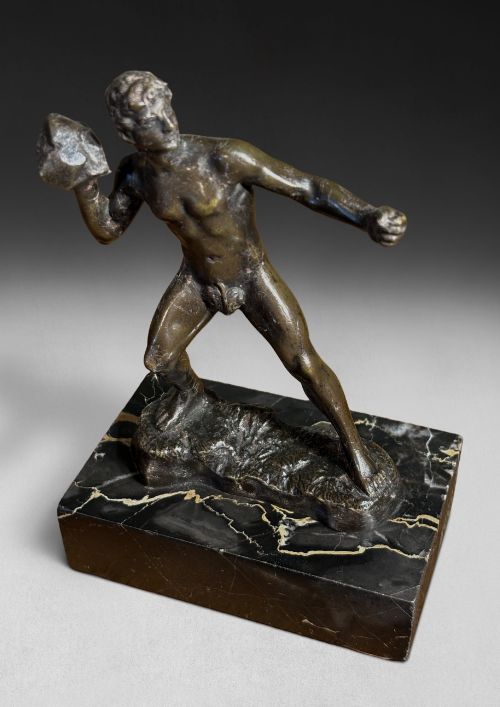
Many sculptures are mounted onto integral bases fashioned from contrasting materials such as giallo antico, black marble, fossil marble or white marble plinths. Some more elaborate models incorporate secondary elements in ormolu or mixed metals to define architectural details and decorative borders.
Bronze Souvenir Sculpture Retail Price Guide 2026
Typical asking prices for bronze souvenir sculpture among the pieces listed under this phrase on Sellingantiques today, from the lower quarter to the upper quarter. They describe what is for sale here now, not the wider market.
Several pieces depict slumbering deities and sleeping fauns, offering nineteenth-century desk owners a permanent excuse for afternoon fatigue.
What varies in quality
The choice and preparation of the mounting stone also set pieces apart, with dense decorative marbles correctly fitted to the bronze base indicating greater care in assembly. Patination quality further separates works, as deeply layered chemical finishes show more nuance than flat, uniform dark coatings.
G Amodio Naples·Messina Roma
The Bronze Souvenir Sculpture Glossary
- Grand Tour
- An extended journey through France and Italy undertaken by nineteenth-century travellers to study classical art and architecture. Souvenirs purchased along the route form the basis of this category.
- Patination
- The surface coloration of metal achieved through chemical application or natural ageing. Different patinas range from deep brown to greenish verdigris.
- Ormolu
- Gilded bronze used for decorative mounts and architectural details. The technique involves applying a gold amalgam to the bronze surface.
- Lost-wax casting
- A method of metal casting where a wax model is melted away to leave a mould for molten bronze. This technique allows for high fidelity in intricate sculptural forms.
Bronze Souvenir Sculpture: Frequently Asked Questions
How were these sculptures displayed?
Collectors typically placed these objects upon library desks, mantelpieces or dedicated display tables alongside books and scientific instruments.
Their heavy marble bases allowed the small bronzes to stand securely while adding a neoclassical decorative element to nineteenth-century interiors.
How do I identify the subject?
Many figures replicate famous statues housed in Italian museums, such as the Dancing Faun of Pompeii or the Farnese Hercules. Comparing the pose and attributes of the statuette often reveals the specific antique original.
Inscriptions on the base or the distinct style of the marble plinth can provide additional clues regarding the specific city or workshop of origin.
Why do the patinas differ?
Foundries applied different chemical treatments to the metal surface to emulate the appearance of buried antiquities or to highlight specific sculptural contours. Some pieces display a dark brown or black finish, while others exhibit a green verdigris tone.
Over decades of handling and exposure to light, these patinas acquire unique tonal variations that distinguish individual examples.