



Bronze Setter Dog
A bronze setter dog captures the intense poise and steady focus of the hunting field in lasting metal.
Bronze Setter Dog
When you search for a bronze setter dog, you encounter sculptural works that capture the distinct stance and athletic build of gundogs. These pieces frequently emerge from nineteenth-century animalier traditions and later twentieth-century interpretations.
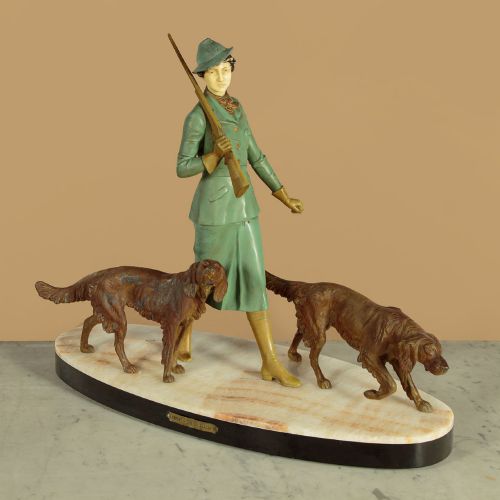
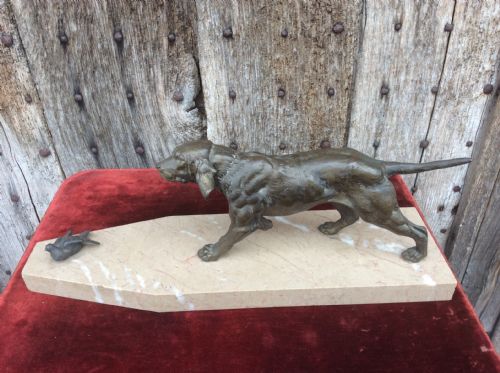
You are most likely to meet nineteenth-century bronze and spelter figures mounted on stone plinths such as marble and onyx. The forms range from solitary resting hounds to dramatic scenes depicting dogs putting up pheasants or retrieving game.
The objects span multiple decades, showing both solid bronze castings and cold-painted finishes. French animalier schools heavily influence the style, alongside later Art Deco interpretations.
Materials and casting methods
Foundries utilised traditional metal casting techniques to shape molten bronze and spelter into detailed canine forms. Metal patination was then applied to create deep, varied surface tones on the fur and musculature.
Many sculptures are mounted directly onto heavy architectural bases made from marble, onyx, or alabaster. These stone plinths provide stability and contrast with the dark patinated metal figures above.
Bronze Setter Dog Retail Price Guide 2026
Typical asking prices for bronze setter dog among the pieces listed under this phrase on Sellingantiques today, from the lower quarter to the upper quarter. They describe what is for sale here now, not the wider market.
The listings show works cast in both solid bronze and spelter, frequently mounted upon heavy marble, onyx, or alabaster plinths.
Distinctions in sculpture quality
The fineness of the chisel work and chassage determines how sharply the musculature, feathering of the coat, and facial expressions are defined after casting. Finer pieces retain crisp anatomical details rather than soft, smoothed surfaces.
The quality of the mount affects the overall presence of the piece, particularly where natural stone plinths are fitted precisely to the metal base. Heavier, richly veined marble or onyx bases indicate a more substantial production standard.
Jules Moigniez·Delabrierre·C Masson
The Bronze Setter Dog Glossary
- Animalier
- A nineteenth-century artistic movement focused on the realistic depiction of animals. Sculptors in this tradition studied anatomy closely to portray wildlife and sporting dogs with great fidelity.
- Spelter
- A zinc alloy frequently used as a cost-effective alternative to bronze. It accepts patination and metallic finishes well, though it is softer and lighter than solid bronze.
- Patination
- The chemical treatment or natural ageing process applied to the metal surface. It creates enduring brown, green, or dark tones that highlight the sculptural detail.
- Cold-painted
- A technique where paint is applied to cold metal rather than fired in a kiln. This allows for delicate polychrome colouration on sporting figures.
Bronze Setter Dog: Frequently Asked Questions
What is a bronze setter dog sculpture?
These pieces are metal sculptures depicting setter gundogs, often created during the nineteenth and early twentieth centuries.
They celebrate the form and sporting heritage of the breed through detailed metalwork.
How do I identify animalier bronzes?
Animalier bronzes show realistic anatomical study and dynamic poses of animals in natural settings.
Look for signature markings on the base and the characteristic heft of cast metal.
What is the difference between bronze and spelter?
Bronze is a durable copper alloy that takes a deep, stable patina and holds fine chisel details.
Spelter is a softer zinc-based metal that was often painted or given a bronze-like finish for domestic display.
Where should I display these sculptures?
These figures suit studies, libraries, or mantelpieces where their sturdy stone bases provide stable placement.
Keep them away from direct heat sources to protect the patinated surfaces and stone plinths.