


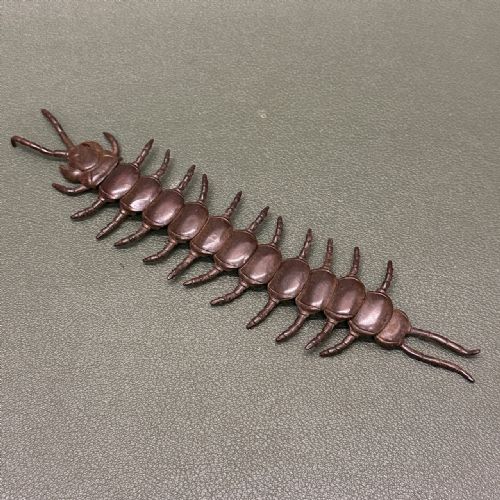
Bronze Okimono Figure
A bronze okimono figure brings the extraordinary naturalism and precision of Japanese metalwork into a room.
Bronze Okimono Figure
A bronze okimono figure is a decorative Japanese sculpture designed for display, capturing subjects ranging from wildlife to human figures in striking detail. When you search for this phrase, you encounter works that span the late nineteenth and early twentieth centuries, predominantly originating from the Meiji period.
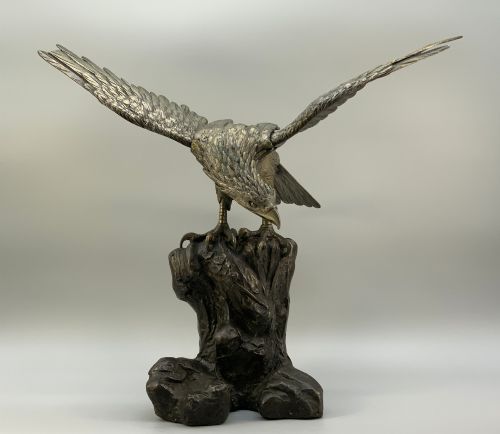
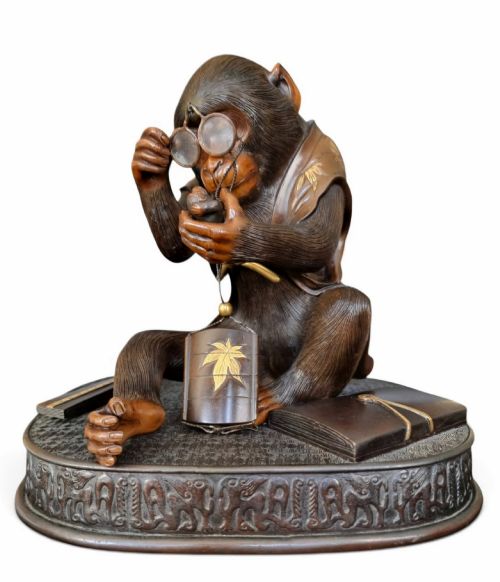
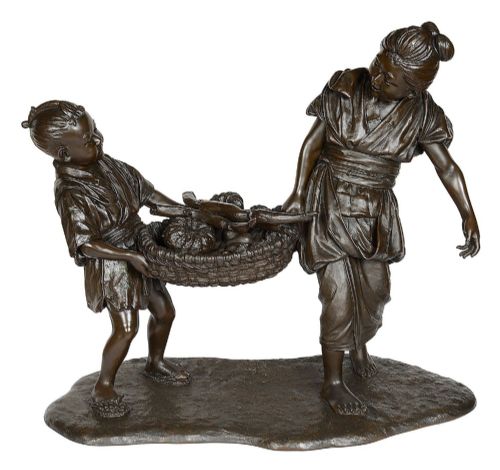
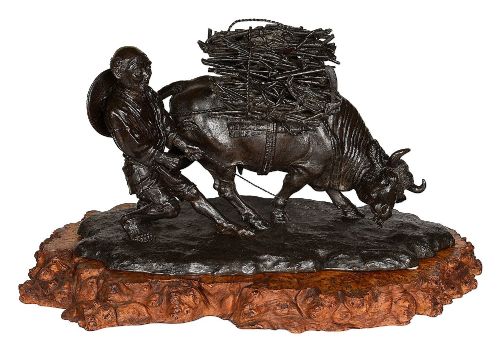
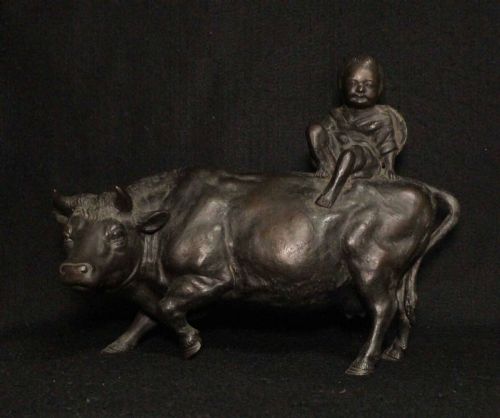
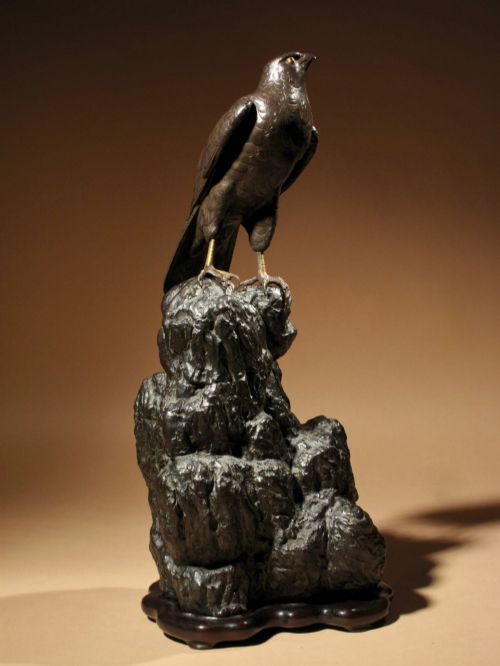
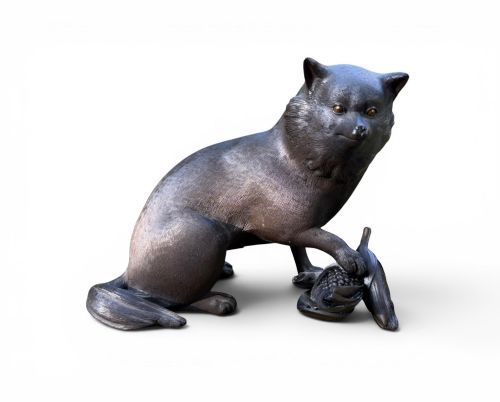
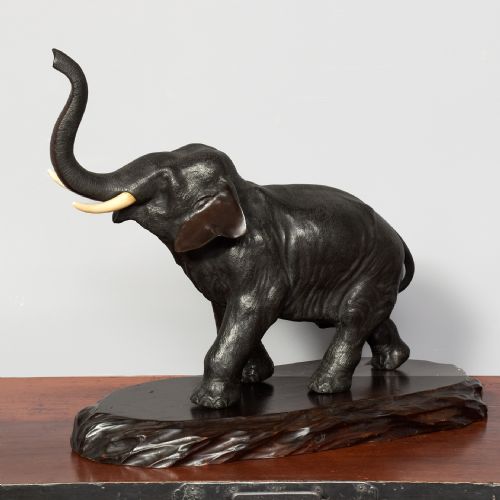
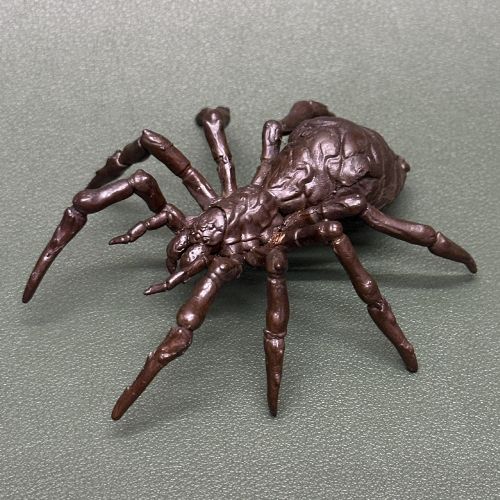
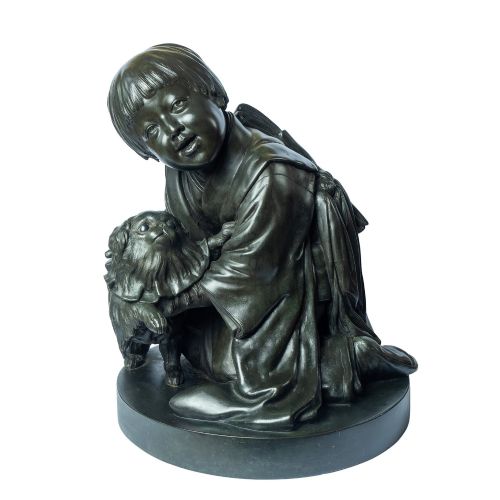
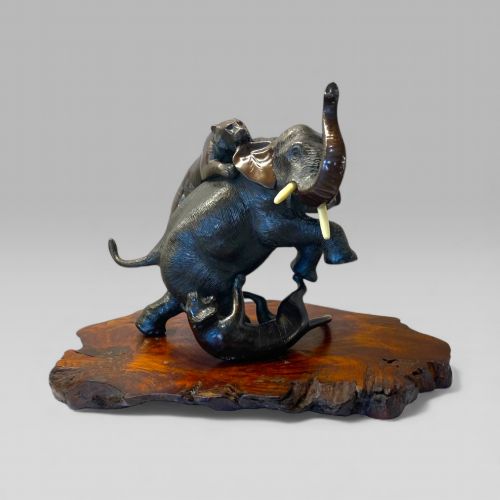
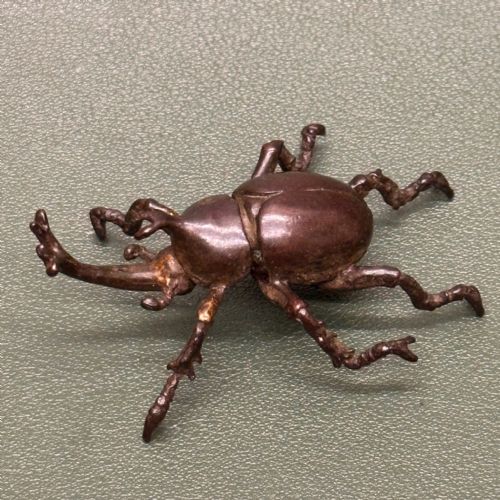
The subjects divide broadly between the animal kingdom and human figures, with creatures such as eagles, elephants, monkeys, and insects appearing frequently alongside scholars, musicians, and figures with animals. Many pieces rest upon naturalistic bases or carved wood supports that complement the cast metalwork.
These sculptures range from intimate table pieces to large-scale garden figures and pairs of geese. The majority date to the nineteenth century, reflecting the peak of metalworking skill during the Meiji era.
Materials and casting techniques
Makers utilised bronze, patinated bronze, copper, and mixed metals to achieve diverse surface tones and textures. Artisans often applied rich patination to emulate the natural colours of fur, feathers, and skin.
Details were frequently enhanced through gold inlay or the integration of materials such as bone, ivory, and burr wood. Articulated sections, seen in insects and centipedes, demonstrate advanced metal-joining techniques that allowed limbs and segments to move.
Casting was paired with meticulous chiselling and carving by hand to define surface textures, from the craggy rocks beneath a hawk to the shell of a rhinoceros beetle.
Listings feature bronze okimono figures from the nineteenth and early twentieth centuries, spanning the Meiji period and employing mixed metals, gold inlay, and wood bases.
Distinctions in quality and execution
Quality rests upon the fidelity of the casting and the precision of the chiselling that followed. Superior works display a lifelike sense of movement and accurate anatomical detail, whether rendering the tension in a crouching lion or the delicate posture of a puppy.
Signatures inscribed by master metalworkers distinguish pieces produced by renowned workshops and artists. The integration of mixed metals, gold inlay, or articulated joints signals higher ambition and greater technical mastery on the part of the maker.
The composition of auxiliary elements, such as root wood bases or naturalistic groundings, supports the overall aesthetic weight of the sculpture.
Masaaki·Tsunemitsu·Kaniya Kuniharu·Seiunsai Miyamoto Sei·Unno Shomin·Gyoko·Miyao
The Bronze Okimono Figure Glossary
- Okimono
- A Japanese ornamental statue or sculpture placed for display in an interior setting. These pieces are intended for appreciation rather than ritual use.
- Meiji Period
- The era in Japanese history lasting from 1868 to 1912, characterised by the opening of trade and a flowering of decorative arts. Metalwork from this period achieved international renown for its technical virtuosity.
- Patinated Bronze
- Bronze treated with chemicals, heat, or acids to produce a specific surface colour or aged finish. This technique highlights texture and adds depth to the metal.
- Mixed Metals
- The combination of different metal alloys, such as copper, bronze, and brass, within a single object. Artisans used contrasting metals to create pictorial effects and colour variation.
- Articulated
- Constructed with movable joints that allow parts of the sculpture, such as limbs or carapaces, to articulate. This method is particularly prized in metal insects and reptiles.
Bronze Okimono Figure: Frequently Asked Questions
What is a bronze okimono figure?
A bronze okimono figure is a Japanese decorative sculpture created for display during the late nineteenth and early twentieth centuries. These pieces represent animals, insects, and human subjects cast in metal with high levels of detail.
They served as ornamental objects in traditional Japanese interiors and continue to function as sculptural focal points in modern rooms.
How do I identify a Meiji period piece?
Meiji period pieces date between 1868 and 1912, a time when Japanese metalworkers achieved exceptional mastery in bronze casting and patination. Look for naturalistic subjects rendered with precise anatomical observation.
Many of these sculptures feature signatures or seals cast into the bronze or carved on the base, pointing to specific workshops and masters of the era.
Where should I place an okimono in my home?
These sculptures suit tabletops, mantelpieces, and dedicated display cabinets where their fine details and patination can be appreciated up close. Larger examples, such as garden dragons or large birds, function well as freestanding floor pieces.
Perect placement allows adequate light to reveal the subtle textures of the bronze, mixed-metal elements, and associated wood bases.
Why do some pieces have articulated parts?
Master metalworkers constructed certain insect and reptile sculptures with articulated segments to mimic the natural movement of living creatures. Centipedes, beetles, and spiders were engineered with interlocking metal plates that flex.
This technique demonstrates the extraordinary technical ambition and skill of Japanese craftsmen during the late nineteenth century.