







Bronze Musician Figures
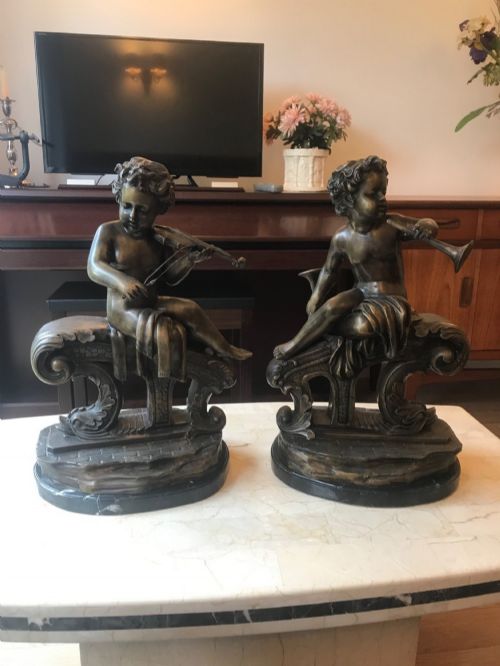
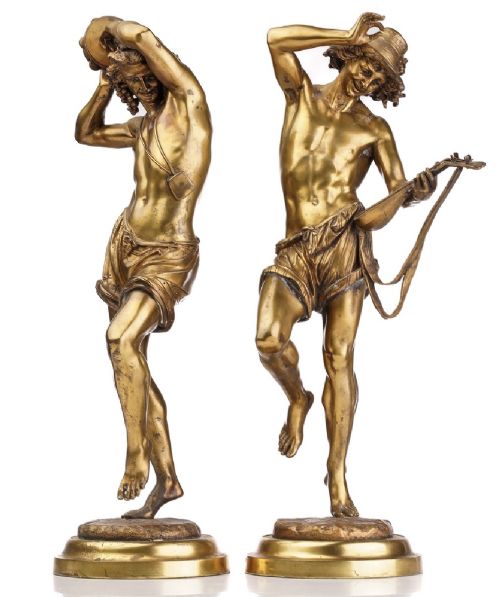
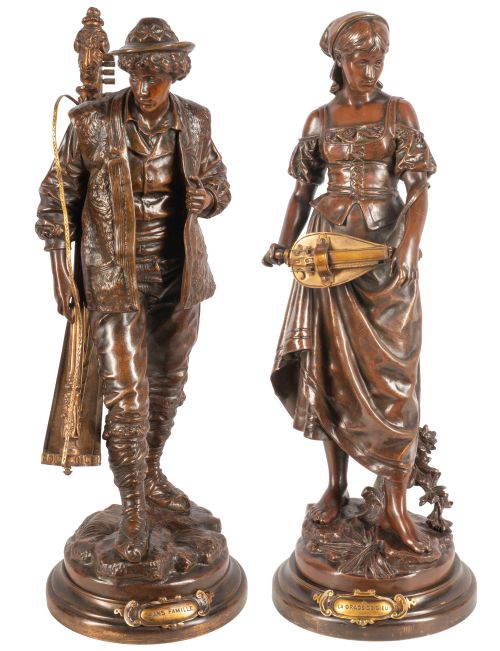
These bronze musician figures capture performers from harps to mandolins, offering sculptural presence and fine metalwork detail for your interior.
Bronze Musician Figures
When you search for bronze musician figures, you encounter sculptural works depicting performers with instruments such as harps, flutes, and mandolins. These pieces emerge predominantly from nineteenth-century European foundries, alongside selections from the Art Deco era and mid-twentieth-century production.
The subjects range from classical figures and harlequins to minstrel pairs and mythological characters. Sculptors often cast these subjects standing or seated, sometimes incorporating bases of marble or onyx.
You frequently meet French foundry productions from the nineteenth century on this page, reflecting the period's output of detailed figurative bronzes. Works span diverse stylistic movements including Rococo Revival, Neoclassical, Art Nouveau, and Art Deco.
Materials and casting methods
Foundries utilised cast bronze, frequently applying patinated finishes or gilt bronze to highlight the contours of the musician and their instrument. Metalwork was occasionally combined with marble, onyx, or plaster elements to form the complete sculpture.
Makers applied patination through chemical treatments to achieve dark or coloured surface tones on the metal. Skilled artisans chased the cooled bronze surface by hand, sharpening the details of drapery, facial expressions, and instrument strings.
Bronze Musician Figures Retail Price Guide 2026
Typical asking prices for bronze musician figures among the pieces listed under this phrase on Sellingantiques today, from the lower quarter to the upper quarter. They describe what is for sale here now, not the wider market.
Distinctions in craftsmanship
The depth and consistency of the patination or gilding further separate standard foundry editions from exceptional works. Bases constructed from solid marble or onyx, fitted securely to the bronze, indicate elevated production standards.
Edouard Drouot·Carrier-Belleuse·Alfred Grevin·Justo de Gandarias·Aug. Moreau·Paul Fournier·Albert Ernest Carrier-Belleuse·Miyao·Josef Lorenzl·Marcel Debut·Renzo Colombo·Barbedienne·Auuste Moreau
The Bronze Musician Figures Glossary
- Patinated bronze
- Bronze treated with chemical solutions to alter the surface colour, producing rich brown, green, or dark tones. This finish protects the metal and enhances sculptural depth.
- Gilt bronze
- Bronze coated with a layer of fine gold or an amalgam, providing a bright, reflective surface. It is often seen on nineteenth-century decorative items.
- Chasing
- The manual refinement of a cast metal surface using hammers and small punches. This process cleans up seams and defines fine textures.
- Ormolu
- Finely ground high-carat gold applied to a bronze base, historically used for decorative mounts and candelabra components. The technique demands precise metallurgical skill.
- Art Deco
- A design style spanning the interwar period characterised by streamlined geometric forms and stylised figures. Sculptures from this era often depict dancers and musicians with modern linear grace.
Bronze Musician Figures: Frequently Asked Questions
What periods do these figures come from?
The pieces span the eighteenth, nineteenth, and twentieth centuries, with a strong concentration of nineteenth-century European casting.
You also find twentieth-century pieces representing Art Deco and later modernist movements alongside earlier historical revivals.
How were these sculptures displayed originally?
Many stood upon mantelpieces, an occasional part of garniture sets paired with candelabra or clocks. Others served as standalone cabinet bronzes.
Larger statues occupied entrance halls and salons, often elevated on dedicated pedestals or furniture surfaces.
How do I identify the foundry or maker?
Look along the base or the lower edge of the bronze for cast signatures, foundry stamps, or inscribed titles. These marks are typically integrated directly into the metal during the casting process.
Signatures often correspond to known nineteenth-century sculptors or prominent Parisian casting houses.
What materials accompany the bronze?
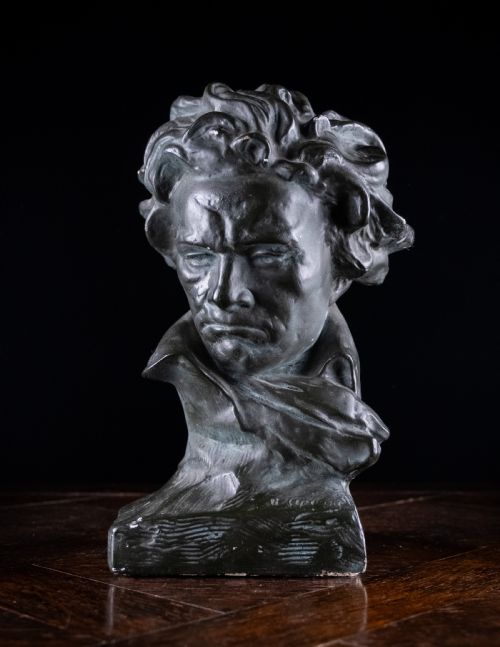
Marble and onyx frequently form the integral bases supporting the heavier metal figures. Plaster and paint appear in specific portrait busts from the collection.
Gilding and dark patination are standard surface treatments applied to the bronze itself.