




Bronze Mounted Glass Lamp
A bronze mounted glass lamp brings together heavy cast metal and clear or coloured glass, offering a warm and decorative light source for the home.
Bronze Mounted Glass Lamp
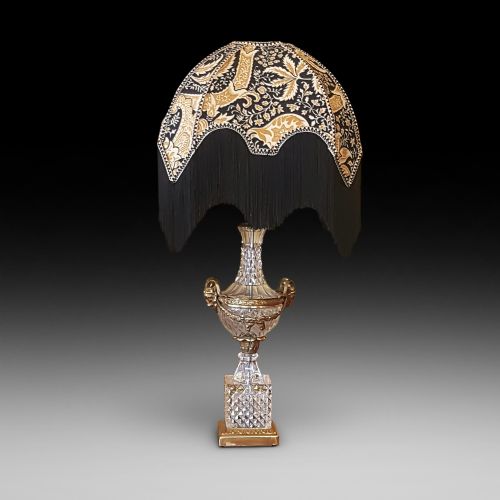
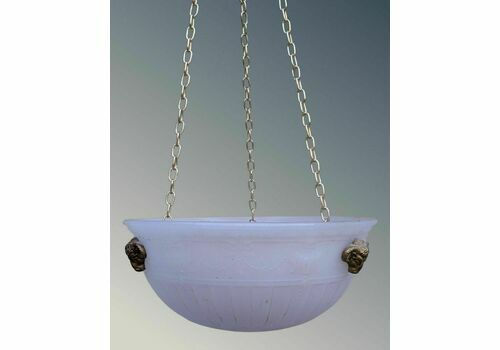
When you search for a bronze mounted glass lamp, you find lighting pieces that combine metalwork mounts with glass bodies or shades. These items range from table lamps and ornamental ewer lamps to ceiling lanterns and plafonnieres.
The pieces on this page span the nineteenth century, the Edwardian era, and the early twentieth century. You will frequently encounter French styling, including Louis XVI, Rococo Revival, and Neoclassical designs.
Forms vary from column table lamps and blue glass vessels to porcelain combinations and enamelled faience. Each object utilises metal mounts to secure and accentuate the glass component.
How they were made
Maker's workshops combined cast bronze, ormolu, or gilt metal with blown, moulded, or cut glass elements. Metal mounts were shaped with classical motifs or scrolling foliage to fit snugly around the glass body.
Many examples integrate additional materials such as porcelain, faience, and fabric elements to complete the structure. Metal components were often cast, chased, and gilded to provide a bright contrast against the translucent glass.
Bronze Mounted Glass Lamp Retail Price Guide 2026
Typical asking prices for bronze mounted glass lamp among the pieces listed under this phrase on Sellingantiques today, from the lower quarter to the upper quarter. They describe what is for sale here now, not the wider market.
Listings feature items spanning the 19th century, 1800s, 1900s, and Edwardian periods, employing gilt bronze, brass, cut glass, ormolu, porcelain, and faience.
What varies in quality
Quality rests in the crispness of the bronze or ormolu casting and the depth of the cut in the glass. Finer pieces display sharply defined ornamentation on the mounts and heavy, clear crystal rather than lightweight pressed glass.
The integration between the metal mounts and the glass vessel dictates the overall success of the piece. Superior examples show careful proportion where the metalwork enhances rather than overpowers the glass form.
The Bronze Mounted Glass Lamp Glossary
- Ormolu
- Gilded bronze, where a layer of gold is applied to a bronze base using mercury amalgamation or an electrochemical process. It provides a bright golden finish that does not tarnish easily.
- Plaffonier
- A ceiling-mounted lighting fixture that sits close to the surface, often featuring glass bowls held within metal mounts.
- Cut glass
- Glass decorated by grinding facets or patterns into its surface using a wheel. This technique creates reflective surfaces that catch and refract light.
- Ewer
- A large jug with a wide spout and a handle, which makers frequently adapted into decorative lamp bases during the nineteenth century.
Bronze Mounted Glass Lamp: Frequently Asked Questions
What periods do these lamps come from?
The pieces span the nineteenth century, the Edwardian period, and the early decades of the twentieth century. Many carry distinct stylistic influences from French design traditions.
Craftsmen during these eras favoured classical motifs, ornate mounts, and heavy glass bodies to create decorative illumination for grand interiors.
How do I identify French styles?
French designs often feature refined Neoclassical columns, Louis XVI symmetry, or exuberant Rococo scrolling on the bronze mounts. These pieces lean heavily on classical architectural vocabulary.
Look for cast details such as acanthus leaves, bead reels, and rams head motifs integrated directly into the metalwork.
Were these originally electric?
Most older examples started life as oil lamps, kerosene burners, or candle-lit ceiling fixtures before conversion to electricity. Makers adapted the original glass and metal reservoirs to house modern wiring.
Conversion methods varied, but the primary aesthetic of the bronze mounts and glass bodies remained intact.
Where should I place a ceiling lantern?
Ceiling lanterns and plafonnieres suit hallways, entrance lobbies, or rooms with restricted ceiling height where a hanging pendant might obstruct movement. Their enclosed glass and metal construction diffuses light evenly.
Ensure the scale of the lantern matches the proportions of the hallway and the height of the ceiling.