





Bronze Mount Jardiniere
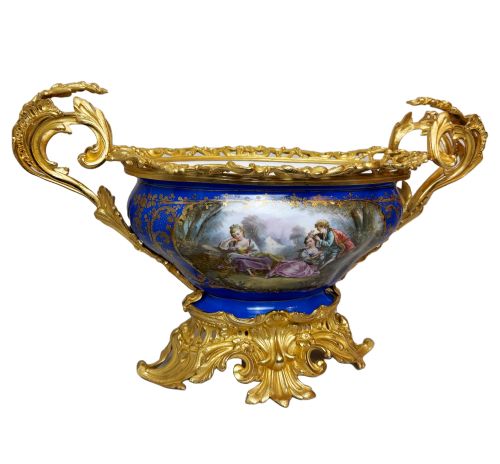
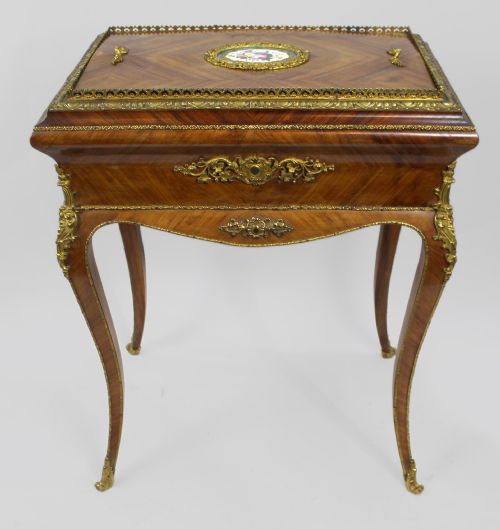
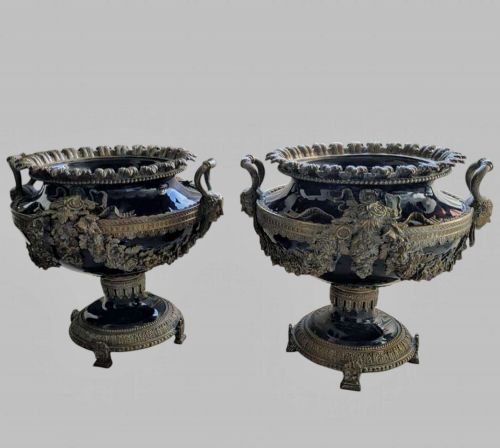
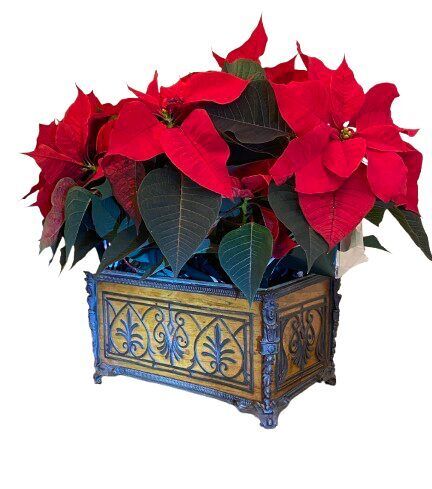
These bronze mount jardiniere pieces bring French revival style and polished timber into a room to hold indoor plants.
Bronze Mount Jardiniere
A bronze mount jardiniere stands as a decorative plant container, planter, or table, frequently seen in nineteenth century French designs. The selection here ranges from compact ceramic vessels to tall stands and inlaid tables suited for floral display.
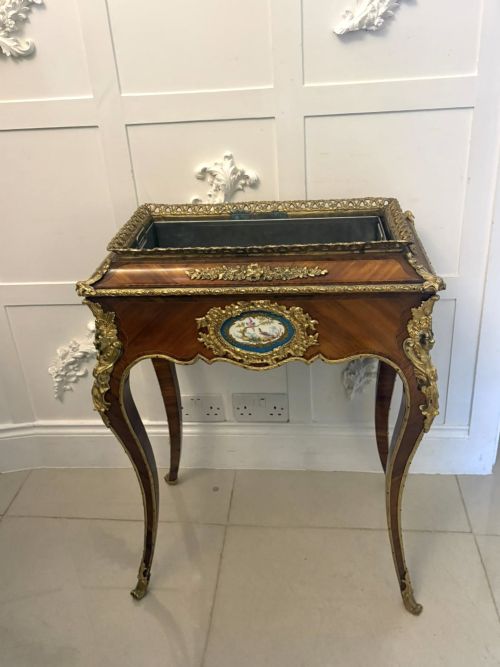
Makers shaped these objects during the Victorian era and the nineteenth century, drawing upon Louis XV style, Napoleon III aesthetics, and Louis XVI influence. Buyers encounter floor-standing tables, pedestal stands, and surface vessels designed to hold plants indoors.
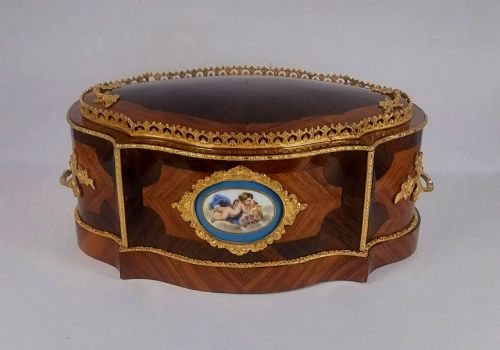
Woods such as kingwood, burr walnut, olive wood, and mahogany form the primary bodies of these planters. Ormolu, gilt bronze, and gilt metal mounts frame ceramic plaques, porcelain panels, and cloisonné enamel.
Materials and construction
Cabinetmakers utilised hardwoods like kingwood and burr walnut, often applying marquetry and fine wood inlays to the exterior surfaces. Ormolu and gilt bronze mounts were cast and chased then fixed to corners, rims, and legs.
Ceramic plaques, porcelain panels, and blue ceramic bodies integrate into the timber frames alongside cut glass and cloisonné enamel. Zinc and metal liners protect the underlying wood from moisture when holding plants.
Bronze Mount Jardiniere Retail Price Guide 2026
Typical asking prices for bronze mount jardiniere among the pieces listed under this phrase on Sellingantiques today, from the lower quarter to the upper quarter. They describe what is for sale here now, not the wider market.
Some planters moonlighted as wine coolers, proving that Victorian ferns and champagne bottles shared identical tastes in furniture.
What separates the finest examples
The refinement of the cast bronze or ormolu mounts dictates the tier of the piece, with sharper chiselling and weightier metal marking superior workshops. Finely figured kingwood and burr walnut veneers combined with intricate marquetry elevate the joinery.
The integration of hand-painted porcelain plaques or Sevres-type panels provides a measure of distinction. Original fitted metal liners and stable construction across tall stands and tables complete the standard of the object.
The Bronze Mount Jardiniere Glossary
- Ormolu
- Gilded bronze applied as a decorative mount to furniture and planters. It provides bright metallic contrast against dark timber surfaces.
- Kingwood
- A dense, richly figured timber utilised in fine French cabinetmaking. It frequently appears in nineteenth century marquetry and inlaid panels.
- Marquetry
- The art of applying pieces of veneer to a structure to form decorative patterns. Craftsmen used various woods to create geometric and floral designs.
- Cloisonne
- An enamel technique where metal wire forms compartments on a base. Glass paste fills these areas before firing to create coloured patterns.
- Jardiniere
- A decorative pot or stand designed to hold plants or flowers. French examples often incorporate metal mounts and porcelain plaques.
Bronze Mount Jardiniere: Frequently Asked Questions
How were these jardiniere stands used originally?
These pieces held potted plants and floral displays within nineteenth century drawing rooms and reception spaces. The inclusion of zinc or metal liners protected the delicate wooden frames from water damage.
Wealthy households used them to bring living greenery indoors as part of elaborate interior decoration schemes. Tall stands raised plants to eye level while table variants combined plant housing with surface utility.
What woods appear most often on these planters?
Kingwood and burr walnut dominate the timber construction of nineteenth century examples. Craftsmen selected them for their striking grain patterns and dark, warm tones.
Mahogany, olive wood, and ebonised finishes also appear across the selection. These timbers provided sturdy foundations for ornate ormolu mounts and porcelain plaques.
How do I identify a Louis XV style jardiniere?
Louis XV style pieces feature characteristic curved lines, cabriole legs, and asymmetrical gilt bronze mounts. The overall silhouette emphasises flowing organic forms rather than rigid symmetry.
Makers working in nineteenth century France revived these eighteenth century motifs for Victorian interiors. Marquetry inlays on kingwood often accompany these sweeping structural curves.
Are liners always present in these antique planters?
Original metal liners occasionally survive within the wooden bodies of nineteenth century pieces. Many examples now lack these internal components due to centuries of use and cleaning.
Replacement liners allow modern owners to utilise the vessels for plants safely. The absence of an original liner does not detract from the decorative merit of the outer case.