





Bronze Lion on Marble
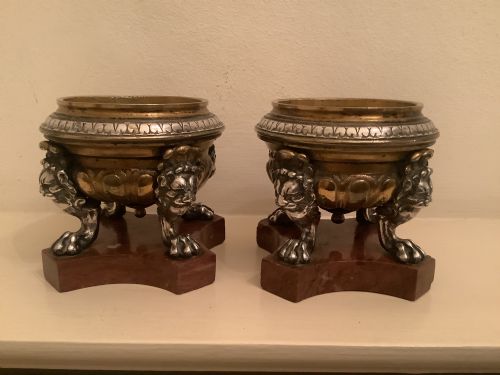
These pieces unite metal sculpture and heavy stone plinths, combining a bronze lion on marble into striking desk accessories, candelabra, and mantel ornaments.
Bronze Lion on Marble
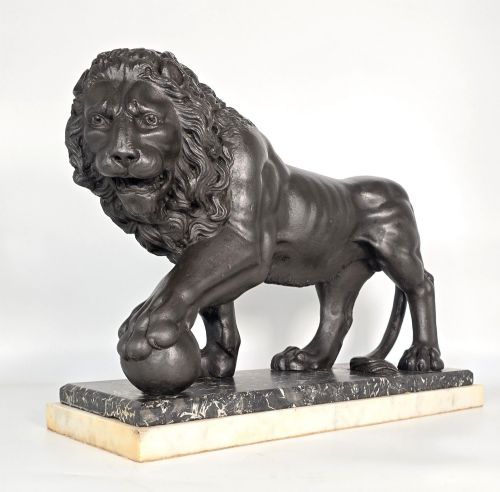
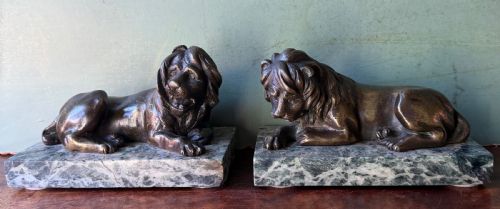
A bronze lion on marble brings together cast metalwork and polished stone bases, appearing most frequently in nineteenth-century Grand Tour sculptures, animalier studies, and functional desk pieces such as inkwells and bookends. Buyers searching this phrase encounter sculptural depictions of the Medici or Capitoline lions mounted upon heavy plinths of Sienna marble or standard varieties.
The objects span varied forms beyond simple animal figures, including tazzas, garniture components, and fountain heads created across the nineteenth and early twentieth centuries. French workshops produced many of the surviving examples, incorporating neoclassical motifs alongside later Art Deco interpretations like the sealion bookends and the figure of Androcles.
How they were made
The metal components rely on bronze casting, utilising patinated finishes, gilt bronze, and ormolu to achieve contrasting textures and warm metallic tones. Makers often combined silvered elements or utilised silver plate alongside standard bronze to highlight specific details on figures and mounts.
Mounts and plinths employ stone materials such as marble and alabaster, which were shaped and polished to support the heavy metal sculptures. These stone bases provide structural stability and create a distinct visual contrast against the dark patinated or gilded bronze lions.
Bronze Lion on Marble Retail Price Guide 2026
Typical asking prices for bronze lion on marble among the pieces listed under this phrase on Sellingantiques today, from the lower quarter to the upper quarter. They describe what is for sale here now, not the wider market.
Listings feature French Empire, Neoclassical, and Art Deco styles, spanning periods from the nineteenth century into the 1930s.
What varies in quality
The selection of the stone plinth also distinguishes the range, with dense, finely veined marble or rich Sienna bases indicating higher ambition than plain mounting stone. Furthermore, the integration between the metal sculpture and its stone support demonstrates the overall craftsmanship of the workshop.
Paul-Édouard Delabrièrre·Le Courtier
The Bronze Lion on Marble Glossary
- Bronze
- An alloy of copper and tin utilised for casting sculptures and decorative objects, valued for its durability and capacity for fine detail.
- Ormolu
- Gilt bronze created by applying a finely ground high-carat gold-mercury amalgam to a bronze object, which is then heated to drive off the mercury.
- Grand Tour
- The traditional nineteenth-century journey undertaken by upper-class Europeans through France and Italy, returning with classical antiquities and bronze sculptures.
- Animalier
- A nineteenth-century artistic genre focusing on the realistic depiction of animals, particularly predators such as lions.
- Tazza
- A shallow saucer-like dish supported on a stem and foot, often fashioned from bronze and marble in nineteenth-century decorative arts.
Bronze Lion on Marble: Frequently Asked Questions
What is a bronze lion on marble?
These works are decorative or sculptural objects featuring a cast bronze lion figure mounted onto a heavy stone base. They range from Grand Tour souvenirs to functional items like inkstands and bookends.
Most surviving examples originate from nineteenth-century French and Italian workshops. The combination pairs the weight of patinated or gilt bronze with polished marble plinths.
How were these pieces used originally?
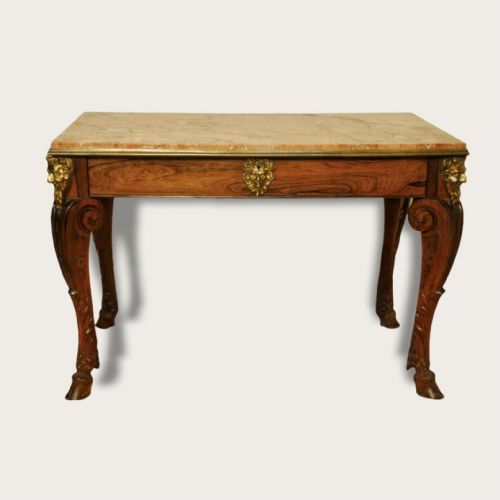
Many served as decorative ornaments on desks, mantelpieces, and side tables in nineteenth-century drawing rooms and libraries. Some combined decoration with utility, functioning as inkwells, tazzas, or bookends.
Grand Tour versions were typically displayed in studies as mementos of travel through Italy. Others formed part of larger clock garnitures or table centrepiece arrangements.
How do I care for marble and bronze?
Dust the bronze regularly with a soft, dry cloth to prevent accumulation in the crevices of the casting. Avoid liquid cleaners or polishes that can damage patinated or gilded surfaces.
Clean the marble base with a damp cloth and dry immediately to protect the polished stone. Keep the pieces away from direct sunlight and excessive moisture to preserve the material integrity.
How can I tell the period?
Nineteenth-century pieces often display characteristic patination, French foundry marks, or specific stylistic cues linked to the Grand Tour and neoclassical revival. The weight and type of the marble base also help establish the era of production.
Art Deco examples from the twentieth century introduce stylised forms, such as sealions and simplified sculptural contours. Examining the casting technique and the wear on the underside of the stone provides further chronological clues.