





Bronze Koro Burner
A bronze koro burner brings quiet ritual and masterly metalwork into a room, taking the form of lidded vessels designed for burning incense.
Bronze Koro Burner
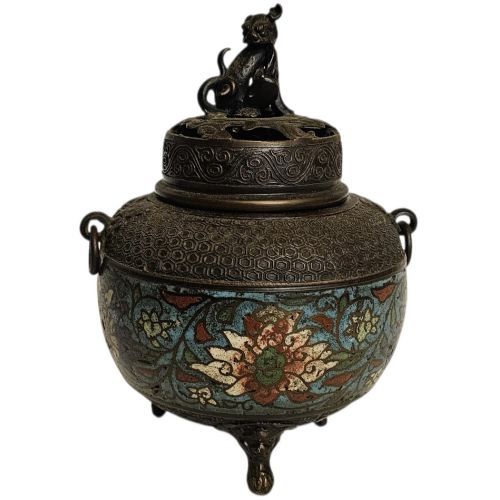
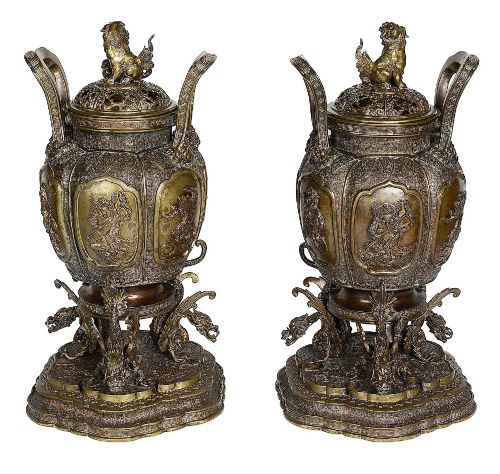
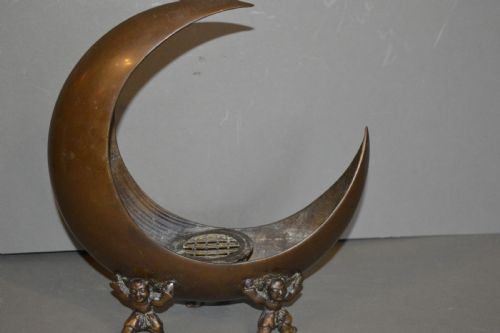
A bronze koro burner is an incense vessel originating from East Asian traditions, typically encountered here in Japanese Meiji period examples and Chinese Qing style pieces. These containers take various forms, including lidded urns, hanging boat shapes, and unusual crescent moon bodies.
The pieces listed on this page span the late nineteenth century into the early twentieth century, specifically covering the Meiji and Taisho periods. Makers utilised bronze, gilt bronze, and copper alongside decorative elements such as enamel and gold leaf.
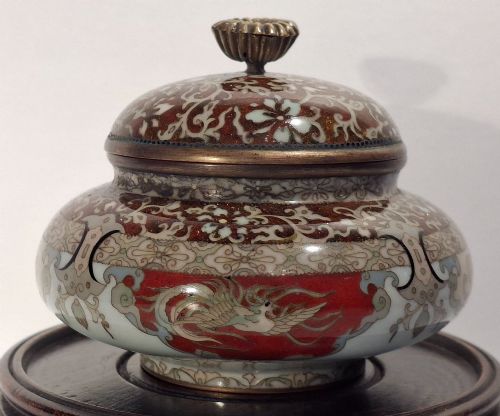
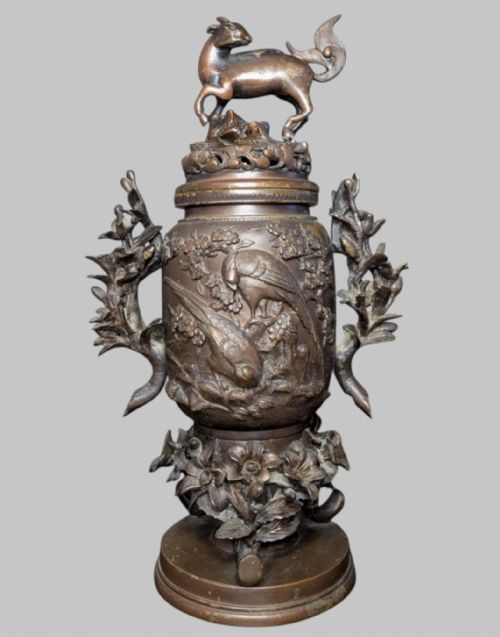
Vessels often feature sculptural additions like animal finials, including goat figures, which sit atop the pierced lids designed to release fragrant smoke. Buyers will find both pure bronze models and complex examples combining metalwork with cloisonne enamel.
How they were made
Artisans formed the primary bodies of these incense burners using bronze, copper, and gilt bronze, often shaping the metal through casting or hammering. Metalwork was frequently enhanced with inlaid silver or detailed surface engraving.
Bronze Koro Burner Retail Price Guide 2026
Typical asking prices for bronze koro burner among the pieces listed under this phrase on Sellingantiques today, from the lower quarter to the upper quarter. They describe what is for sale here now, not the wider market.
Materials recorded on this page include bronze, gilt bronze, copper, cloisonne enamel, earthenware, and gold leaf.
What varies in quality
Quality rests in the precision of the casting and the crispness of the surface chasing, where finer examples display sharply defined details on animal finials and handles. The complexity and neatness of the cloisonne enamel work also distinguish superior items.
The presence of signatures or crests, such as the Shimazu crest, elevates certain pieces by linking them to named workshops and recognised artisans of the period.
Tsukamoto Hikokichi·Kizan
The Bronze Koro Burner Glossary
- Koro
- A traditional Japanese incense burner, typically featuring a body, a pierced lid for smoke release, and often three or more feet.
- Cloisonne
- A decorative metalwork technique where fine wire is soldered to a bronze base to create compartments filled with enamel.
- Finial
- A decorative ornament that crowns the lid of the incense burner, frequently shaped as an animal or mythical beast.
- Meiji Period
- A notable era in Japanese history spanning from 1868 to 1912, characterised by exceptional advancements in metalwork and decorative arts.
- Censer
- An alternative term for an incense burner used across various cultures for burning aromatic resins or plant materials.
Bronze Koro Burner: Frequently Asked Questions
What is a bronze koro burner?
A bronze koro burner is a lidded vessel traditionally used for burning incense in Japanese and Chinese cultures. These decorative objects combine sculptural metalwork with functional design.
They frequently rest on small feet and feature pierced lids that allow scented smoke to drift outward during use.
How do I date a bronze koro burner?
Dating relies on stylistic clues, manufacturing techniques, and historical markers such as period designations like the Meiji era. Nineteenth-century examples often display distinct casting methods and decorative motifs compared to later pieces.
Makers' signatures or specific crests can also help narrow down the period of production.
How were bronze koro burners used?
These vessels were primarily utilised for burning aromatic incense during quiet contemplation, traditional ceremonies, or scholarly gatherings. The pierced lids ensured the smoke dispersed evenly throughout the space.
Over time, many of these burners transitioned into purely decorative cabinet pieces displayed for their artistic merit.
How do I clean a bronze koro burner?
Cleaning should be kept minimal to preserve the natural patina and any delicate surface treatments like gilt or enamel. A soft, dry cloth removes dust safely without disturbing the metal.
Harsh chemical polishes or abrasive cleaners must be avoided, as they can permanently damage the bronze surface and coloured enamel work.