





Bronze Hardware
Bronze hardware grounds a room in tactile weight, offering tangible history through door knockers, handles, and tie backs.
Bronze Hardware
Bronze hardware encompasses functional and decorative metalwork designed for doors, windows, and drapery, spanning centuries of craftsmanship.
Buyers meet varied forms on this page, ranging from 18th-century continental door knockers to Victorian drop handles and French ormolu curtain tie backs.
The selection includes specialised pieces such as Japanese hikite pulls, Art Deco crystal ballroom handles, and Edwardian centre door knobs.
Materials and Casting
Pieces are primarily produced in bronze, brass, and ormolu, utilising traditional casting methods that yield solid, durable forms with distinct surface patination.
Gilded bronze and enamel additions provide decorative depth, while specialised items incorporate intricate hand-chased details and applied patinas.
Construction techniques combine cast metal components with fitted plates, screw mounts, and in some instances, inlaid elements such as parchment or crystal.
Bronze Hardware Retail Price Guide 2026
Typical asking prices for bronze hardware among the pieces listed under this phrase on Sellingantiques today, from the lower quarter to the upper quarter. They describe what is for sale here now, not the wider market.
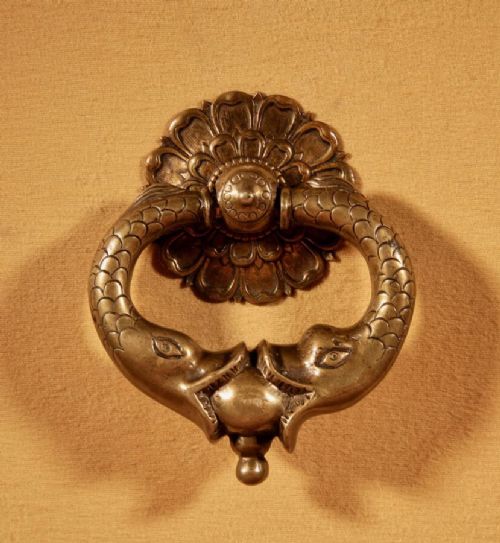
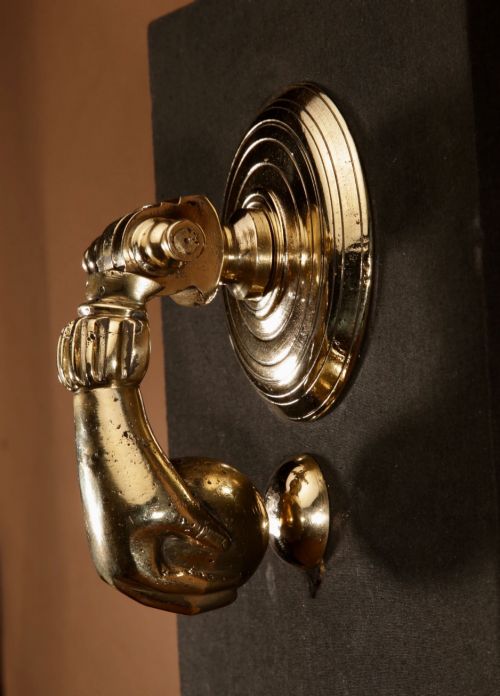
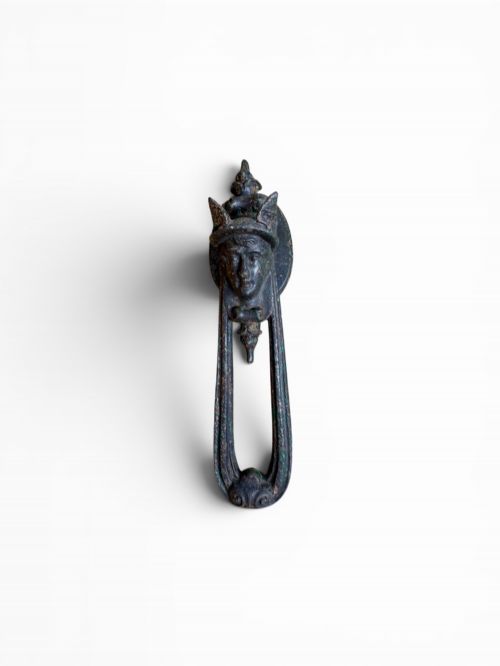
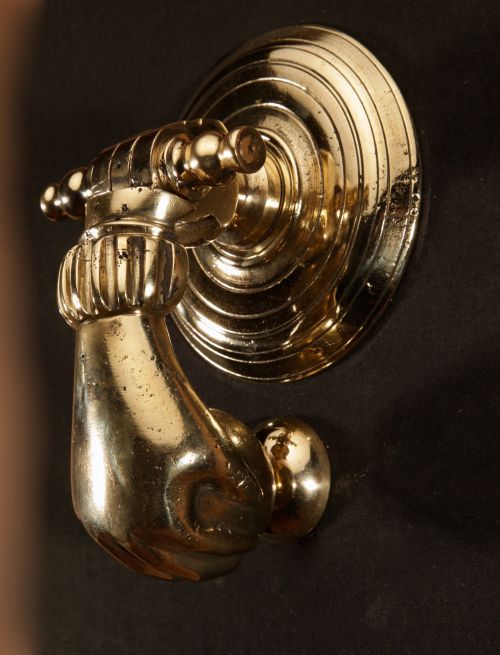
Hands, sphinxes, ram heads, and Gothic dragons peer from the metalwork, turning simple door furniture into miniature sculpture.
Distinctions in Execution
Quality reveals itself in the crispness of the cast, where sharper relief and defined chasing separate superior examples from softer, worn productions.
The integrity of the original surface finish, whether patinated bronze or fire gilding, dictates the visual presence of the object.
Completeness matters, particularly with matched pairs of handles or tie backs retaining their original fixing mechanisms and uniform coloration.
Maurice Jallot·Henri Picard
The Bronze Hardware Glossary
- Ormolu
- Gilded bronze, typically produced by applying a mercury and gold amalgam to a bronze base and heating it. This technique creates a rich, lasting metallic lustre seen on French decorative pieces.
- Hikite
- A recessed door pull handle traditional in Japanese architecture. These pieces often feature delicate enamel or metalwork details.
- Patination
- The natural or induced oxidation on the surface of bronze over time. It creates varied colour tones that indicate age and handling.
- Pelmet
- A framework placed above a window to conceal curtain fixtures. They are frequently paired with matching decorative tie backs.
- Chasing
- The manual refinement of a cast metal surface using hammers and punches. This process sharpens details and textures after the initial casting.
Bronze Hardware: Frequently Asked Questions
How do I clean antique bronze hardware?
Maintenance requires only a soft cloth to remove dust, preserving the natural patina accumulated over decades of use.
Harsh commercial polishes strip away historical surfaces and should be avoided entirely on patinated or gilt objects.
Are these door handles suitable for daily use?
Most pieces are cast solidly from bronze or brass and function reliably on interior doors when installed correctly.
Fragile items, such as those with delicate enamel work or crystal elements, require careful placement to prevent accidental impact.
How do I date a bronze door knocker?
Dating relies on stylistic clues, mounting methods, and the method of casting visible on the reverse side of the object.
Comparing the decorative motifs, such as Victorian lion masks or Neoclassical wreaths, to established design periods clarifies the timeline.
What is the difference between bronze and brass hardware?
Bronze is an alloy primarily of copper and tin, offering a heavier weight and a darker, richer natural patination.
Brass is an alloy of copper and zinc, typically yielding a brighter yellow tone unless treated with a patinated finish.