


Bronze Hall Lantern Light
These pieces illuminate entryways with enduring authority, bringing historical weight and refined metalwork directly to the threshold of a home.
Bronze Hall Lantern Light
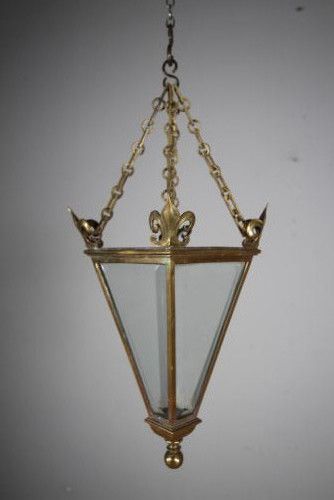
A bronze hall lantern light serves as an overhead fixture designed specifically for corridors, vestibules, and entrance passages where directional illumination meets formal presentation. Most examples found here originate from nineteenth-century workshops or the early decades of the twentieth century, carrying distinct historic character into domestic spaces.
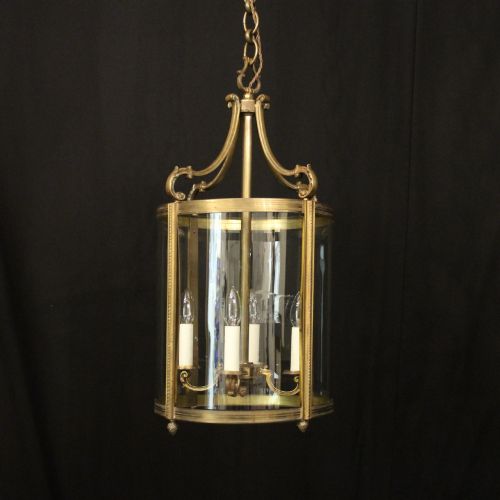
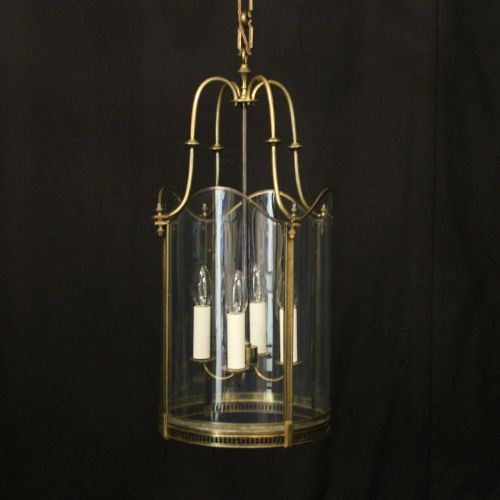
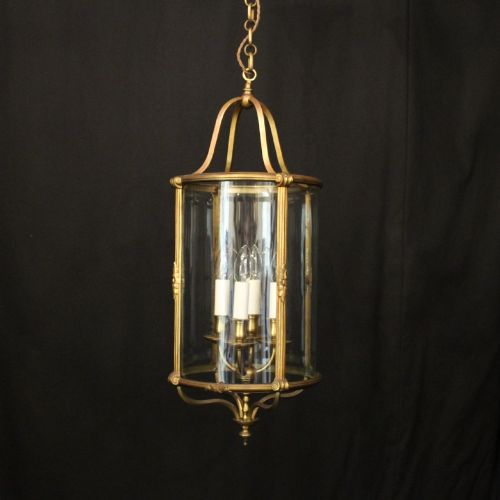
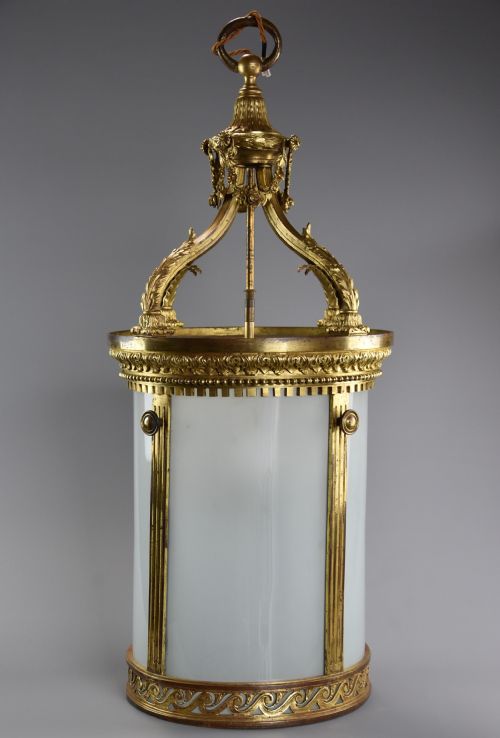
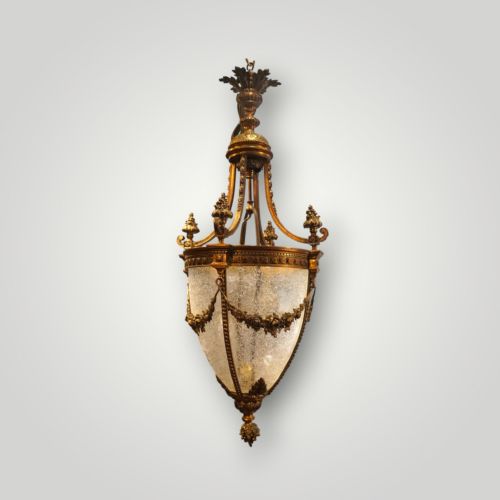
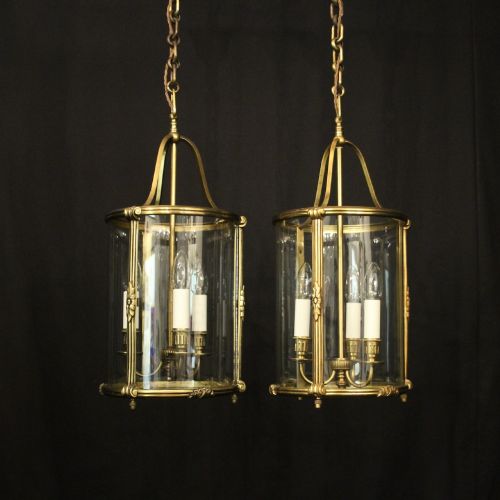
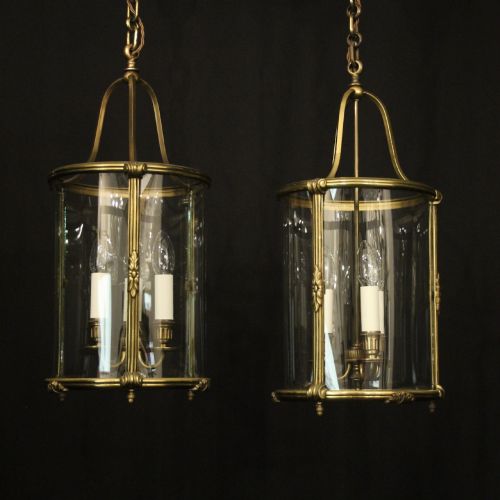
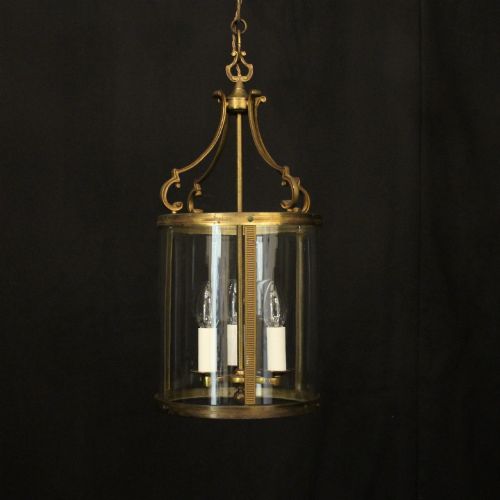
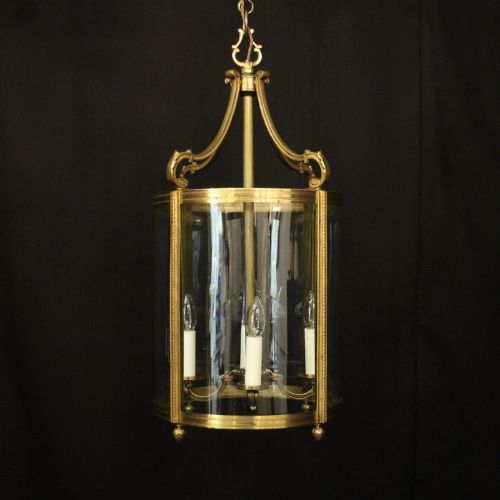
The prevailing form on this page is the French hall lantern, frequently cast in gilt bronze or standard bronze with multiple internal light fittings or candle branches. Buyers frequently encounter convex glass panels and heavy frames influenced by neoclassical or rococo designs from continental salons.
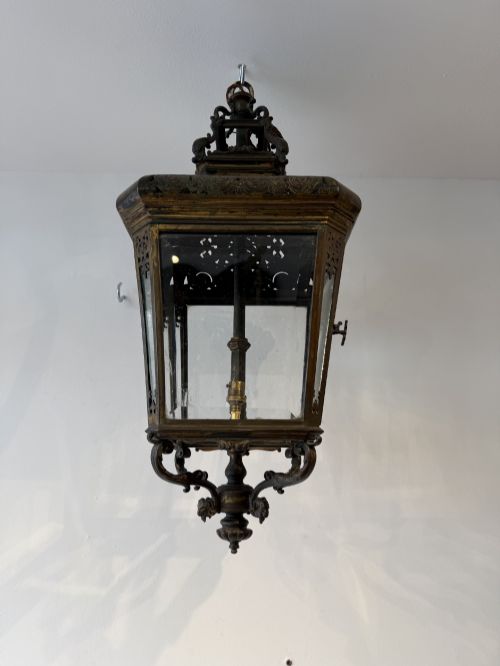
Beyond French variants, English interpretations appear alongside Gothic or Arts and Crafts ceiling lights, showing broader geographical origins within the same overarching category. These objects range from compact single-bulb pendants to large multi-light fixtures suited for high ceilings and expansive country houses.
Materials and construction methods
Foundry work relied on casting bronze, brass, and ormolu into structural frames, often finished with fire-gilding or silver gilding to catch the surrounding light. Metal components were joined to enclose glass panes, which could be flat, bevelled, or curved into convex shapes depending on the desired optical effect.
Glazing techniques incorporated clear, frosted, etched, or opaline glass secured tightly within metal ribs, while internal burner or candle clusters utilised multiple tiers to distribute illumination evenly through the enclosed space.
Materials recorded across the archive include gilt bronze, brass, opaline glass, and bevelled glass.
Distinctions in manufacture and form
The refinement of the casting work dictates the distinction between standard production and exceptional output, visible in the crispness of leaf motifs, scrollwork, and decorative mounts. Heavier gauge metalwork and substantial proportions indicate greater material investment during the initial creation.
Glass selection further separates examples, where thick bevelled or convex panes demonstrate higher manufacturing complexity than flat, unadorned glass panels. The integration of maker attributions, such as work originating from established firms, adds documented heritage to the physical object.
Perry & Co
The Bronze Hall Lantern Light Glossary
- Gilt Bronze
- Bronze that has been coated with a thin layer of gold or gold amalgam to produce a rich, reflective surface. This finish resists tarnishing and was widely favoured in French decorative lighting.
- Convex Glass
- Curved glass panels fitted into the lantern frame to diffuse light outward and create a rounded profile. Such panes require specialised moulding techniques during production.
- Ormolu
- Finely chased or gilded bronze used extensively in decorative arts and mounts. The term derives from the French for milled or ground gold.
- Bevelled Glass
- Glass panes featuring an angled edge ground along the perimeter to refract light sharply. This detail enhances the visual depth of the fixture.
- Opaline Glass
- A translucent, milky-white glass used to soften the glare of internal bulbs or candles. It provides a diffused glow characteristic of nineteenth-century lighting.
Bronze Hall Lantern Light: Frequently Asked Questions
How do I hang a heavy bronze hall lantern?
Suspension requires fixing directly into ceiling joists or structural timber using a load-bearing hook and chain capable of supporting the substantial weight of cast metal and glass.
Professional electrical installation ensures the internal wiring safely connects to the household supply while maintaining the proper drop height for the corridor.
Were these lanterns originally wired for electricity?
Earlier examples were designed for candles or oil burners before being adapted for modern electrical components during subsequent restorations.
Many surviving pieces retain their historic conversion wiring or have been carefully rewired to accommodate contemporary bulbs without altering the exterior metal frame.
How do I clean gilt bronze and glass?
Maintenance involves dusting the metal components gently with a soft dry cloth to preserve the historic surface patination and delicate gilding.
Glass panels can be removed or wiped in place using standard glass cleaner applied to a cloth rather than sprayed directly onto the surrounding bronze.
What ceiling height suits a large hanging lantern?
Expansive hallways with high ceilings accommodate larger multi-light pendants, allowing sufficient clearance underneath for foot traffic and door swings.
Proportion remains the primary guide, ensuring the physical bulk of the frame does not overwhelm the narrower dimensions of a standard domestic entrance.