

Bronze Furniture Mounts
Bronze furniture mounts are the cast and chased metal ornaments adorning fine cabinetry and tables, sought after for the sculptural finish they bring to period timber pieces.
Bronze Furniture Mounts
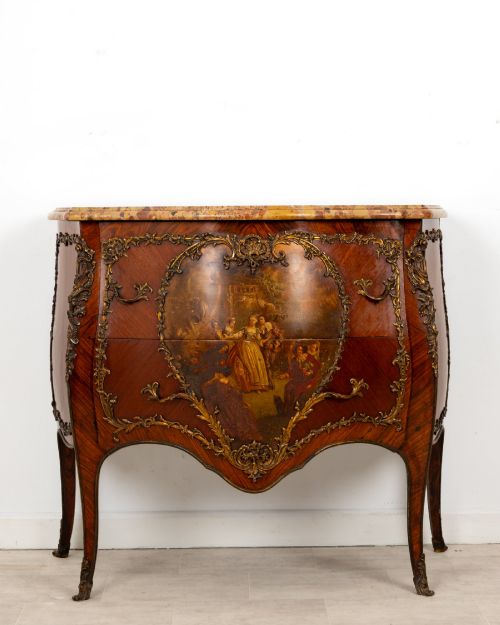
When you search for bronze furniture mounts, you encounter cast metal decorative elements, ormolu accents, and gilt-bronze appliques designed to embellish nineteenth-century desks, commodes, and vitrines. These pieces range from small finial ornaments to substantial corner mounts and mounts integrated into French Louis XV Revival and Louis XVI style furniture.
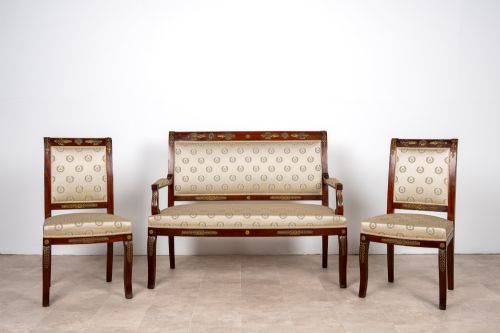
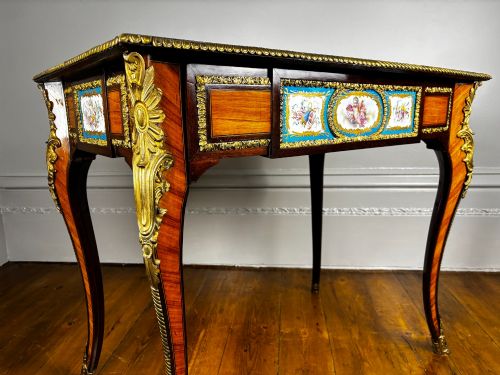
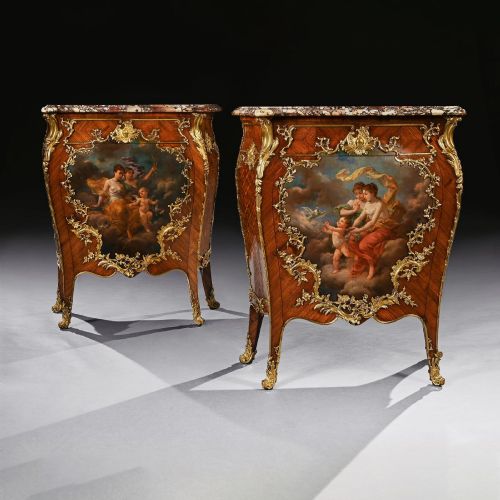
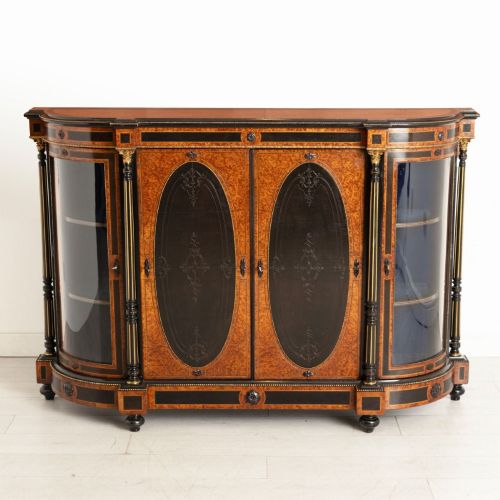
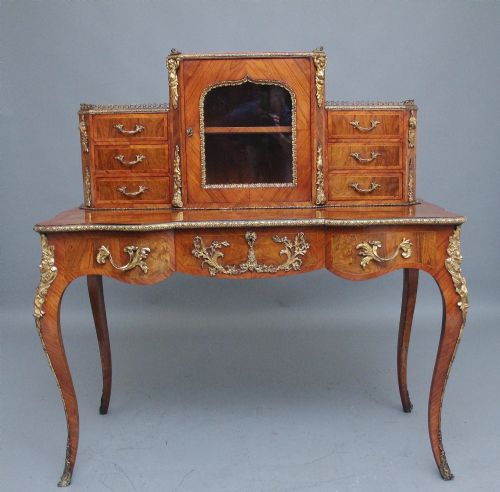
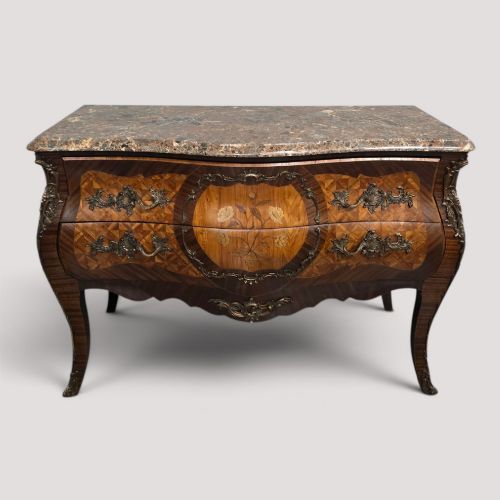
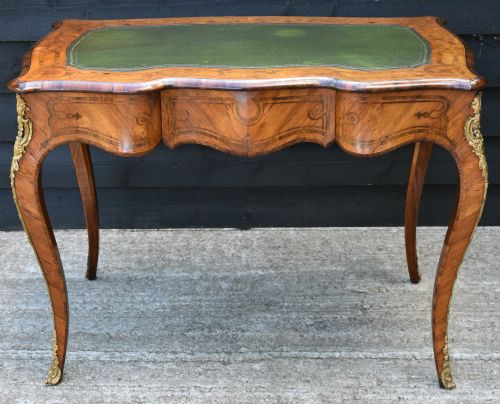
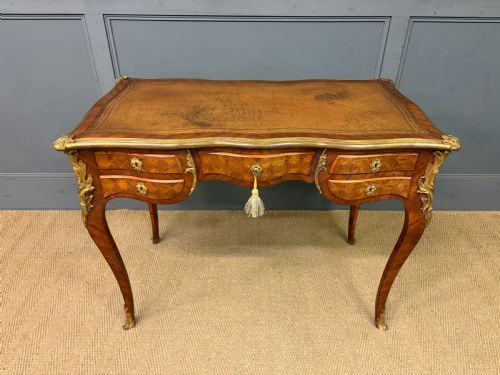
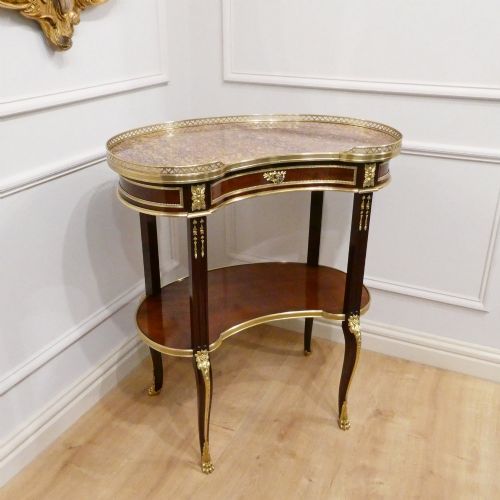
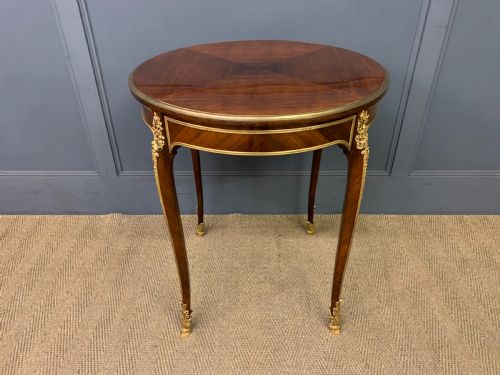
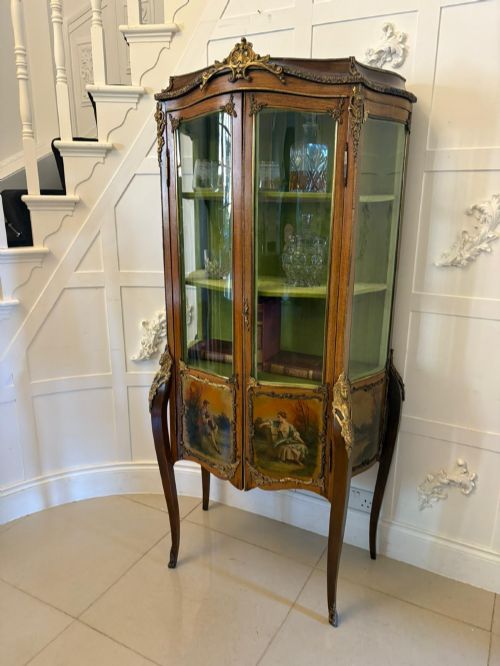
The objects meeting this description on this page primarily originate from nineteenth-century French and English cabinetmaking workshops. They appear as standalone ornamental mounts or attached to primary forms such as kingwood and walnut display cabinets, writing desks, and side tables.
Buyers look for these items to appreciate the intricate casting quality and the dialogue between polished gilt metal and rich timber veneers like mahogany, amboyna, and burr maple. The selections reflect periods spanning the Victorian era through the turn of the twentieth century.
How they were made
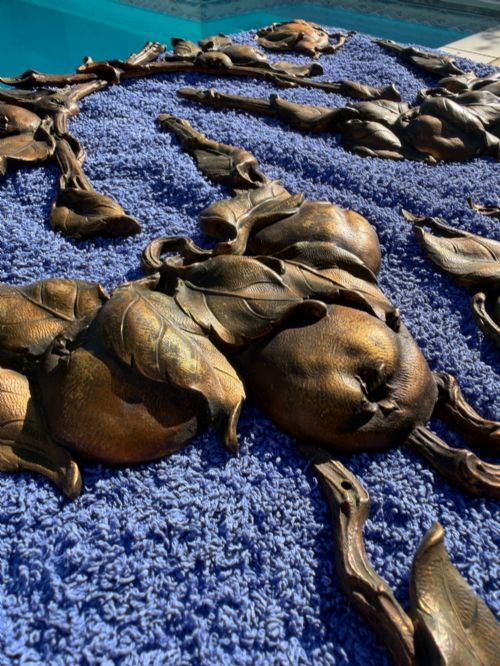
These mounts were produced using the lost-wax casting method or sand casting, shaping molten bronze into elaborate scrollwork, figurative appliques, and structural ornaments. Craftsmen then refined the raw metal surfaces by hand, employing chisels and files to sharpen details before applying a mercury gilt or gold wash finish known as ormolu.
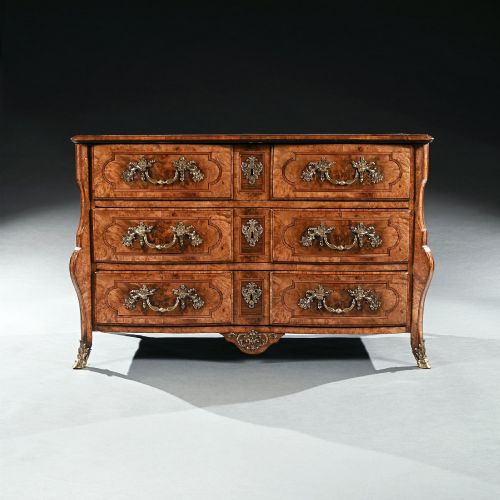
The finished bronze elements were secured to timber carcases using pegs, screws, or pins, complementing veneers of kingwood, rosewood, and walnut, frequently accompanied by marble tops and parquetry inlay.
Bronze Furniture Mounts Retail Price Guide 2026
Typical asking prices for bronze furniture mounts among the pieces listed under this phrase on Sellingantiques today, from the lower quarter to the upper quarter. They describe what is for sale here now, not the wider market.
Listings feature nineteenth-century furniture incorporating ormolu, gilt bronze, kingwood, mahogany, and marble across forms like vitrines, commodes, and writing desks.
What varies in quality
Quality in these items rests upon the crispness of the original bronze chasing and the depth of the gilding. Superior examples display sharp relief work where every leaf, scroll, or figurative feature retains distinct edges and hand-tooled subtlety, rather than the softened contours typical of secondary production runs.
The integration between the metal mount and the underlying timber carcase also dictates standard. Master cabinetmakers ensured that brass and bronze elements fitted the wood contours precisely, aligning with parquetry, marquetry, and vernis martin panels without gaps or mismatched proportions.
François Linke·Thomas Hache·Gillows·Gabriel Viardot·Johnstone And Jeanes·H. J. Hatfield And Sons·Maison Millet·Henry Dasson·Mercier Freres·Krieger Paris·E. Kahn·Blake
The Bronze Furniture Mounts Glossary
- Ormolu
- A gilded bronze technique utilising a mercury amalgam to bond gold to a bronze base, producing a rich metallic lustre. This finish characterises high-end nineteenth-century decorative hardware.
- Applique
- A decorative metal ornament applied directly to the surface of furniture. These elements provide visual weight and sculptural contrast to timber panels.
- Cartonnier
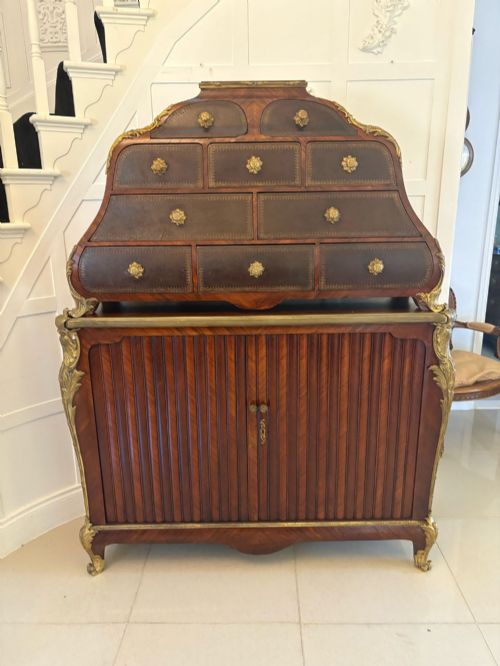
- A decorative cabinet designed for holding papers and documents, frequently embellished with elaborate gilt-bronze mounts and leather accents.
- Vernis Martin
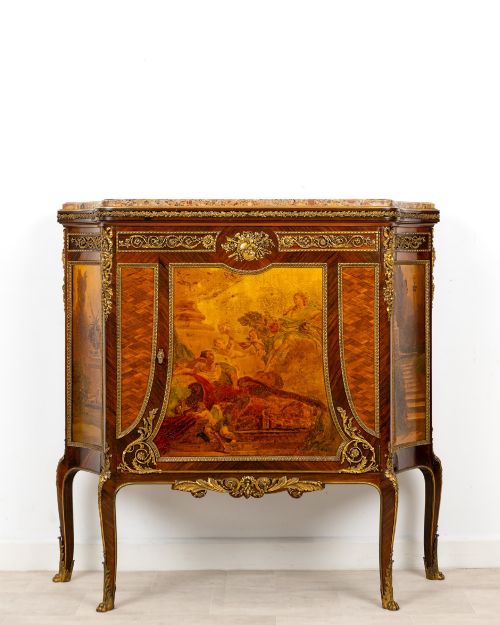
- A type of simulated Japanese varnish developed in France, often framed by ormolu mounts on vitrines and commodes.
- Parquetry
- Geometric wood inlay patterns forming decorative surfaces on tables and cabinets, often accented by bronze mounts at vulnerable corners and edges.
Bronze Furniture Mounts: Frequently Asked Questions
What are bronze furniture mounts?
Bronze furniture mounts are cast and chased metal ornaments used to decorate the corners, aprons, and panels of fine cabinets, desks, and tables. They serve both a protective function for vulnerable wood edges and a decorative purpose, adding sculptural dimension to the piece.
These elements are frequently rendered in gilt-bronze or ormolu, aligning with revival styles popular during the nineteenth century. They reflect the collaborative skill of metalworkers and cabinetmakers working in major European centres.
How do I identify French revival styles?
French revival styles on this page draw inspiration from the reigns of Louis XV and Louis XVI, characterised by either asymmetrical rococo curves or restrained neoclassical symmetry. Look for serpentine lines, floral marquetry, and specific mount designs like putto finials or acanthus scrolls.
Cabinetmakers of the nineteenth century consciously emulated these earlier periods, often combining traditional parquetry and vernis martin panels with contemporary mechanical ingenuity in desks and tables.
How were mounts attached to furniture?
Mounts were typically secured to the timber carcase using threaded pins, screws, or small brads fitted through pre-drilled holes in the bronze. The placement was planned during the construction of the cabinet so that the metal sat flush against veneers like kingwood, mahogany, or walnut.
Precision in fitting ensured the bronze accents complemented the parquetry lines and marble tops without disrupting the structural integrity of the timber beneath.
What woods appear alongside these mounts?
Furniture featuring bronze mounts is predominantly constructed from dense, finely grained hardwoods capable of supporting heavy decorative hardware. Kingwood, walnut, mahogany, and amboyna form the primary carcases and veneer surfaces.
These timbers provide a dark or richly figured background that contrasts with the golden sheen of gilt-bronze and ormolu, frequently enhanced by contrasting stringing and parquetry.