

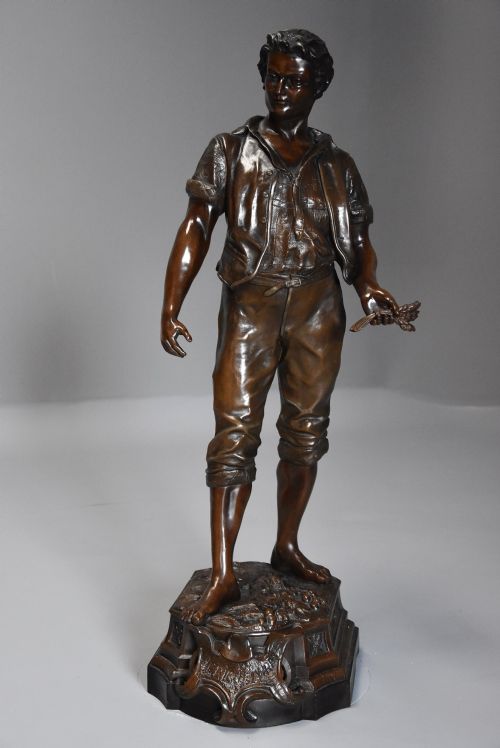


Bronze Finish Statues
These bronze finish statues bring classical figures, animals, and decorative busts into interiors through accessible patinated metals and painted clays.
Bronze Finish Statues
The most common versions on this page are French spelter figures and terracotta pieces carrying a patinated bronze finish. They capture the sculptural ambition of major periods like Art Nouveau and Neoclassical design without the heavy weight or cost of solid bronze.
How they were made
Makers utilised softer, more accessible materials such as spelter, terracotta, and plaster to form the core of these sculptures. These substances allowed for intricate moulding of drapery, facial expressions, and animal musculature.
A surface treatment known as a bronze finish or patinated metal layer was then applied over the base material. This metallic coating created the visual depth and shadow of genuine cast bronze.
Bronze Finish Statues Retail Price Guide 2026
Typical asking prices for bronze finish statues among the pieces listed under this phrase on Sellingantiques today, from the lower quarter to the upper quarter. They describe what is for sale here now, not the wider market.
Even Roman emperors Marcus Aurelius and Caracalla occasionally show up dressed in nineteenth-century bronze finish.
What varies in quality
The sophistication of the patination separates standard decorative items from superior examples. A skilled application of bronze finish creates natural tonal variations across the folds of clothing and hair.
F.Milliot·Jennings Brothers·Frederic Goldscheider·Antoine-Felix Bouré
The Bronze Finish Statues Glossary
- Spelter
- A zinc alloy commonly used as a substitute for bronze in nineteenth-century decorative figures. It accepts patination well but remains softer than true bronze.
- Terracotta
- Fired clay used extensively for sculptural busts and figures. It provides a warm, earthy base for applied bronze finishes.
- Patina
- The surface sheen and colour developed through age or artificial chemical treatment. On these pieces, it mimics the appearance of weathered bronze.
- Animalier
- A nineteenth-century artistic style focusing on realistic depictions of animals. These sculptures often feature lions, bulls, and domestic creatures.
Bronze Finish Statues: Frequently Asked Questions
Are these statues made of solid bronze?
Most of these pieces are cast in softer alternative materials such as spelter, terracotta, or plaster. They receive a patinated coating that creates a convincing bronze finish.
This method allowed nineteenth-century makers to produce detailed sculptural figures at a lighter weight and more accessible scale than solid metal casting.
How do I clean a bronze finish statue?
Dust these sculptures gently with a dry, soft cloth to prevent accumulation in the crevices. Avoid water, harsh chemical cleaners, or polishes which can strip the delicate surface patination.
Preserving the original finish ensures the piece retains its intended tone and historical character.
Where were most of these sculptures made?
A significant portion of these figures originates from French foundries and workshops active during the nineteenth and early twentieth centuries. French makers excelled at producing expressive spelter and terracotta statuary.
Other notable examples include American studies and European Grand Tour models created for collectors.
How do I identify an Art Nouveau piece?
Art Nouveau statues typically feature flowing organic lines, stylised hair, and natural motifs inspired by plants and flowers. Female figures from this movement often display dynamic, curving postures.
These designs emerged strongly around the turn of the twentieth century, shifting away from rigid academic styles.