






Bronze Door Furniture
Bronze door furniture brings tactile weight and classical presence to an entryway, spanning Victorian, Edwardian, and eighteenth-century designs.
Bronze Door Furniture
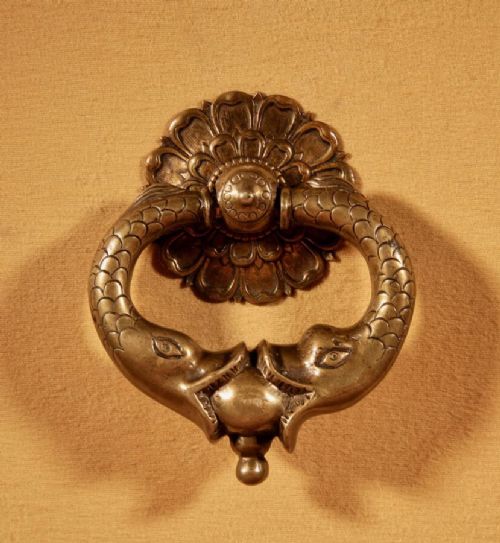
Bronze door furniture encompasses functional hardware and decorative fittings designed for entrances, ranging from robust handles and centre pulls to intricate knockers shaped as hands or sphinxes. When searching for bronze door furniture, collectors encounter diverse styles from the nineteenth and twentieth centuries, including Victorian, Edwardian, and Classical Revival pieces.
Assessing Quality
Weight and structural integrity also separate standard production hardware from superior examples. Thicker metal gauge and well-preserved mounting points indicate higher grade manufacture suited to prominent doorways.
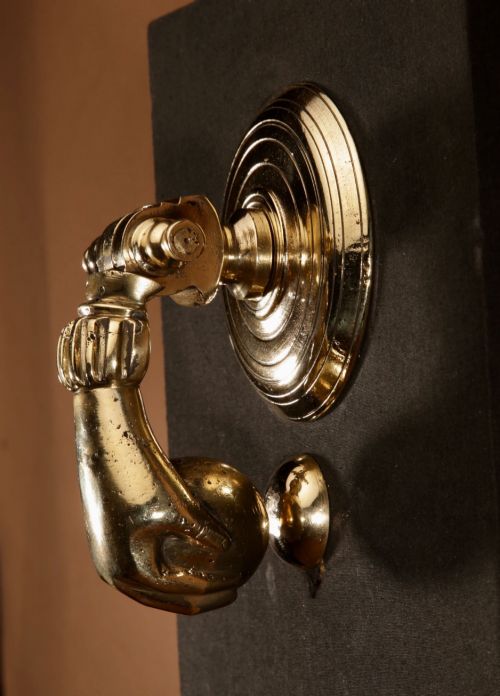
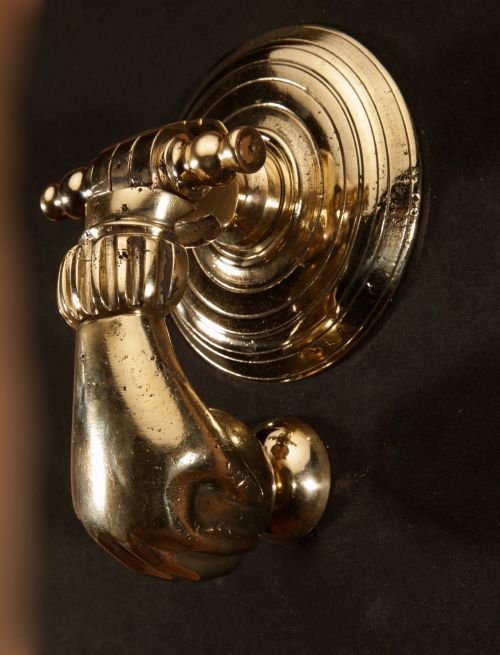
Several knockers take the form of an outstretched hand, ready to greet visitors before they even step inside.
H. J. Hatfield & Sons·Gillows
The Bronze Door Furniture Glossary
- Bronze
- An alloy consisting primarily of copper, traditionally combined with tin, prized for its strength, corrosion resistance, and capacity for holding fine detail in casting. It develops a rich patina over time.
- Ormolu
- Gilded bronze, where a finely ground gold-mercury amalgam is applied to a bronze base and heated to drive off the mercury. This technique creates a durable, golden surface finish.
- Push plate
- A protective metal plate fitted to a door around the handle or latch area to prevent the wood from becoming soiled or worn by frequent touching. They often match adjacent handle designs.
- Centre pull
- A decorative and functional handle mounted in the middle of a door rather than near the edge, typically used for pulling heavy entrance doors closed. They are frequently symmetrical or cast in sculptural forms.
Bronze Door Furniture: Frequently Asked Questions
How do I clean antique bronze hardware?
Dust gently with a soft cloth to preserve the historical surface layer. Avoid harsh metal polishes that strip away age-related patination.
Wax can be applied sparingly to protect the metal from moisture if the piece is handled frequently in a modern interior.
Can these antique knockers be fitted to modern doors?
Most antique knockers and handles can be installed on modern doors using appropriate fixings. Ensure the weight of the bronze piece matches the structural capacity of the door.
Check the spacing of existing screw holes if replacing modern hardware to avoid unnecessary drilling.
How do I date a bronze door knocker?
Examine the casting technique, fastener types, and stylistic motifs to determine the period of manufacture. Victorian and Edwardian pieces often display machine-threaded screws alongside traditional hand-finishing.
Stylistic cues such as Classical Revival or Egyptian Revival elements provide further clues to the era of creation.
What is the difference between brass and bronze hardware?
Bronze is a copper-tin alloy known for deep, warm brown tones and high durability. Brass is a copper-zinc alloy that tends to exhibit a brighter, more golden yellow hue.
Visual inspection of the patina and weight often helps distinguish between the two metals in older architectural fittings.