

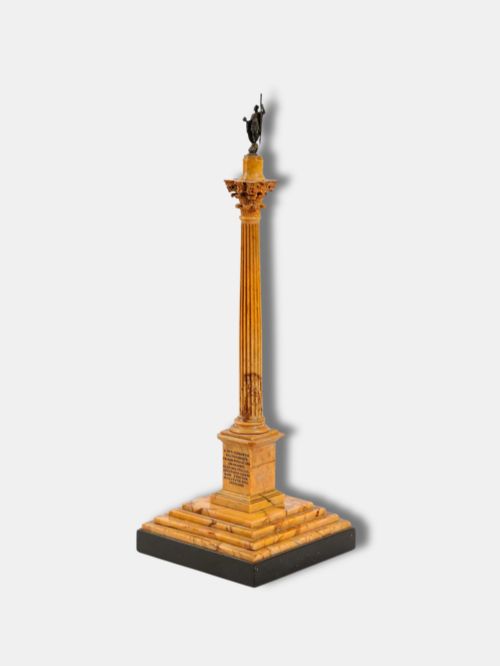
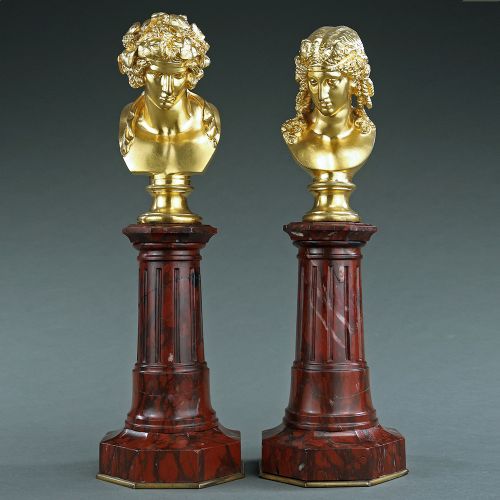


Bronze Column Sculpture
These bronze column sculpture pieces combine vertical classical form with cast metal, offering an architectural presence that elevates any display.
Bronze Column Sculpture
A bronze column sculpture brings together sturdy architectural supports and detailed sculptural metalwork, appearing in forms such as pedestals, plinths, and classical figures. Buyers searching for a bronze column sculpture encounter pieces ranging from tall display columns mounted in ormolu to miniature models of historical architecture like the Vendome Column.
The objects seen here bridge the gap between functional furniture supports and standalone decorative art. Many incorporate contrasting materials like marble and onyx to create substantial bases for busts, urns, and smaller figures.
Originating largely from the nineteenth century, these works draw heavily on Regency, French Empire, and Neoclassical styles. They reflect a persistent European fascination with classical antiquity, translated into domestic display pieces for grand interiors.
Materials and construction
Foundry work relied on traditional casting techniques to shape bronze and gilt bronze into columns, figurative mounts, and decorative collars. These metal elements were frequently paired with turned marble, onyx, or exotic timbers to build stable vertical structures.
Ormolu mounts, consisting of finely chased and gilt bronze, were pinned or screwed directly onto stone shafts and wooden pedestals. The combination of cold-cast or hand-chased metalwork with polished mineral columns required precise joinery to bear weight safely.
Bronze Column Sculpture Retail Price Guide 2026
Typical asking prices for bronze column sculpture among the pieces listed under this phrase on Sellingantiques today, from the lower quarter to the upper quarter. They describe what is for sale here now, not the wider market.
Listings feature nineteenth-century materials including onyx, ormolu, and red marble alongside bronze.
Distinctions in quality
Quality rests upon the crispness of the metal chasing and the depth of the foundational stone. Superior examples display sharp definition in acanthus leaves, figurative reliefs, and gilt mounts without soft edges or casting flaws.
The choice of stone shifts the visual weight and stability of the piece, with dense red marble, fine onyx, and matched timber veneers marking out more ambitious workshops. Integrated rotating mechanisms and heavy fire-gilt mounts further separate standard production from exhibition pieces.
Humphrey Hopper
The Bronze Column Sculpture Glossary
- Ormolu
- Gilded bronze, produced by applying a mercury-gold amalgam to cast bronze before heating to drive off the mercury. This technique creates a durable, warm metallic finish common on nineteenth-century mounts.
- Torchere
- A tall stand or ornamental candlestick designed to hold a light source or display a decorative object at height. Many share the slender vertical profile of a column.
- Neoclassical
- A style reviving the art and architecture of ancient Greece and Rome, dominant during the Regency and nineteenth-century periods represented here. It emphasises symmetry, proportion, and classical motifs such as fluted columns and acanthus scrolls.
- Plinth
- The heavy base supporting a statue, vase, or column. It provides visual grounding and physical stability to tall vertical sculptures.
- Grand Tour
- A cultural journey undertaken by wealthy young Europeans through France and Italy to study classical antiquities. It generated a demand for bronze models, busts, and souvenir columns.
Bronze Column Sculpture: Frequently Asked Questions
What is a bronze column sculpture?
It is a decorative object or architectural support that integrates cast bronze with column structures, often serving as a pedestal for busts or urns.
These pieces draw on classical design, utilising materials like marble and ormolu to create vertical displays.
How were these columns used originally?
Historically, they functioned as display stands for art, lighting supports, or focal points in grand reception rooms.
Their sturdy construction allowed them to support heavy marble busts and bronze figures securely.
How do I date a bronze column?
Dating relies on identifying the prevailing style, such as Regency or French Empire, alongside the type of stone and casting method used.
Nineteenth-century examples frequently combine turned stone shafts with hand-chased gilt bronze mounts.
How do I care for marble and bronze?
Maintenance involves dusting with a dry microfiber cloth and avoiding harsh chemical cleaners that can strip gilt surfaces.
Stone bases benefit from occasional gentle wiping, while bronze mounts require minimal intervention to preserve their natural patina.