




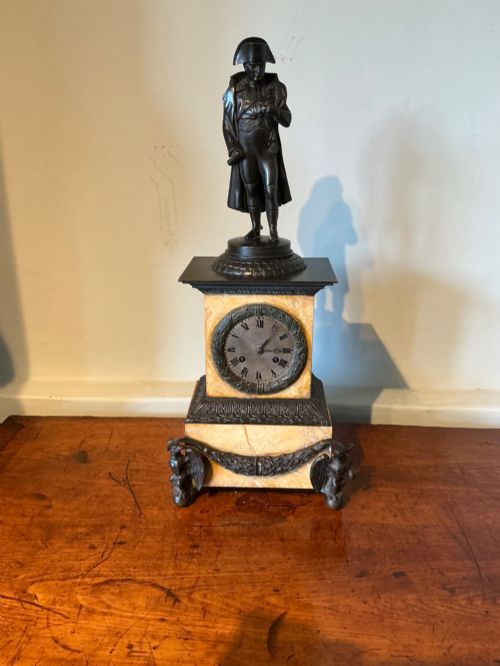
Bronze Clock with Marble
These heavy, striking timepieces combine cast metal figures with solid stone bases, offering both functional timekeeping and grand shelf decoration.
Bronze Clock with Marble
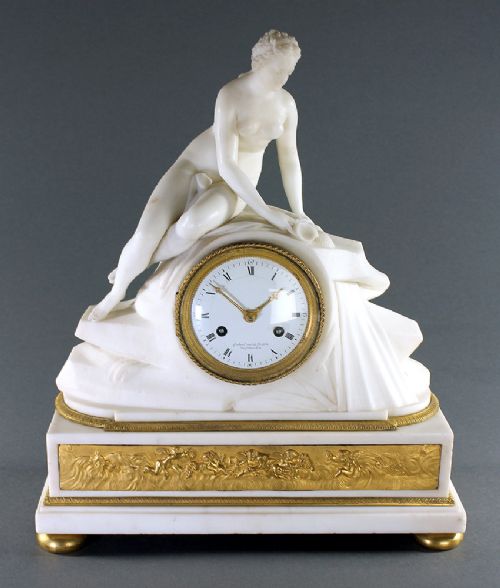
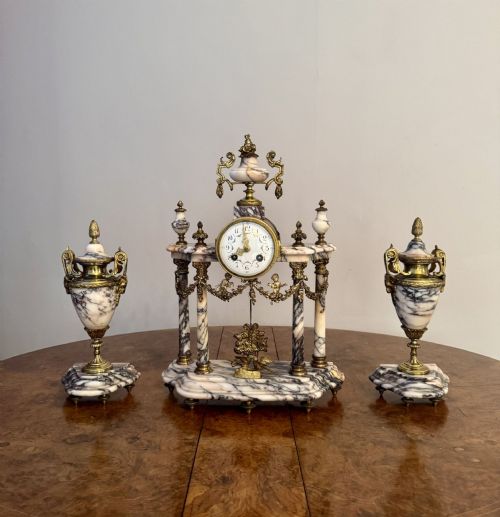
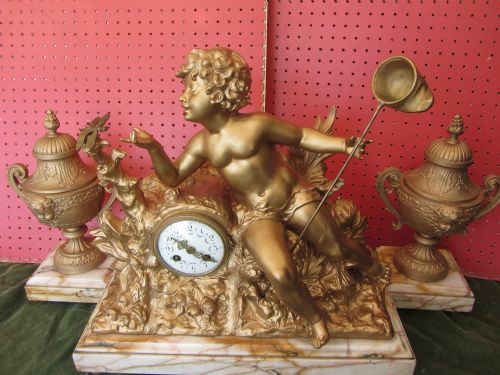
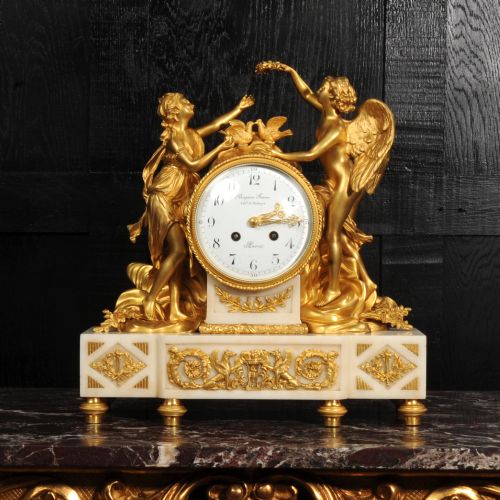
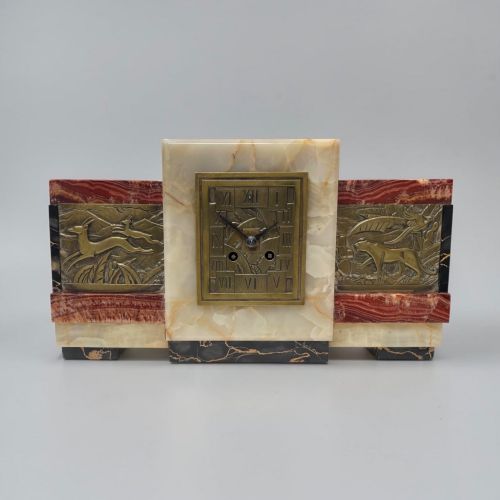
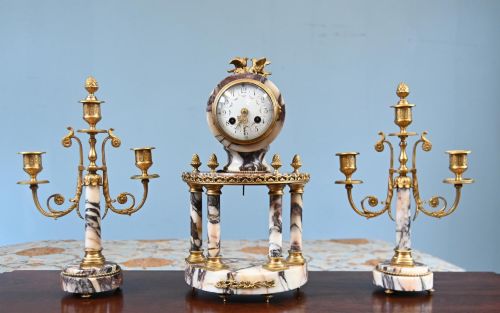
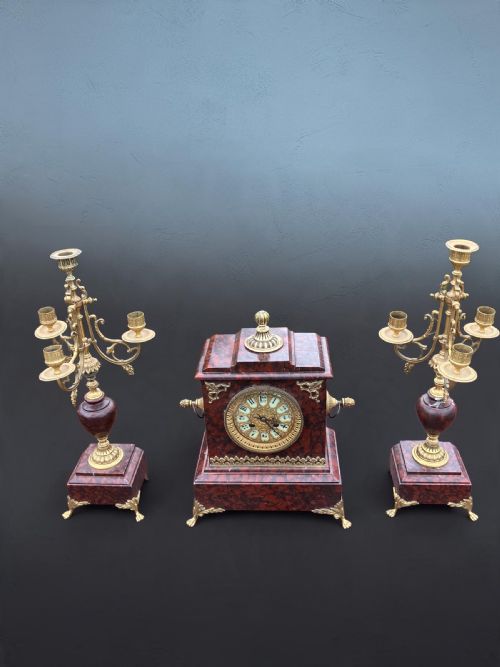
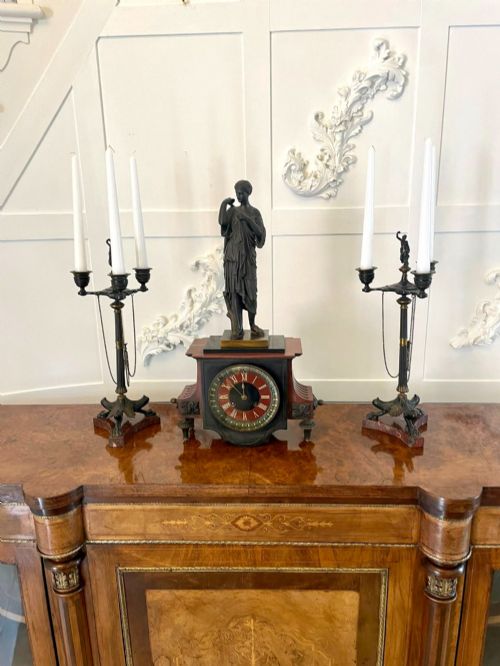
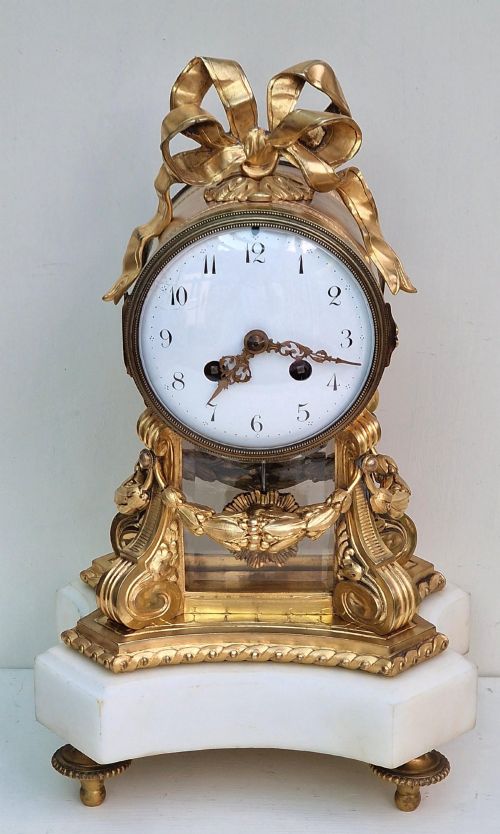
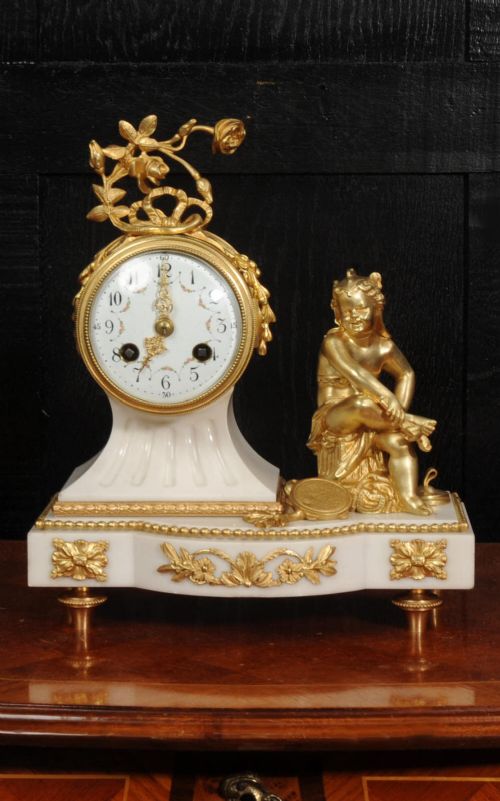
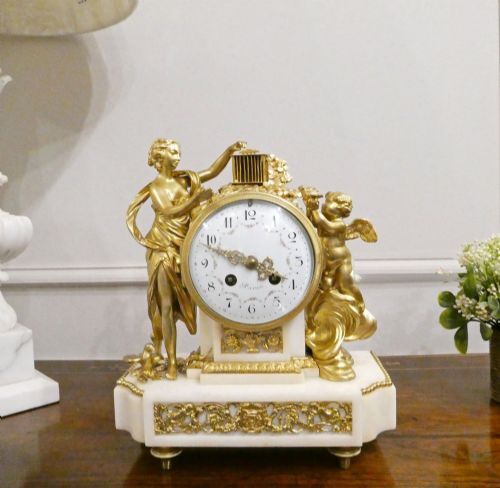
A bronze clock with marble is a substantial mantel piece that brings together metal sculpture and stone architecture. You encounter these most frequently as nineteenth-century French or Victorian mantel clocks, often accompanied by matching garnitures or candelabras.
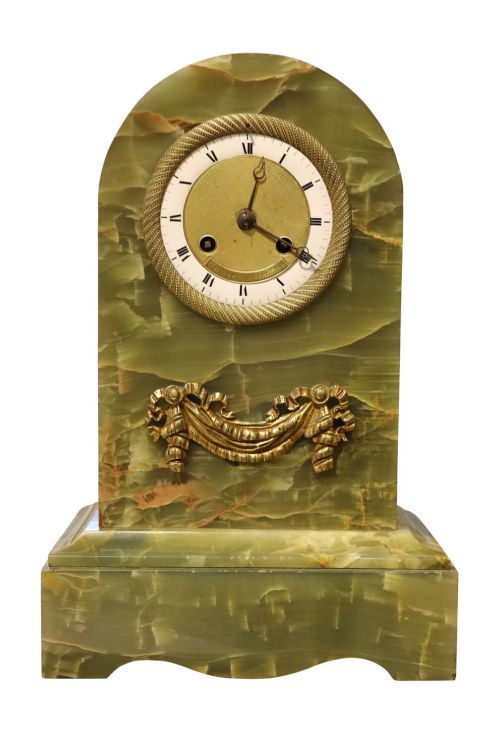
The sculptural subjects range from classical figures and literary heroes like William Shakespeare to exotic animals and cherubs. They sit upon heavy bases of green marble, onyx, or variegated stone, serving as the central ornament of a room.
How they were made
Foundry workers cast the bronze, brass, and ormolu components before applying heavy gilt finishes or dark patination. Stonemasons cut and polished the heavy marble and onyx blocks to form the architectural plinths and stands.
Clockmakers fitted mechanical movements, including single fusee and eight-day systems, into the stone or metal housings. Enamel dials were kiln-fired and painted by hand, while glass covers protected the delicate hands.
Bronze Clock with Marble Retail Price Guide 2026
Typical asking prices for bronze clock with marble among the pieces listed under this phrase on Sellingantiques today, from the lower quarter to the upper quarter. They describe what is for sale here now, not the wider market.
The listings show nineteenth-century periods alongside Art Deco, utilising materials like bronze, marble, onyx, glass, and enamel.
What varies in quality
Stone selection creates another major divide, where uniform black marble differs markedly from variegated specimen marble or rich green marble with complex veining. Heavier, denser stone bases command greater presence and stability on the mantel.
R Varnier·F Marti·Henry Berkeley Square London·Farcot·Uriano
The Bronze Clock with Marble Glossary
- Garniture
- A set of matching ornamental objects for a mantelpiece, typically consisting of a central clock flanked by a pair of candelabras or urns.
- Ormolu
- Gilded bronze, where a layer of gold is applied to a bronze base using mercury amalgamation or electrochemical techniques.
- Single fusee
- A mechanism with a cone-shaped pulley that equalises the driving force of the mainspring as it unwinds, ensuring more accurate timekeeping.
- Silk suspension
- An early method of hanging the pendulum from a fine loop of silk thread behind the dial, common in mid-nineteenth-century French clocks.
- Bezel
- The metal ring that holds the glass protecting the clock face in place.
Bronze Clock with Marble: Frequently Asked Questions
How do I wind the clock?
Most mechanical movements require a key inserted into the winding holes on the enamel dial to tension the mainspring.
Take care not to over-wind the mechanism, as this can damage the internal gears and spring assembly.
Where should I place the clock?
These heavy timepieces need a sturdy, level surface like a mantel shelf, sideboard, or heavy table to support their significant stone and metal weight.
Keep them away from direct sunlight, damp areas, and extreme temperature fluctuations to protect the marble and internal metalwork.
What is a clock garniture?
A garniture is a matched decorative set containing a central clock accompanied by side pieces such as candelabras or urns.
Makers designed these sets to create a balanced, symmetrical display across a fireplace mantel.
How do I identify the period?
Look to the stylistic cues, such as the clean geometric lines of Art Deco or the ornate mounts of Louis XIV and Regency styles.
Materials also offer clues, as specific combinations of onyx, gilt bronze, and variegated marble point directly to nineteenth-century production.